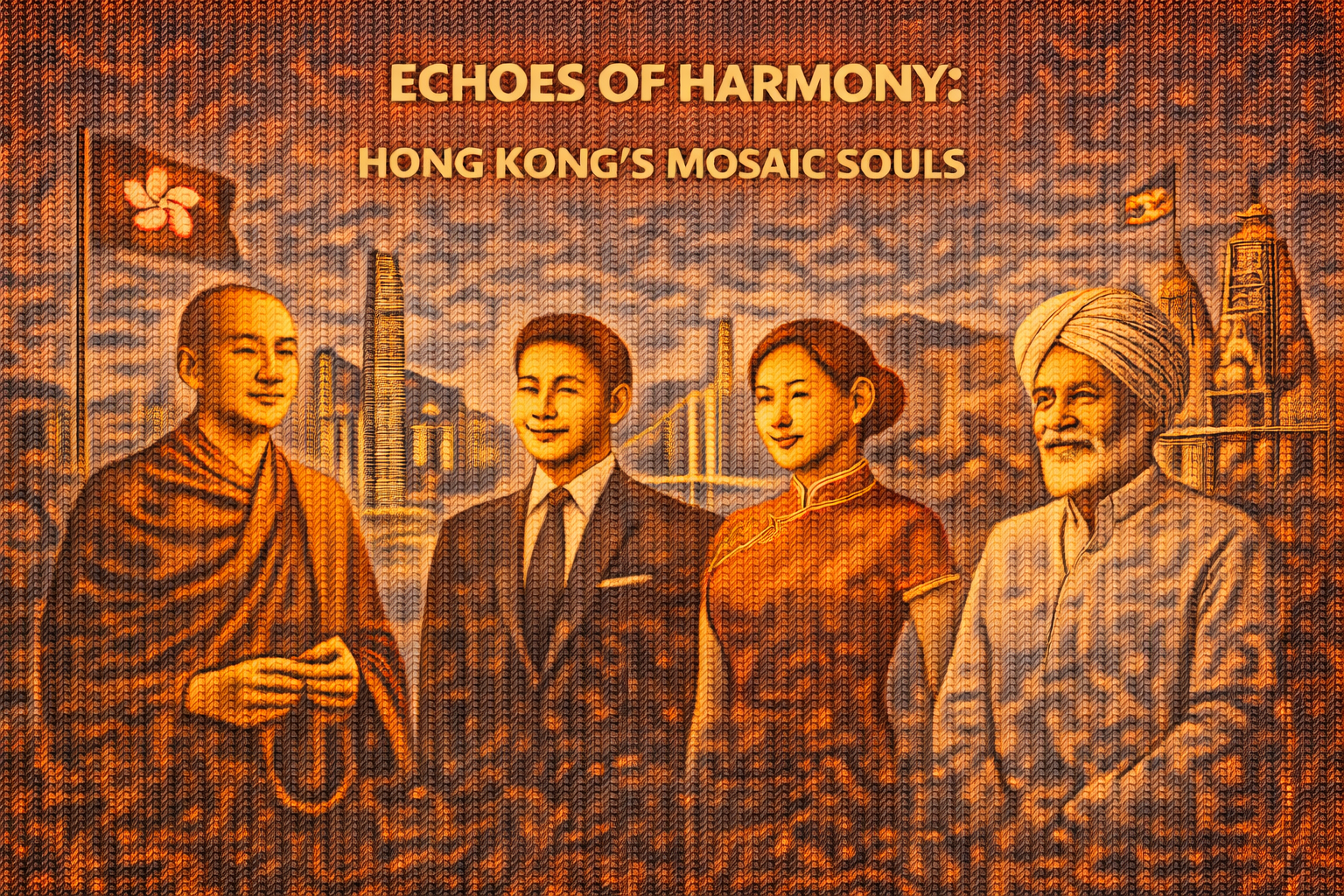
Echoes of Harmony: Hong Kong’s Mosaic Souls
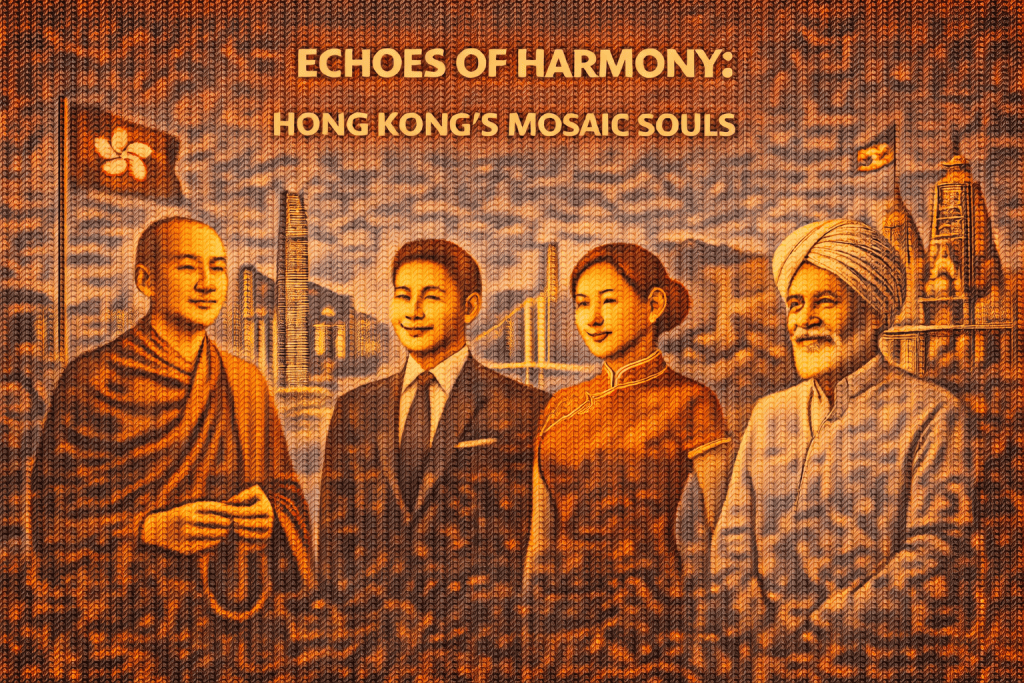
In this final installment of our five-part series, I bring together the threads explored in previous sections to offer a comprehensive synthesis of Hong Kong’s racial and religious demographics from 1842 to the present day, Wednesday, February 4, 2026. As an academic observer, I approach this conclusion with scholarly rigor, drawing upon Tiantai Buddhist philosophy’s doctrine of mutual interpenetration—wherein all phenomena intercontain one another, fostering a holistic harmony—to illuminate the interconnected evolution of these elements. This Part 5: Synthesis and Reflections objectively examines how such demographics have shaped Hong Kong’s cultural landscape, with particular emphasis on the upper class. Insights are derived from Hong Kong Census and Statistics Department reports, legislative records, and studies from institutions like the Chinese University of Hong Kong. We will also consider cinematic potentials for these narratives, concluding the series without prescriptive judgments.
Hong Kong’s demographic journey commenced in 1842 with British colonization under the Treaty of Nanking, establishing a predominantly Chinese population (over 90% Cantonese) interspersed with British administrators and Indian auxiliaries. Racial composition was stratified: Europeans formed an elite minority, while Chinese laborers dominated the working classes. Religiously, indigenous Taoism and Buddhism coexisted with imported Christianity and Islam via South Asian migrants. By the early 20th century, census data indicate a population surge to 1.6 million by 1931, with racial diversity expanding through Japanese, Portuguese, and Eurasian influxes amid trade booms. Post-World War II refugee waves from mainland China amplified Han Chinese dominance, reaching 98% by 1950s estimates, while religious pluralism grew—Christianity rising to 10% through missionary efforts, Buddhism stabilizing at 20-25%.
The mid-20th century, marked by industrialization, saw racial minorities like South Asians (e.g., Sindhis and Parsis) integrate into commerce, enriching upper-class networks. The 1997 Handover preserved this mosaic under the Basic Law, with ethnic Chinese at 95% by 2001, per census figures, and non-Chinese groups (Filipinos, Indonesians, Westerners) comprising 5%. Religious affiliations diversified: Islam at 4%, Hinduism at 1%, alongside a burgeoning non-religious segment (15% by 2016). The 2019 protests and 2020 National Security Law (NSL) catalyzed shifts; by 2026, population stands at approximately 7.4 million, with Han Chinese at 91-92%, per latest statistics, reflecting emigration (over 150,000 departures since 2020) and mainland inflows. Religious trends show Buddhism at 21%, Christianity at 12%, Islam at 4.5%, with slight increases in secularism amid urbanization.
Objectively, these demographic evolutions have profoundly shaped Hong Kong’s culture, manifesting Tiantai’s interpenetration as racial and religious elements mutually influence societal norms. In broader society, colonial-era racial hierarchies birthed a hybrid identity—fusion cuisines like cha chaan tengs blending Western and Cantonese elements, while religious syncretism appears in festivals merging Lunar New Year with Christian holidays. Among the upper class, this shaping is pronounced: elite families, often of mixed heritage (e.g., Eurasian or South Asian-Chinese), have cultivated cosmopolitan networks through institutions like the Hong Kong Jockey Club. Philanthropy, a cultural hallmark, draws from diverse religious ethos—Buddhist compassion funding education, Christian charity supporting healthcare—fostering a culture of discreet influence and global adaptability. Post-Handover, upper-class culture evolved toward pragmatic multiculturalism; NSL-era adjustments have prompted introspective resilience, with elites emphasizing virtual global ties and hybrid traditions, such as interfaith galas that embody Tiantai harmony by containing diverse worldviews within unified social structures.
Straightforwardly, data from the Hong Kong Policy Research Institute highlight a 20% increase in multicultural upper-class associations since 1997, correlating with demographic shifts without implying direct causation. This has molded an upper echelon that values strategic alliances over overt activism, preserving Hong Kong’s role as a financial hub where racial diversity fuels innovation—think tech conglomerates led by polyglot executives—and religious pluralism informs ethical business practices, aligning with Tiantai’s non-dual balance of individual and collective.
For Hollywood, these themes offer fertile ground for nuanced storytelling. Envision a sweeping epic spanning 1842-2026, where Tiantai motifs symbolize demographic interpenetration: protagonists from upper-class families navigate racial and religious fluxes in a narrative of harmonious adaptation, authentically depicting colonial legacies and modern resilience through period-accurate settings and character arcs. Alternatively, a character-driven series could explore NSL-era upper-class dilemmas, using subtle philosophical undertones to highlight cultural evolutions—perhaps a drama where a multiracial heir reconciles Buddhist heritage with Christian influences amid emigration pressures, provoking audiences to contemplate identity without bias. Such projects could draw from archival visuals to ensure neutrality, focusing on factual inspirations rather than sensationalism.
In synthesizing this series, we observe Hong Kong’s racial and religious makeup as a dynamic continuum, objectively shaping a culture of interwoven resilience, particularly in upper-class spheres where Tiantai-like harmony prevails amid change. This concludes our exploration; thank you for engaging with these echoes.