The Gilded Equinox: Lunar New Year Among Hong Kong’s Elite
-Part 5: The Return of the Kitchen God and the Soft Open
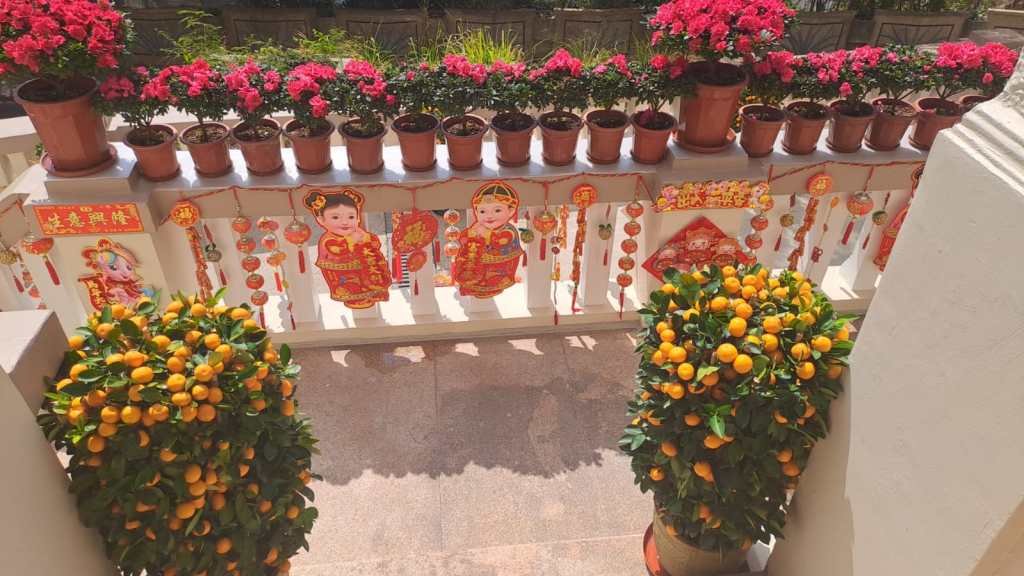
Today is Friday, the 20th of February, designated as Chor Say—the fourth day of the Lunar New Year. If yesterday, the day of the “Red Mouth,” was characterized by silence and avoidance, today marks a tentative re-engagement with the machinery of the world. The strict isolation is lifted. The spiritual bureaucracy, which had theoretically paused for the holidays, is back online.
The primary event of Chor Say is the ritual of Jip Sun (Welcoming the Deities). Specifically, we are preparing for the return of Zaou Gwan, the Kitchen God. According to lore, he ascended to heaven days ago to report on the family’s behavior to the Jade Emperor. Today, he returns.
For a production designer, the domestic setting for Chor Say offers a fascinating contrast between high-tech modernity and agrarian superstition. In our household, the ritual does not take place in the living room, but in the kitchen—a space of stainless steel, induction hobs, and Sub-Zero refrigeration. Yet, in the center of this sterile, functional space, a temporary altar is erected.
The visual juxtaposition is striking: the smoke of sandalwood incense curling around a digital smart-fridge. We offer specific items to Zaou Gwan upon his return: tea, fruit, and crucially, Nian Gao (sticky rice cake). The texture is important here. The superstition is that the sticky sugar will “seal” the god’s mouth or sweeten his mood, ensuring that he brings only blessings and auspicious mandates from heaven for the coming year.
A director capturing this scene should focus on the hierarchy of the household staff. In a wealthy Hong Kong home, the domestic helpers are often the custodians of this specific ritual, guiding the younger generation of the family on where to place the joss sticks. It is a moment where the class structure momentarily inverts; the helpers, possessing the knowledge of the ritual, direct the employers. This dynamic provides a subtle, realistic layer to any script involving an “Old Money” family.
While the morning is spiritual, the afternoon of Chor Say is administrative. It is what the corporate world might call a “soft open.” We do not yet go to the office—the banks and stock exchange are generally still dormant or operating at reduced capacity—but the intent of commerce begins to stir.
My father retreats to his study. This is a distinct shift from the previous days where business talk was taboo. He is now permitted to check the global markets. He consults the Tung Shing (Chinese Almanac) to determine the exact auspicious hour for the physical reopening of the office, which usually occurs on Day 5 or Day 8.
For a screenwriter, this is the moment to showcase the “Generational Burden.” A scene could depict the patriarch sitting alone in a dim, wood-paneled study, the festive red decorations visible in the hallway, while he reviews a year’s worth of projections. The festive veneer cracks slightly here; the weight of maintaining the empire returns. He begins the process of preparing the Lai See for his employees.
This is not a trivial task. These are not the small packets given to children. These are Hoi Gung Lai See (Start of Work Red Envelopes). In a large conglomerate, this involves thousands of packets. The visual of stacks of red envelopes, arranged like bricks of bullion on a desk, communicates power and patronage. The camera should linger on the hands filling these envelopes—precise, rhythmic, and mechanical. It is a distribution of loyalty as much as currency.
The wardrobe for Chor Say reflects this transition. The “activewear” of the Peak walk is gone. We return to “Smart Casual.” The colors are still bright—no greys or blacks yet—but the silhouette is sharper. We look less like holiday-makers and more like professionals on a weekend break.
By dinner time, the atmosphere has normalized. The “Red Mouth” danger has passed, and the Kitchen God is back in his corner, fed and placated. The meal is less ritualistic than the vegetarian feast of Day 1 or the massive banquet of Day 2. It is a functional, nourishing meal, often clearing out the leftovers of the previous feasts. We are metabolizing the holiday, breaking it down to fuel the work week ahead.
We go to sleep on Chor Say with a sense of anticipation. The quiet is over. The “Great Return” is imminent.
Join me tomorrow for Part 6: Chor Ng (Day 5), also known as the Festival of Po Wu. This is the crescendo of the commercial holiday—the Birthday of the God of Wealth. We will discuss why this is the most critical day for the Hong Kong economy, the specific sounds that will wake the city, and how we ensure the markets open in our favor.