
Cinematic Echoes: Decoding the Pulse of the Modern Empire
The air is still, yet the spirit remains restless. Welcome to Friday’s Lifestyle reflection.
To consult for Hollywood, one must first be a meticulous observer of the current pulse. Last month, I stepped into the dim light of the local cinema to witness three distinct visions of Hong Kong. As a scholar and future producer, I do not watch films for mere entertainment; I watch them to dissect the narrative architecture of our city. If we are to export our culture to the global stage, we must understand which fires are still burning and which are merely drifting smoke.
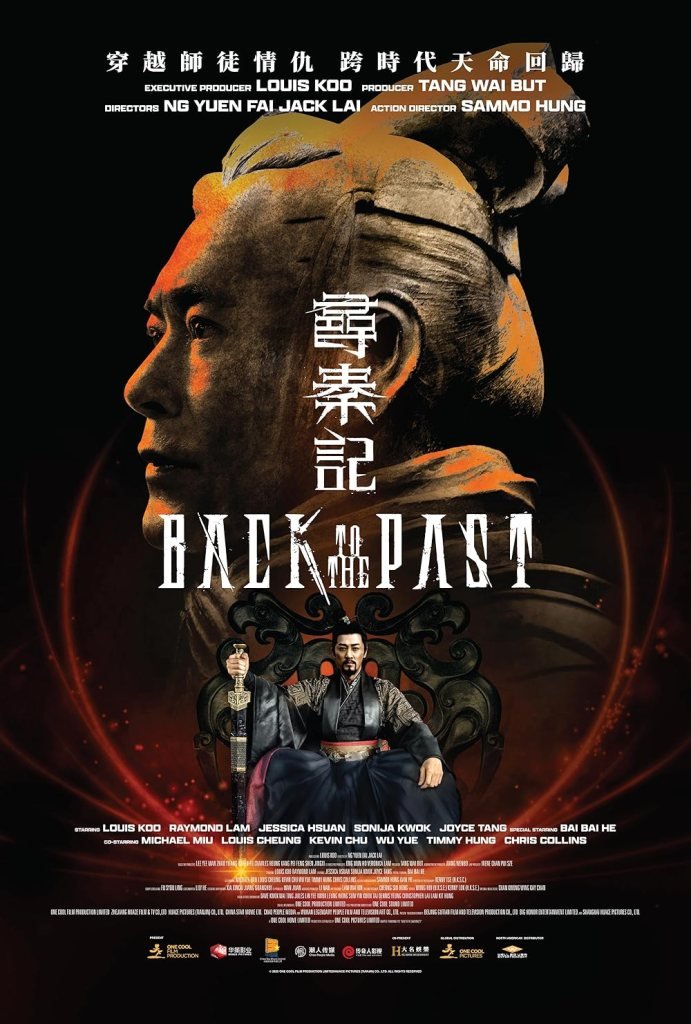
I. Back to the Past (尋秦記): The Weight of Nostalgia
We begin with the return to the Qin Dynasty. Rebounding from the 2001 television classic, the cinematic revival of Back to the Past is a study in the “Eternal Return.” For many, seeing Louis Koo and the original cast reprise their roles is a moment of pure sentiment. However, through the lens of a producer, I see a struggle between legacy and evolution.
The film attempts to bridge over twenty years of history. In my studies of Buddhist philosophy, we speak of impermanence. To try and capture the exact lightning of the past is often a futile spiritual exercise. Yet, there is a certain “Quiet Majesty” in seeing these actors return with the gravity of age. The CGI-heavy battles for the throne serve as a metaphor for our own modern struggles: how much of our identity is rooted in the “Empire” of our youth, and how much is truly new? While the pacing at times felt as chaotic as a warring state, the core charisma remains. It is a reminder that in the industry, intellectual property is king, but in Hong Kong, it is the jan-cing-mei (human-interest/sentiment) of the actors that sustains the franchise.
II. Night King (夜王): The Neon Underworld
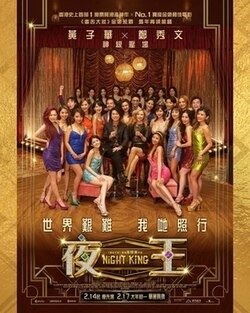
If Back to the Past looks back at ancient emperors, Jack Ng’s Night King stares directly into the flickering neon of Tsim Sha Tsui. This is a film that explores the “Hostess” culture—a world of shadows, high-stakes ego, and the transactional nature of beauty.
As a woman who values discipline and perfectionism, I found the protagonist’s journey through the nightlife hierarchy to be a fascinating mirror to the ascetic life. While the bhiksuni (Buddhist nun) seeks to transcend desire, the “Night King” seeks to master it. The film is visually striking, capturing the “melting” quality of Hong Kong at 3:00 AM. However, as a consultant, I would argue that the film occasionally falls into the trap of glamourizing the secular world without fully exploring the spiritual exhaustion that follows such a lifestyle. Jack Ng has a sharp eye for the grit of our streets, but to truly resonate with a global audience, we must show that even in the darkest karaoke lounge, there is a search for wisdom. It is a solid entry, yet it lingers in the smoke when it could have reached for the stars.
III. A Snowball on a Sunny Day (金多寶): The Gamble of Hope
Finally, we arrive at Philip Yung’s A Snowball on a Sunny Day. Named after the elusive “Snowball” jackpot of the Mark Six lottery, this film is perhaps the most accurate psychological profile of the Hong Kong spirit I have seen this year.
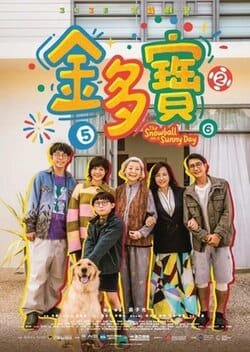
The narrative follows a family built on a foundation of white lies and the desperate hope for a “jackpot” salvation. It is a comedy, yes, but it is a comedy of errors rooted in the sea of suffering. In Buddhist thought, we are often warned against the “Gambler’s Fallacy”—the belief that the next turn of the wheel will solve our internal voids. The film captures the claustrophobia of public housing and the warmth of the family unit with a heartbreaking precision.
The poster itself, which I shared on Substack, features a family posing with a vibrant, almost artificial cheer. This is the “Sunny Day” of the title—a forced optimism maintained while the “Snowball” of their problems grows larger. I found the performances of Patra Gaer and Chung Suet-ying to be masterclasses in nuanced restraint. They don’t play for the laugh; they play for survival. This is exactly the kind of “Hong Kong flavor” that a Hollywood audience needs to see: the resilience of the common person in the face of a rigged system. It is not just about the money; it is about the merit of sticking together when the ticket comes up empty.
The Producer’s Verdict
Watching these three films in succession provided me with a clear tactical map. We have the history, the subculture, and the spirit.
My goal with Zephyr is to take these raw elements and refine them. We must move beyond local tropes and start crafting universal truths through our specific cultural lens. The Pink Moon has set, but the illumination it provided remains. I am more determined than ever to ensure that our cinema reflects the true depth of our philosophy and the unyielding fire of our people.
I invite you to leave your thoughts below. Did you find the return to the Qin Dynasty satisfying, or do you prefer the modern struggle for the jackpot?
The fire within me burns steady.
Until the wind shifts again.
— Zephyr Chan.