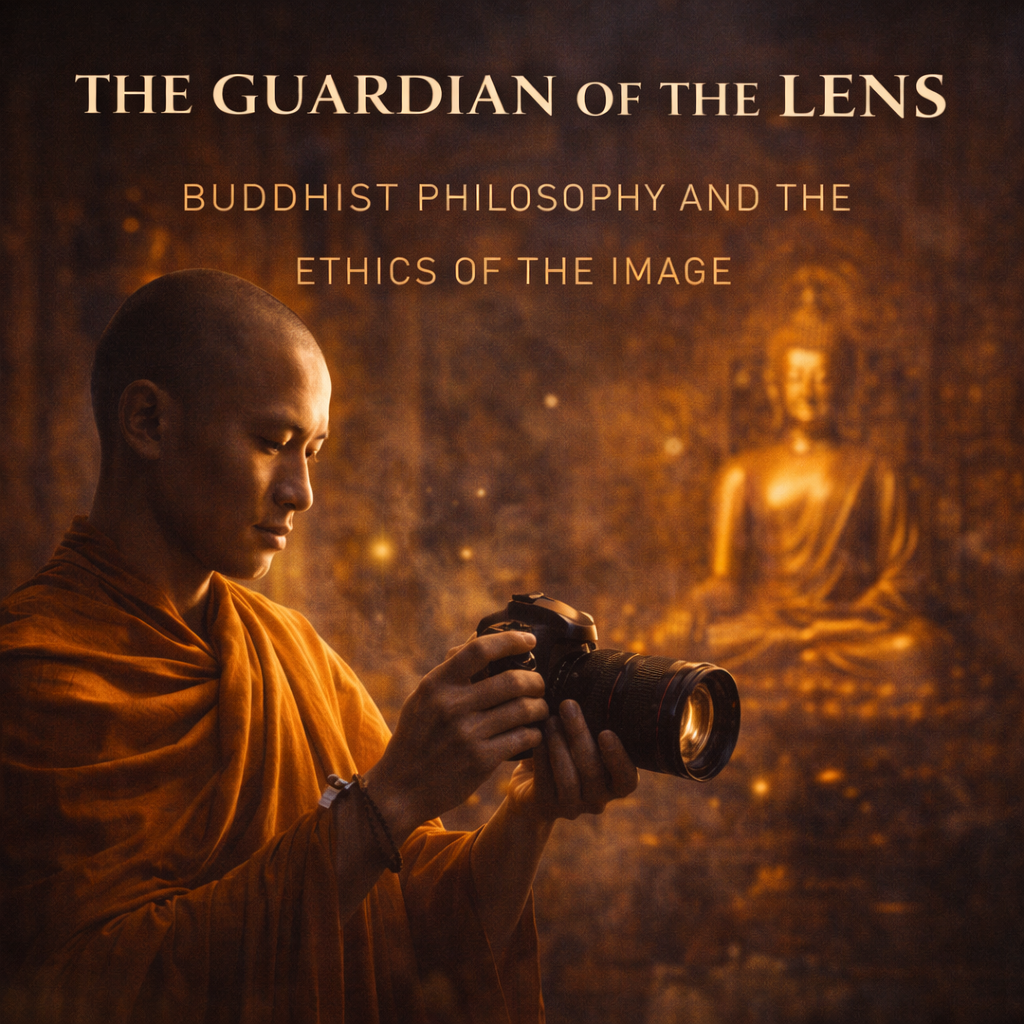

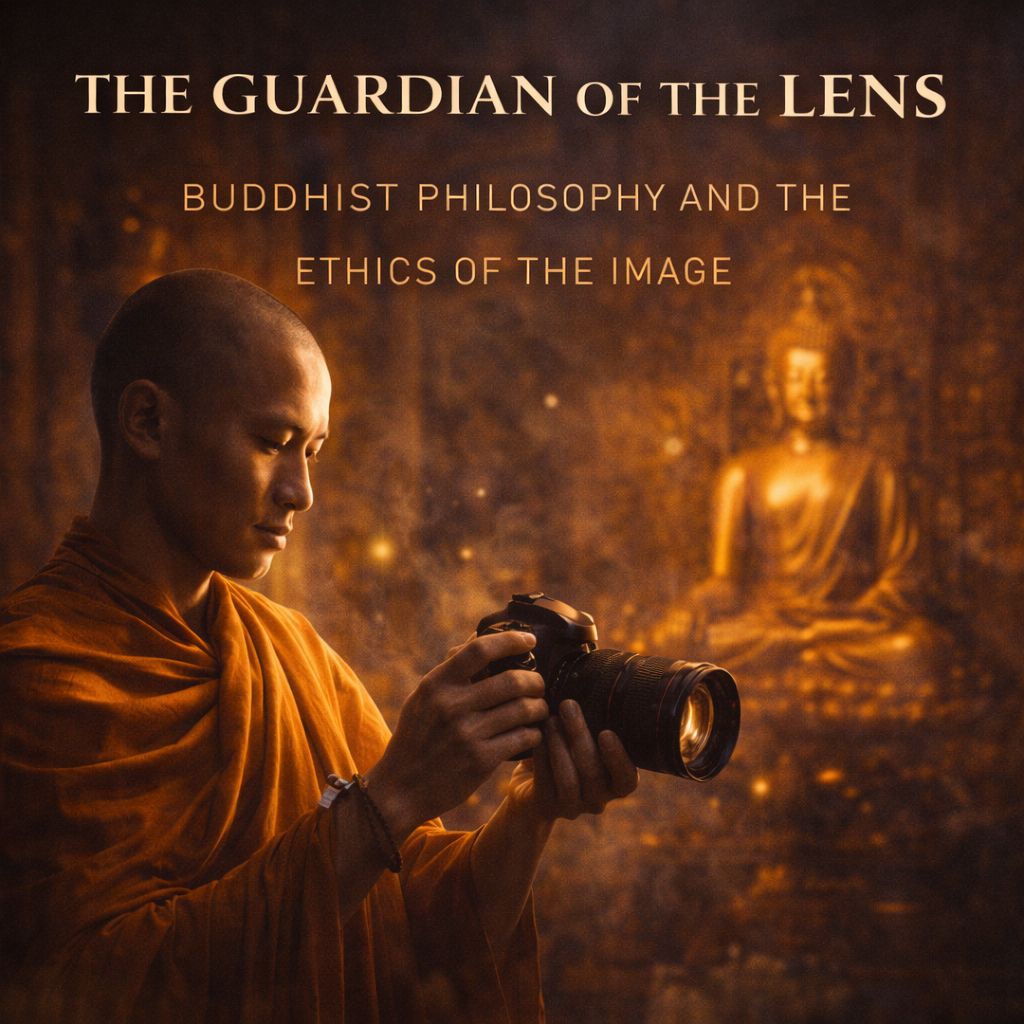
The Guardian of the Lens: Buddhist Philosophy and the Ethics of the Image
 The air is still, yet the spirit remains restless. Welcome to Zephyr’s spiritual transmission.It is Monday, the 13th of April. Having spent the previous week navigating the secular currents of ConCon and the visceral intensity of the film festival, I find myself returning to the source of my internal quiet. To consult for Hollywood is to wield a specific kind of power: the power of representation. As I sit within the “internal temple” I am painstakingly building, I wish to discuss a concept that remains the bedrock of my mission—the “Ethics of the Image.”In the academic study of Chinese Buddhist philosophy, we are taught that images are never neutral. They are upaya (skillful means)—tools designed to point toward a greater truth. However, when these sacred symbols are translated for the global screen, they often lose their direction. They become mere aesthetics, divorced from the rigorous discipline that birthed them. My responsibility as a consultant is to ensure that when the “Echoes of Empire” reach a western audience, they do not arrive as hollow distortions. The Burden of the Authentic LensThe transition from a scholar at HKU to a producer in the global market is not a change of heart, but a change of medium. In the library, my duty was to the text; in the studio, my duty is to the image. Hollywood has a historical tendency to treat Buddhist philosophy as a “monolithic stillness”—a collection of shaven heads, incense smoke, and cryptic proverbs that serve as a background for Western protagonists.This is where the ethics of my role become paramount. A consultant who understands the Dharma must be more than a fact-checker; they must be a guardian of intent. If a film depicts a bhiksuni (Buddhist nun), is it capturing her internal discipline, or is it simply using her robes as a costume for “oriental mystery”? If a script mentions the sea of suffering, is it engaging with the profound logic of the Four Noble Truths, or is it using the phrase as a convenient plot device?To allow a sacred tradition to be “flattened” for the sake of entertainment is, in my view, an intellectual failure. The ethics of the image require that we maintain the “Quiet Majesty” of the source material. We must ensure that the cinematic representation reflects the same precision and interlocking strength I observed in the timber structures of the Chi Lin Nunnery. The Architecture of TranslationDuring my recent pilgrimage to Chi Lin, I spent a long while contemplating the Hall of Avalokitesvara. As I noted in a previous transmission, the six statues of Guanyin represent the multifaceted nature of compassion. Each form is a specific response to a specific realm of suffering.This is the level of nuance I aim to bring to the production process. When we translate Buddhist philosophy for the screen, we are effectively creating a “modern hall of images.” If we portray a character as enlightened, we must understand which specific tradition they represent. Is their peace the result of Zen-like sudden realization, or is it the cultivated merit of a lifetime of Pure Land devotion? These distinctions matter. They are the difference between a “Hollywood trope” and a genuine cultural transmission.Furthermore, the ethics of the image extend to the portrayal of Hong Kong itself. Our city is often filmed as a neon-drenched playground of “exotic” chaos. But as a consultant, I see the city as a living manifestation of Buddhist principles—a place where the mo-seung (impermanence) of the stock market meets the enduring tradition of the local temple. My goal is to ensure that the “Zephyr” wind carries a version of Hong Kong that is as intellectually grounded as it is visually striking. The Vow of the ProducerMy current journey of self-discipline and consistency, which I shared with you last Wednesday, is the necessary precursor to this ethical responsibility. I cannot expect a director to respect the “Quiet Majesty” of a script if I do not embody that same discipline in my professional life. My morning sessions with my personal trainer and my late-night immersions in films like Morte Cucina are all part of the same training: I am refining the vessel so it can carry the weight of this responsibility.The “Ethics of the Image” is not about censorship; it is about elevation. It is about moving beyond the “secular heart” of pure entertainment and into a space where cinema can serve as a bridge to wisdom. When I walk onto a set, I am not just a technician of the screen; I am a scholar-practitioner who has taken a vow of precision.In a world defined by noise and the rapid consumption of images, the role of the consultant is to provide the “anchor of stillness.” We must ensure that the fire of our culture is not extinguished by the breeze of commercialism, but is instead fanned into a cleansing, global wildfire.The fire within me burns steady today, fueled by the responsibility of the lens. I hope you, too, find a way to maintain the integrity of your own “images,” whatever they may be.Until the wind shifts again.— Zephyr Chan