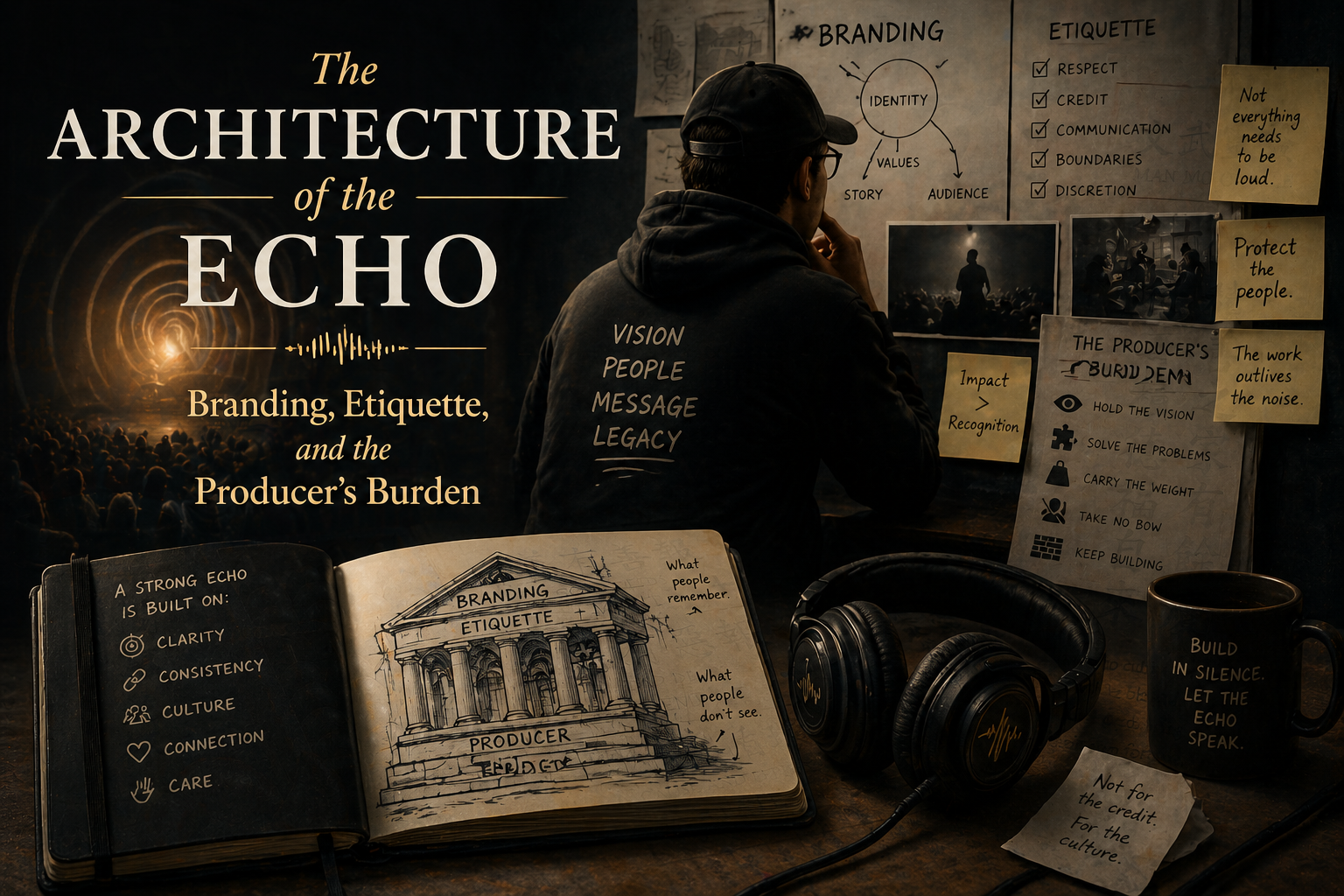
The Architecture of the Echo: Branding, Etiquette, and the Producer’s Burden.
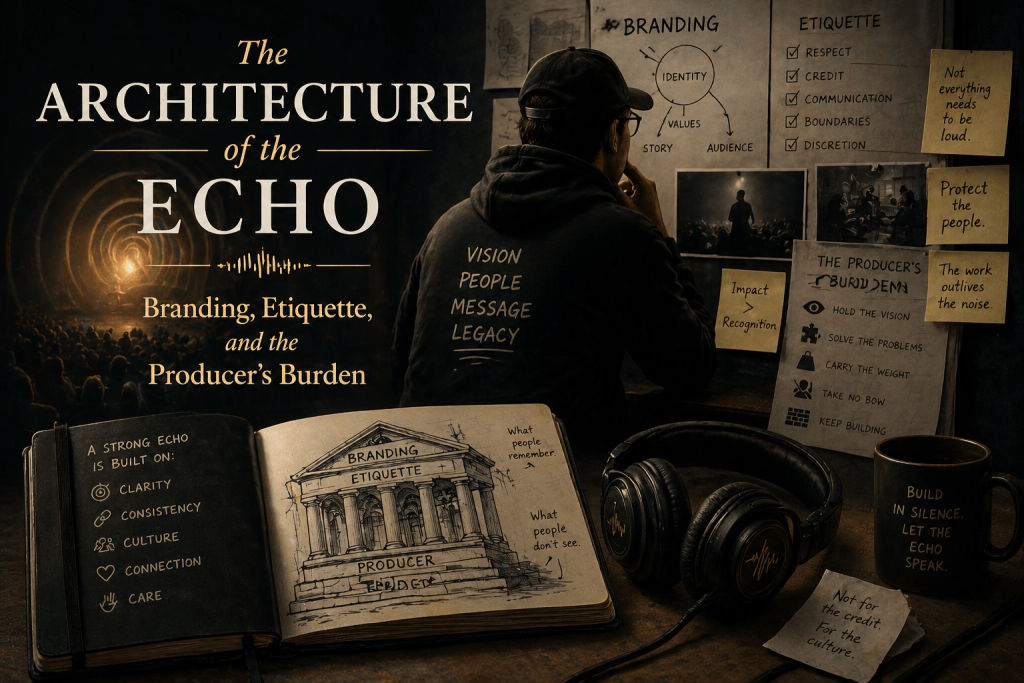
The air is still, yet the spirit remains restless. Welcome to Zephyr’s Wednesday transmission.
It is Wednesday, the 29th of April. Today, I wish to step away from the incense smoke of the temple and the cinematic flicker of the theater to discuss the cold, hard machinery of the industry I am entering. To consult for Hollywood, one must be more than a scholar; one must be a master of the “Echo.” My mentor, therapist, and confidante, Ruby Tang, was spectacularly spot-on when she noted that without proper branding and marketing, a product—no matter how sacred or profound—remains invisible. Without visibility, there are no sales. And the entertainment industry, at the end of the day, is a business.
As much as I am loathe to admit it—even to myself—I must brand myself appropriately for my career as a Hollywood producer and cultural consultant. I cannot simply exist as a quiet scholar of Buddhist philosophy; I must become the bridge that is visible enough for the world to cross.
The Internal Brand
Branding, I have learned, is not a costume one dons for a press junket; it is an architecture that begins from within. It starts with the daily habits and routines I have shared with you previously—the “chipping away of the excess stone.” It culminates in my etiquette and social skills, both within and outside the industry.
This is where Ruby’s lessons in etiquette and social navigation become a tactical necessity. I am, by my own admission, very “green” in this regard. My choices at university—Philosophy and Buddhist Studies—tended toward the solitary and the contemplative. I find that while I make friends easily, the maintenance of those connections is where my discipline wavers. I tend to be less proactive when it comes to remembering the important dates of friends and family, or organizing the social get-togethers that sustain a network.
I am a happy attendee, but a reluctant organizer. This is a significant professional hurdle. A producer is, by definition, a professional manager and organizer. We are the hosts of the “Empire.” Whether it is a red carpet or a high-stakes press junket, the producer must be comfortable as the architect of the event. To move from the “Quiet Majesty” of the library to the kinetic energy of a film set, I must train myself to be the one who initiates, the one who remembers, and the one who hosts.
The Rebranding of the City
This personal branding is a microcosm of the work I intend to do for my hometown. For decades, the Hong Kong entertainment industry branded itself as the action capital of the world. From the legendary fire of Bruce Lee to the “gunfu” precision of Chow Yun-fat, that reputation was earned in blood and sweat. But that brand, while iconic, is no longer sufficient.
I want to rebrand Hong Kong as a city that incorporates the hyper-capitalistic passion for fashion and style we currently associate with South Korea. Our city is just as, if not more, capitalistic than Seoul. We are the home of Li Ka-shing and CK Hutchison Holdings Ltd.—a multinational empire that spans the globe.
Consider the Netflix series Beef. While it was set in Los Angeles and resonated with the Korean-American experience, that narrative of high-pressure, hyper-capitalistic rage could have been set in Hong Kong and still functioned perfectly. We have the same gloss, the same pressure, and the same underlying hunger.
The Facade and the Narrative
However, any honest branding of Hong Kong must acknowledge the shifting ground beneath our feet. We once boasted of the Independent Commission Against Corruption (ICAC), a body whose mission was to ensure a fair and transparent system. Yet, since the implementation of the National Security Law in the summer of 2020, I feel the agency has lost its “teeth and claws.” The “One Country, Two Systems” arrangement has become a mere facade. Everyone is now, in one way or another, beholden to the directives of Beijing.
As a producer, I see branding as the art of packaging narratives. Narratives are the bread-and-butter of the public relations and international relations industries. Politicians and diplomats deal in them, and the entertainment industry is no different. I may despise Chairman Mao for the policies that led to the deaths of tens of millions of his own countrymen, but as an analyst, I admire his profound appreciation for the strength of propaganda. He understood that whoever controls the narrative controls the reality.
The Three-Dimensional Empire
My job as a producer is to produce stories I am passionate about—stories that reclaim our narrative from the two-dimensional tropes of the past. I am looking toward projects like “Eurasia Rising,” or modern adaptations of James Clavell’s “Tai-Pan” and “Noble House.” I want to show the world that Hong Kong is not just a “Triad city” or a “propaganda facade,” but a complex, three-dimensional landscape of love, second chances, and unyielding ambition.
Branding is the lens through which the world sees our fire. I am refining that lens every day, beginning with my own habits and ending with the stories I choose to tell.
The fire within me burns steady, focused on the narrative I am building.
Until the wind shifts again.
— Zephyr Chan”