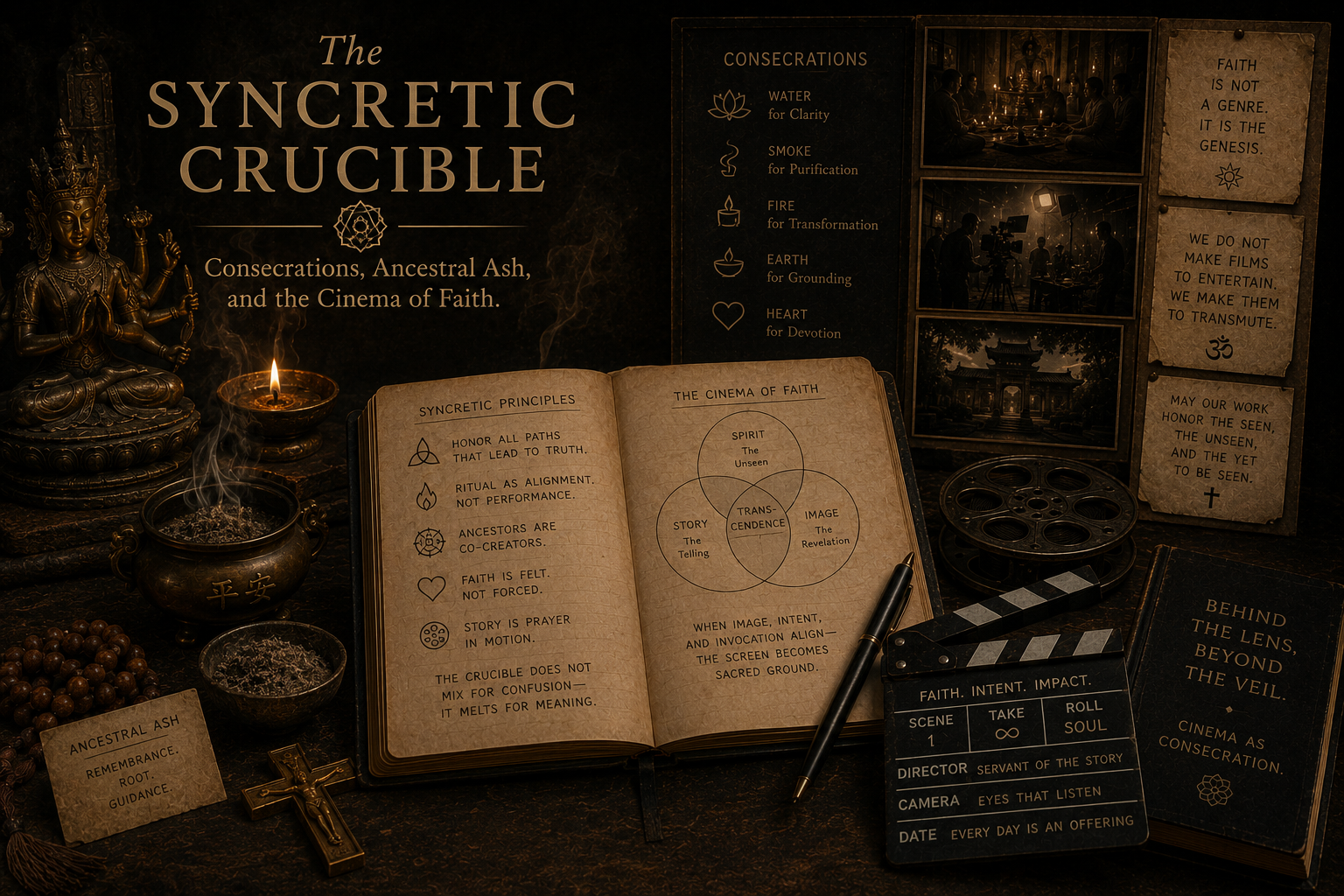
The Syncretic Crucible: Consecrations, Ancestral Ash, and the Cinema of Faith.
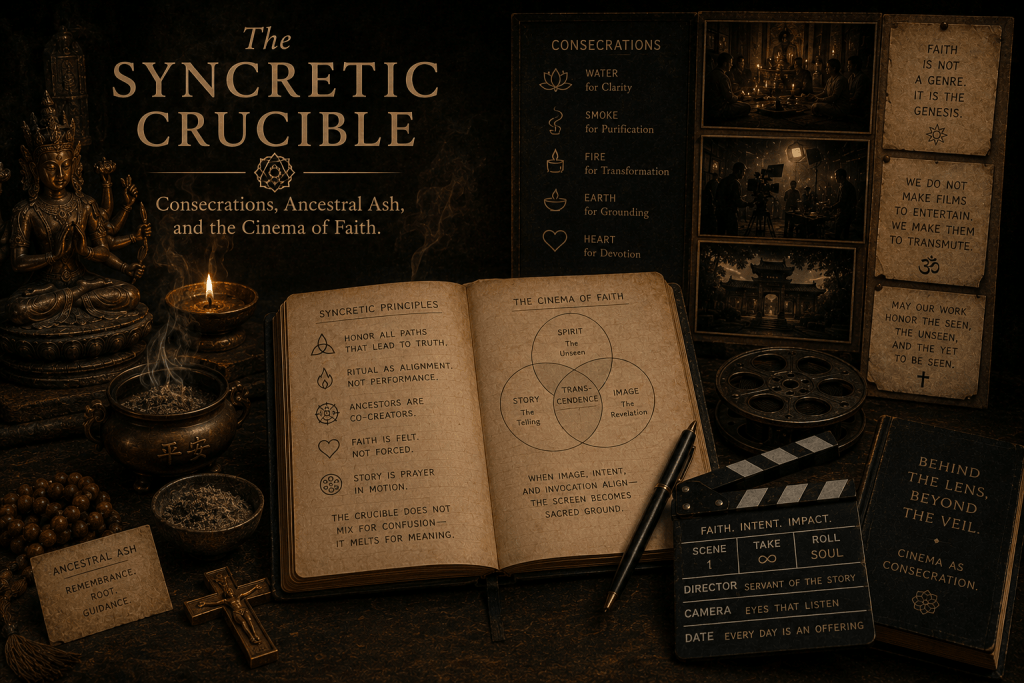
The air is still, yet the spirit remains restless. Welcome to Zephyr’s spiritual transmission.
It is Monday, the 18th of May 2026. Having recently exposed the structural anatomy of my own privilege and the legacy mechanics of the studio system, I find it imperative to return to the invisible currents that animate our streets. To consult for Hollywood on the “Echoes of Empire,” one must look past the neon facades and into the multi-layered spiritual fabric of the city. Today, I wish to discuss the fluid, syncretic nature of spirituality in Hong Kong and how this unique landscape of faith serves as an inexhaustible reservoir for cinematic narrative.
The Architecture of Syncretism
Hong Kong is a magnificent, crowded crucible where ancient traditions and contemporary worldviews exist not in conflict, but in a state of harmonious overlay. Walk through any district and you will witness the seamless alignment of the secular and the sacred: a sleek corporate high-rise designed with meticulous attention to feng shui coordinates, resting mere steps from a roadside shrine thick with the scent of incense.
My own family’s home is a living manifestation of this syncretism. We practice Chinese folk religion, a tradition that breathes through daily, physical devotion. Every evening, as well as during our special seasonal festivals, we engage in the ancestral ritual of burning paper offerings—a bridge of filial piety linking our current reality to the realm of the ancestors.
Yet, this folk practice does not exist in isolation. It is fluidly combined with orthodox Buddhism. Our family is anchored to a local Buddha Hall, and every year we invite a Buddhist monk to perform the formal consecration rituals to cleanse and protect our home.
This is the baseline of Hong Kong spirituality. It is rarely singular. It is an accumulation of merit, custom, and protection drawn from the deep wells of Chinese folk religion, Buddhism, and Daoism, existing comfortably alongside the city’s prominent Muslim, Protestant, and Roman Catholic communities.
The Metaphysics of local Cinema
For a producer, this multi-faith baseline is a masterclass in atmospheric storytelling. Hong Kong cinema has historically understood that the supernatural and the spiritual are deeply woven into the psychology of the everyday citizen.
Consider the classic genres of our film history. The legendary vampire and ghost films of the 1980s and 90s—such as Ricky Lau’s Mr. Vampire—were not merely pulp entertainment; they were highly accurate mappings of Daoist ritual, folk talismans, and the deep-seated cultural anxiety surrounding hungry ghosts and unappeased ancestors. Even in contemporary works, like the psychological horrors of Fruit Chan or Juno Mak’s Rigor Mortis, the camera looks at the decay of public housing through a lens heavy with Buddhist concepts of Samsara (the cycle of rebirth), attachment, and the inescapable weight of past karma.
The texture of our city’s faith translates effortlessly onto the screen because it is tactile. The bright crimson of the ancestral altars, the gray ash of the paper offerings drifting between high-rises, the rhythmic wooden fish clicks emanating from a dim temple hall—these are the high-value visual and auditory assets that a global audience finds captivating. When Western media attempts to portray Eastern spirituality, they routinely flatten it into an aesthetic trope. But an authentic Hong Kong project knows that a character might pray to Guanyin for a second chance, consult a Daoist master for a business date, and attend a Catholic funeral all within the same narrative week.
The Consultant’s Mandate
In my upcoming work as a production assistant for Master Ajax Ho’s podcast under Kenneth’s direction, and as I develop my own entertainment industry drama, Eurasia Rising, I am treating this spiritual tapestry as a core creative asset.
If we are to rebrand Hong Kong as a three-dimensional city of love, complexity, and second chances, we must show how our characters navigate their internal moral maps. A character in Eurasia Rising operating within the cutthroat corporate world will still carry the psychological conditioning of a culture that fears the judgment of King Yama and actively seeks to accrue merit to overcome their worldly barriers.
To produce authentically is to respect these intersections. We do not need to choose between the hyper-capitalism of the modern metropolis and the ancient discipline of the temple. The true narrative of Hong Kong lies precisely where the two meet—where the smoke of the evening incense drifts over the concrete steps of the empire.
The fire within me burns steady, fully aligned with the spirits of the past and the visions of the future.
Until the wind shifts again.
— Zephyr Chan