
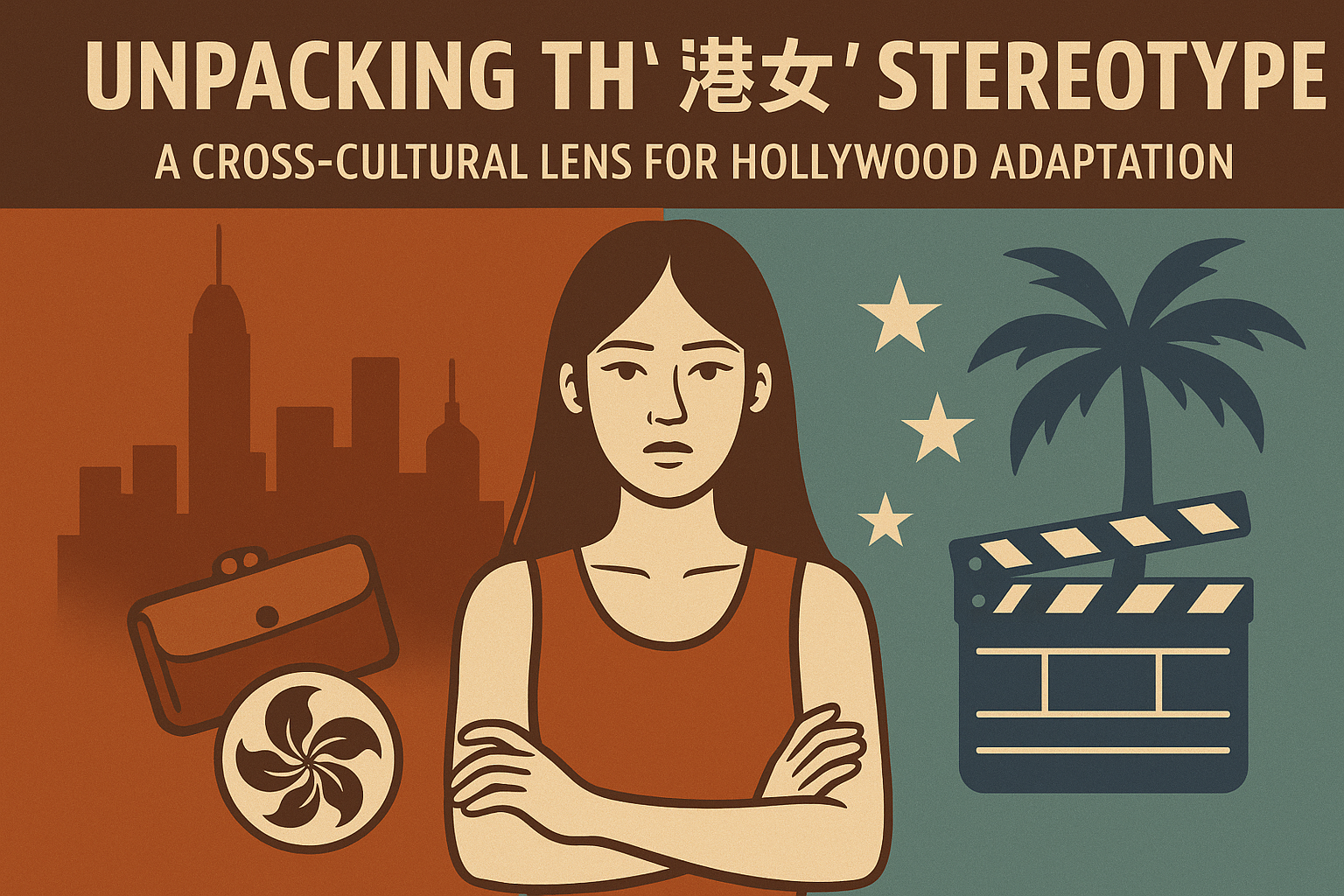

Unpacking the “港女” Stereotype: A Cross-Cultural Lens for Hollywood Adaptation
In the vibrant cultural lexicon of Hong Kong, the term “港女” (gong neui, or “Hong Kong girl”) has emerged as a shorthand for a particular archetype of urban femininity. Coined in online forums and media during the early 2000s, it typically describes young women perceived as materialistic, status-obsessed, and demanding in relationships. These women are often depicted as prioritizing luxury brands, financial security, and social climbing over emotional depth or traditional virtues. While rooted in Hong Kong’s hyper-competitive, consumer-driven society—shaped by its colonial history, economic boom, and dense urban life—the stereotype carries both affectionate and pejorative undertones. Some view it as a celebration of independence and savvy navigation of a capitalist metropolis; others decry it as misogynistic, reducing women to caricatures amid gender tensions.
As a provocative academic, I argue that stereotypes like “港女” are not static relics but dynamic cultural artifacts ripe for reinterpretation. When transplanted to Hollywood, this figure could serve as a bridge—or a battleground—for exploring East-West dynamics. American audiences, accustomed to tropes like the “gold digger” or “ice queen,” might find familiarity in “港女,” yet her adaptation demands nuance to avoid exoticism. Hollywood producers, ever attuned to market trends, could leverage her to tap into the growing appetite for diverse Asian narratives post-Crazy Rich Asians. But how might this character manifest across genres? Below, I outline potential integrations, emphasizing how her traits—ambition, consumerism, and relational pragmatism—could resonate or challenge U.S. viewers.
In romantic comedies, the “港女” archetype aligns seamlessly with the “reformation arc” common in films like Pretty Woman or The Proposal. Imagine a protagonist relocating from Hong Kong to New York, embodying high-maintenance flair: she demands Michelin-star dates, critiques her suitor’s off-brand sneakers, and wields WeChat like a weapon for social leverage. For American audiences, this could humanize her as a product of survival in a cutthroat city, ultimately softening through love’s transformative power. Producers might cast her opposite a bumbling American everyman, highlighting cultural clashes for humor—think her scoffing at casual Fridays or insisting on feng shui in a Brooklyn apartment. This genre’s lightheartedness allows subversion: rather than vilifying her materialism, the story could critique Western individualism, provoking questions about whether her demands reflect empowerment or internalized capitalism.
Shifting to action thrillers, “港女” could evolve into a formidable anti-heroine or ally, echoing characters in Atomic Blonde or John Wick. Her status-driven mindset translates to ruthless efficiency in high-stakes worlds—perhaps as a corporate espionage agent using luxury networks to infiltrate elite circles. Hollywood might portray her navigating triad underworlds or tech conglomerates, her designer wardrobe concealing gadgets and her sharp tongue disarming foes. For U.S. viewers, this interpretation flips the stereotype: her “demanding” nature becomes strategic acumen, challenging the damsel-in-distress trope. Provocatively, it could interrogate global power imbalances—her Hong Kong roots symbolizing resistance to Western hegemony, forcing audiences to confront how Asian women are often exoticized as cunning vixens. Yet, risks abound: without depth, she might reinforce “dragon lady” clichés, underscoring the need for authentic Hong Kong voices in scripting.
Drama offers a more introspective canvas, where “港女” could anchor immigrant tales akin to The Joy Luck Club or Minari. Here, her traits manifest in generational conflicts: a first-generation Hong Kong émigré clashing with American-born children over values like filial piety versus personal ambition. Producers might explore her backstory—fleeing economic pressures or political unrest—revealing materialism as a trauma response. American audiences, amid rising AAPI representation, could empathize with her pursuit of the “American Dream” through luxury as a proxy for stability. This genre provokes by blurring lines between stereotype and reality: is she a victim of societal expectations, or an agent reshaping them? Films could delve into intersectionality, examining how class, race, and gender intersect in diaspora life, potentially earning Oscar nods for nuanced portrayals.
Satirical genres, including dark comedies or mockumentaries like Veep or The White Lotus, provide fertile ground for exaggeration. A “港女” character could lampoon consumer culture, perhaps as a social media influencer in L.A., peddling #LuxuryLife while hiding personal voids. Hollywood might amplify her demands for absurdity—demanding a private jet for a coffee run—mirroring critiques of influencer excess. This approach neutralizes offense by turning the mirror on American materialism, provoking laughter and reflection. For audiences, it demystifies the stereotype, showing it as a universal human folly rather than a cultural quirk.
Finally, in speculative fiction—sci-fi or fantasy like Black Mirror or Westworld—”港女” could symbolize dystopian extremes. Envision her in a cyberpunk Hong Kong-L.A. hybrid, where augmented reality amplifies status games, her traits manifesting as neural implants for social ranking. This genre allows provocative commentary on globalization: her ambition critiques tech-driven inequality, resonating with U.S. fears of economic displacement. Producers could use her to explore identity fluidity, subverting the stereotype by revealing vulnerability beneath the facade.
In conclusion, the “港女” stereotype, when interpreted for Hollywood, offers a prism for examining femininity, culture, and power. Genres from rom-com to sci-fi provide vehicles for adaptation, but success hinges on avoiding reductionism. As an academic provocateur, I contend this could either perpetuate harmful tropes or dismantle them, urging producers to collaborate with Hong Kong creators. Ultimately, such characters might foster cross-cultural dialogue, reminding us that stereotypes are not destinies but invitations to deeper understanding.