
Winter’s Layered Luxuries: An Upper Middle-Class Woman’s Tale from Hong Kong to America
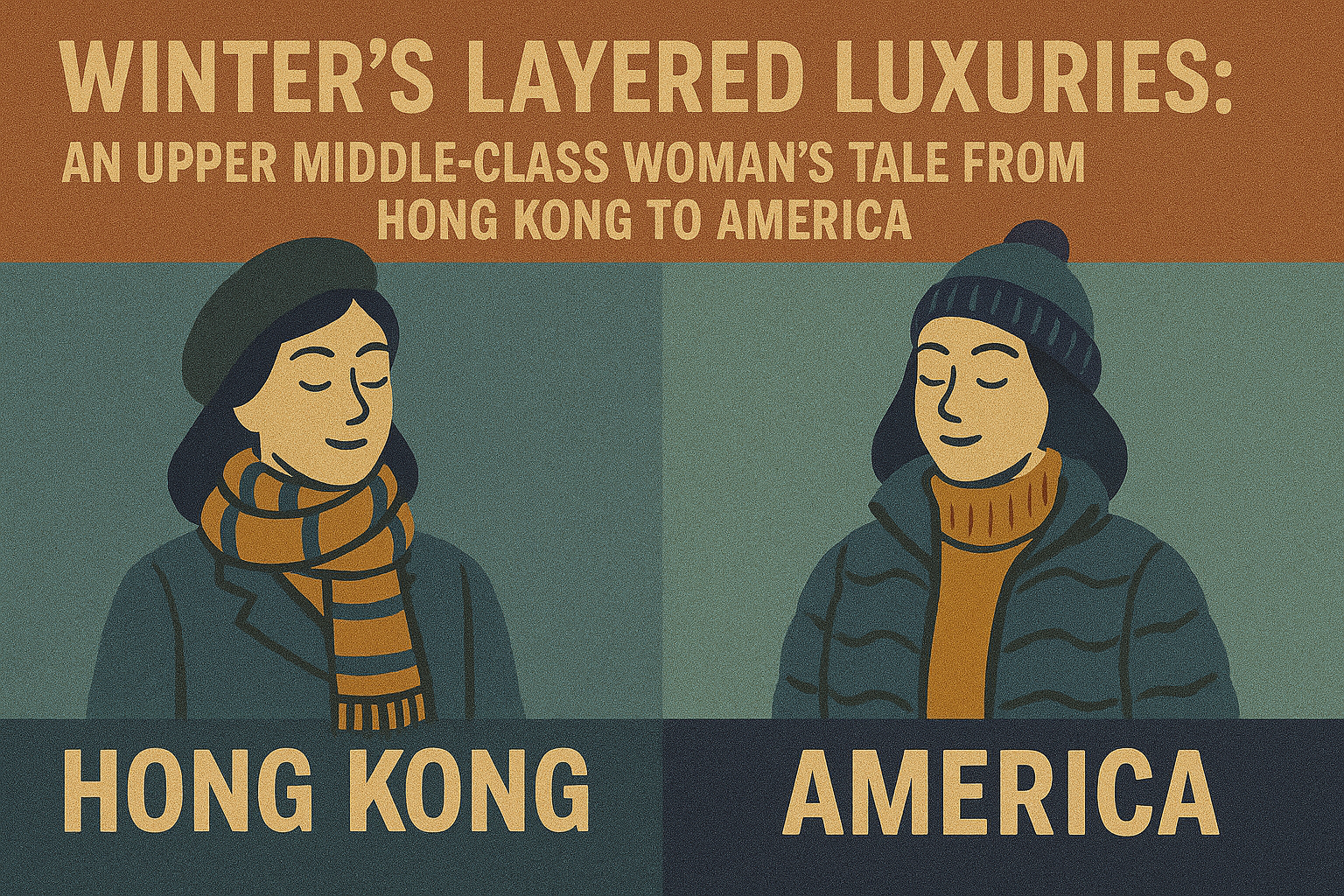
In the glittering mosaic of global winters, the season unfolds as a mirror to privilege, politics, and place. For the average upper middle-class Hong Kong woman—a banker, lawyer, or marketing executive earning HK$60,000-100,000 monthly—winter is a subtle intermission, not a siege. Hong Kong’s subtropical climate delivers mild chills, with averages of 15-20°C (59-68°F) from December to February, rarely dipping below 10°C. No blizzards blanket the city; instead, a crisp breeze sweeps Victoria Harbour, blending humidity with occasional dry spells. She swaps summer linens for layered elegance: cashmere scarves from Lane Crawford, wool-blend coats over silk blouses, and leather boots for urban treks. Comfort reigns—think Moncler puffer vests for weekend hikes, paired with Lululemon leggings, evoking a blend of East-West chic that’s practical yet polished.
Her days pivot around productivity and pleasure. Mornings might involve a Pilates class in Central, followed by office hours in air-conditioned towers. Evenings bring upscale hot pot at trendy spots like Megan’s Kitchen, where premium Wagyu beef and seafood simmer in aromatic broths, shared with colleagues or family. Festivals amplify the vibe: During WinterFest, she sips mulled wine at harbor light shows; Chinese New Year means red envelopes stuffed with cash, lavish dim sum brunches at Lung King Heen, and temple visits in designer cheongsams. Food is communal and nourishing—ginger tea to ward off chills, tangyuan rice balls for Dongzhi solstice sweetness. Travel tempts: a quick flight to Japan’s onsen for “real” cold immersion, or Taiwan’s mountains for foliage sans frostbite. Winter symbolizes renewal—networking at corporate galas, recharging amid neon-lit streets, all while eyeing promotions in a hyper-competitive market.
Contrast this with her American counterpart in the upper middle class—say, a corporate consultant or physician pulling $150,000-300,000 annually. U.S. winters vary wildly: In northern states like New York or Chicago, temperatures plummet to -5°C (23°F) or below, with snowstorms demanding resilience. Southern climes like California offer milder 10-15°C (50-59°F), but the archetype often evokes bundled survival. Clothes adapt harshly: For the Democrat woman, perhaps in Seattle or Boston, it’s eco-conscious Patagonia parkas, merino wool base layers from REI, and vegan leather boots—sustainable choices reflecting progressive values. She might layer ThredUp thrifted finds, prioritizing low-impact fashion amid climate anxiety.
Her winter narrative weaves environmental awareness with holiday indulgence. Food leans diverse and health-focused: organic turkey roasts for Thanksgiving, kale salads with quinoa at potlucks, or vegan pho from fusion spots. Activities include ski weekends in Vermont eco-resorts, virtual book clubs on climate fiction, or volunteering at food banks during blizzards that highlight inequality. Politics infuses it—erratic weather patterns spark discussions on green policies; she might host Friendsgivings with multicultural dishes, emphasizing inclusion. Winter means advocacy: donating to warming centers, or protesting fossil fuels while sipping fair-trade hot cocoa. It’s a season of introspection, balancing career ambitions with social justice, often remote-working through snow days in cozy home offices stocked with Peloton gear.
The Republican upper middle-class American woman, maybe in Dallas suburbs or Denver, frames winter through tradition and self-reliance. In colder Midwest or Rocky Mountain regions, she battles similar sub-zero snaps but with a grit mindset—rejecting “alarmist” climate narratives as natural cycles. Clothing is classic and durable: Barbour waxed jackets, Hunter wellies for slush, and cashmere sweaters from Brooks Brothers, layered over J.Crew chinos. Practicality meets patriotism—red plaid scarves for holiday flair.
Food evokes heritage: Hearty beef stews, apple pies from family recipes, or smoked brisket at Super Bowl parties. Activities center on community: Church-hosted cookie swaps, ice fishing trips with the family, or hunting excursions in snowy woods, fostering bonds. Holidays like Christmas amplify this—elaborate light displays, nativity scenes, and charitable giving to local causes. She might escape to Aspen chalets for skiing, networking with like-minded professionals, or host conservative book groups on American exceptionalism. Winter represents endurance: Shoveling driveways builds character; economic stability allows for charitable galas or private school fundraisers. Politics colors perceptions—dismissing Democrat “doom-mongering” on warming winters, focusing instead on family values amid the chill.
These divergences—HK’s mild, festive efficiency versus America’s polarized, weather-whipped resilience—highlight how climate shapes identity. HK’s woman navigates subtle shifts with urban sophistication; her U.S. peers contend with extremes, their responses filtered through blue-red lenses. Food bridges yet divides: HK’s steaming communal pots versus U.S. partisan plates—Democrats’ global fusions, Republicans’ rooted comforts. Clothes signal status universally, but HK favors lightweight luxury while America demands insulated armor.
Hollywood could harvest these insights for compelling narratives. Envision a thriller where a HK executive, fleeing corporate intrigue, lands in a snowy U.S. Midwest town, clashing with a Republican counterpart over survival ethics—her silk scarves useless against blizzards, sparking romance amid cultural friction. Or a dramedy pitting a Democrat Angeleno against her HK sister-in-law during a family reunion, debating climate over hybrid hot pot-turkey feasts, exposing class hypocrisies. These stories shatter tropes: No more generic “Asian winters” as exotic backdrops; instead, authentic tales of privileged women grappling with seasonal metaphors for global divides, turning mild chills into metaphors for emotional isolation or political thaw.
As a cultural consultant, these findings become career gold. Advising studios on scripts, I’d ensure HK winters aren’t snow-washed into American clichés—guiding wardrobe teams on realistic layers, food stylists on authentic tangyuan, and writers on nuanced politics. For a Netflix series, I’d dissect how a Democrat’s eco-anxiety contrasts a HKer’s pragmatic festivity, fostering inclusive storytelling. This role demands objectivity: Researching via ethnographies, interviewing expats, and bridging East-West gaps to craft hits that resonate globally. In Tinseltown’s echo chamber, such expertise prevents cultural blunders, elevating projects from stereotypical fluff to provocative mirrors of our stratified world. Ultimately, winter’s tales remind us: Seasons may differ, but human ambitions endure.