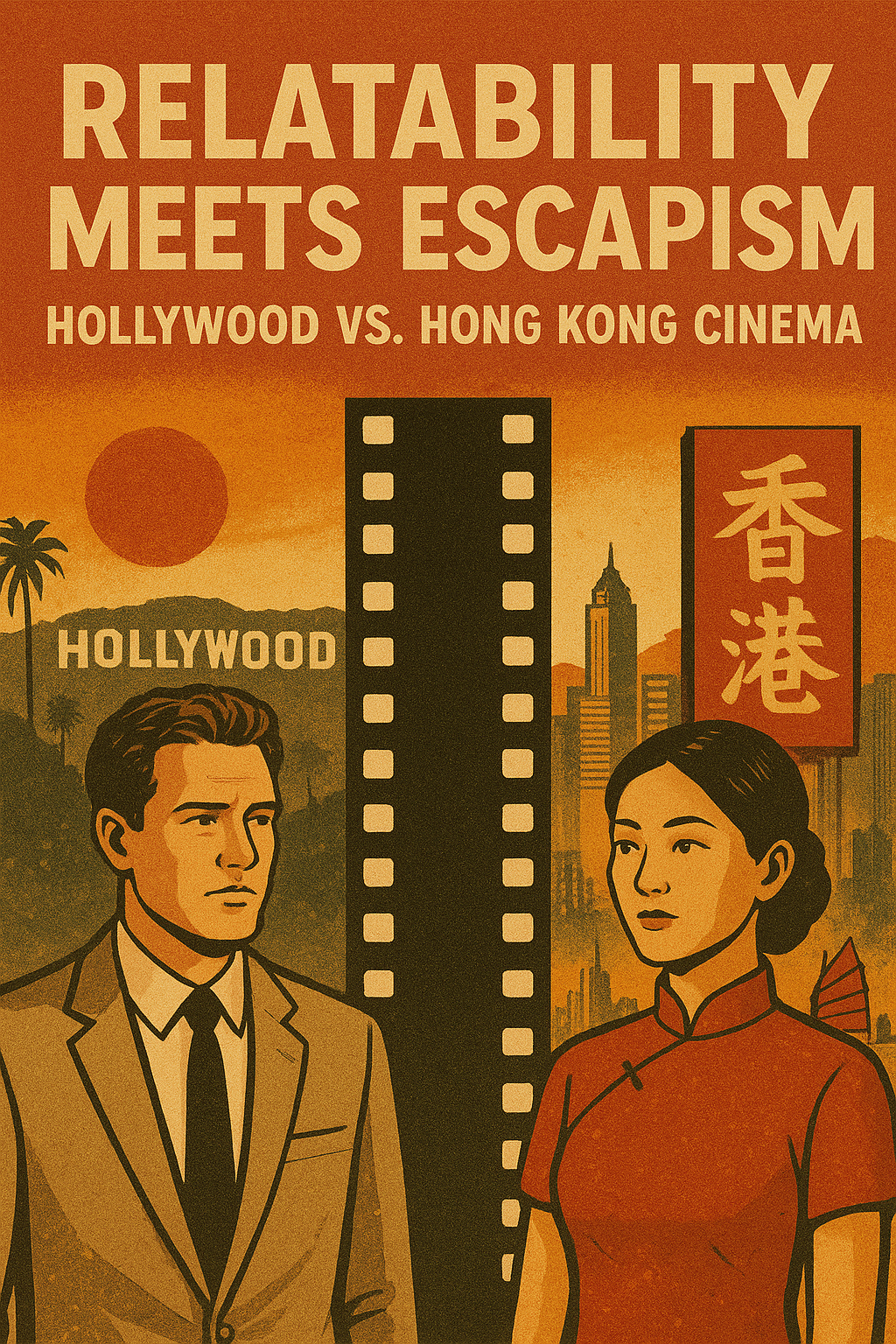

Relatability Meets Escapism: Hollywood vs. Hong Kong Cinema
In the global entertainment landscape, Hollywood and Hong Kong cinema represent two distinct approaches to storytelling and audience engagement. Hollywood, as the dominant force in Western film, has increasingly emphasized relatability and representation, aiming to mirror diverse real-world experiences on screen. This shift is evident in initiatives focused on diversity, equity, and inclusion (DEI), which prioritize casting actors from underrepresented backgrounds to foster authenticity and broader appeal. In contrast, Hong Kong cinema often leans toward escapism, crafting narratives that transport viewers into idealized worlds populated by characters embodying physical fitness and conventional attractiveness. As a Hong Konger serving as a cultural consultant in Hollywood, I observe these ideologies not as opposites but as complementary, with potential for cross-pollination to enrich storytelling. This analysis explores these philosophies factually, drawing on industry trends and examples.
Hollywood’s ideology centers on relatability, where films serve as a reflection of societal diversity rather than pure fantasy. Following social movements like Black Lives Matter, major studios and agencies committed significant resources to DEI programs, donating millions to anti-racist organizations and establishing internal benchmarks to promote inclusive hiring. These efforts include pipeline programs designed to provide opportunities for emerging writers, directors, and actors from marginalized groups, often prioritizing lived experiences over traditional star qualities. For instance, Universal Pictures launched initiatives to identify and support talent from underrepresented communities, reinforcing a commitment to authentic representation. Data from 2024 shows that actors of color held 25.2% of lead roles in top theatrical films, a figure that, while down from 29.2% in 2023, underscores ongoing efforts to diversify casts.
A notable example of this approach is the casting of Simu Liu as the lead in Marvel’s Shang-Chi and the Legend of the Ten Rings (2021). Liu, known for his everyman persona and relatable charm, was selected over other contenders, including Lewis Tan, who has a strong martial arts background and is often perceived as fitting more conventional standards of attractiveness. Tan, who later starred in Mortal Kombat, expressed disappointment but acknowledged Liu as a friend and praised his performance. Liu’s selection aligned with Hollywood’s push for representation, portraying an Asian lead as approachable and grounded, challenging stereotypes of Asian masculinity in pop culture. This choice sparked discussions, with some critiquing Liu’s appearance as less “charismatic” or idealized, yet it highlighted the industry’s preference for actors who embody everyday relatability over unattainable perfection. Such decisions aim to make characters more accessible, encouraging audiences to see themselves in stories that address real social issues.
Hong Kong cinema, by comparison, maintains a strong tradition of escapism, where films offer respite from daily life through high-energy narratives, elaborate action sequences, and visually striking characters. Rooted in the city’s blend of Eastern and Western influences, HK films often prioritize entertainment value, with themes of heroism, romance, and adventure designed to captivate and uplift. Actors and actresses are typically encouraged to maintain fitness and conform to conventional beauty standards, enhancing the fantastical appeal. Content analysis of Chinese films, including those from Hong Kong, reveals that female characters are more likely to be depicted as young, sexualized, and aligned with idealized images, while male leads embody strength and allure. Stars like Jackie Chan, Jet Li, and Maggie Cheung exemplify this: Chan’s acrobatic prowess and Li’s martial expertise provide escapist thrills, often in stories that transcend reality. The industry’s evolution from the 1950s musicals, which hybridized Hollywood genres with Chinese cultural elements, further emphasizes glamour through stylized appearances and performances. This focus on physical ideals supports narratives that allow viewers to escape into worlds of beauty and excitement, reflecting Hong Kong’s historical role as a hub of popular Asian entertainment.
These differing ideologies stem from cultural contexts: Hollywood’s relatability responds to demands for social equity in a diverse society, while Hong Kong’s escapism draws from a fast-paced urban environment where cinema provides relief. However, recent trends show Hollywood retreating from some DEI efforts amid external pressures, suggesting a potential convergence or reevaluation.
As a Hong Konger cultural consultant in Hollywood, I advocate applying HK elements to enhance storytelling without compromising representation. For example, incorporating Hong Kong’s signature fast-paced action and family-centric themes—seen in films like Infernal Affairs or Kung Fu Hustle—can add dynamism to Hollywood narratives. Hollywood has already integrated Chinese kung fu and folk customs in productions like Shang-Chi, shifting from stereotypes to positive inclusion. By blending HK’s escapist flair, such as elaborate fight choreography and humor, with relatable characters, films can achieve broader appeal. This hybrid approach, evident in remakes adapting Hollywood stories with Asian cultural nuances, fosters innovation. Hong Kong’s unique East-West fusion offers Hollywood tools to create stories that are both representative and entertaining, leveraging creativity to bridge global audiences.
In summary, Hollywood’s emphasis on relatability through DEI contrasts with Hong Kong’s escapist ideals, yet both serve vital roles in entertainment. By thoughtfully integrating HK cultural elements like action-driven plots and visual spectacle into Hollywood’s framework, the industry can evolve toward more inclusive and engaging content. This balanced perspective highlights opportunities for mutual growth in a connected world.