Echoes of Opulence: Inside Hong Kong’s Upper Echelons
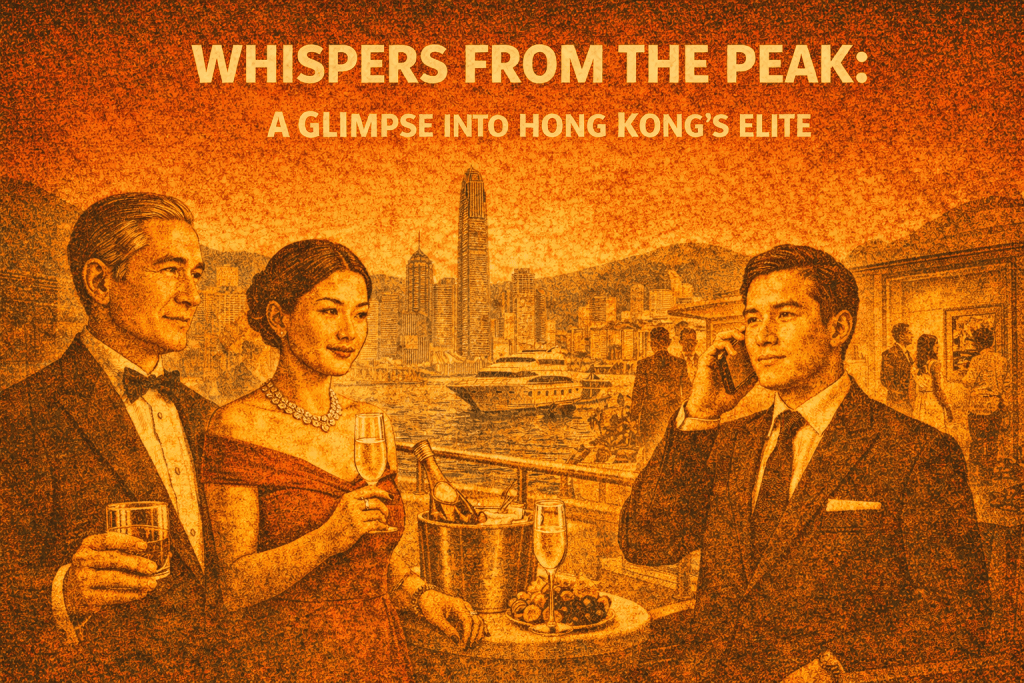
As a member of Hong Kong’s upper class, I navigate a world where legacy and luxury intertwine seamlessly. My family embodies the blend of tradition and modernity that defines this elite stratum. We adhere to Chinese folk religion, a syncretic practice incorporating ancestor worship, geomancy, and Taoist-Buddhist elements, while maintaining membership in a Buddha Hall in Tin Hau—a serene space dedicated to Amitābha in a private residence. This personal lens allows me to dissect the realities of our society, drawing parallels to Kevin Kwan’s “Crazy Rich Asians” trilogy, which satirizes Asian affluence but harbors authentic insights. Here, I extract those kernels relevant to Hong Kong and propose how Hollywood might evolve its narratives.
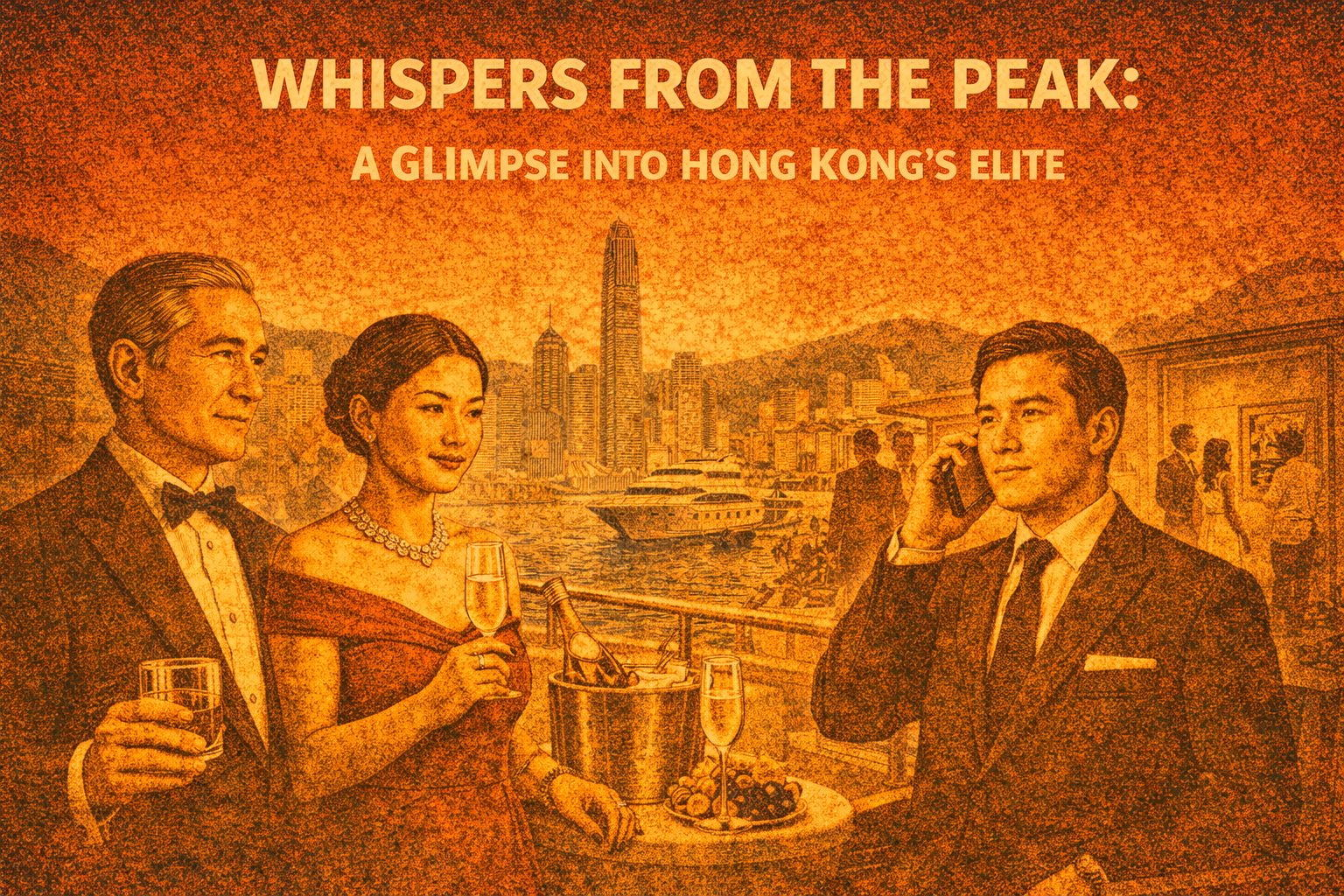
Hong Kong’s upper class is characterized by concentrated wealth, often derived from real estate tycoons and financial magnates who control vast portfolios. Properties in exclusive areas like The Peak or Deep Water Bay scream status—sprawling homes with private lifts and panoramic views over the harbor, far removed from the city’s dense urban core. This isn’t mere ostentation; it’s a practical assertion of power in a land-scarce environment where government-leased plots generate immense revenue. Socially, the elite orbit private clubs, philanthropy events, and international networks, blending local ties with global influence. High incomes, low taxes, and domestic help enable a lifestyle of efficiency and leisure, though it perpetuates stark inequalities—average growth post-1997 Handover has been moderate at 3.1%, yet wealth accrues disproportionately to the top. Urban-centric and cosmopolitan, this class values education and job security, but beneath the polish lies a rigid hierarchy: old money families prioritize lineage over nouveau riche flashiness, though even new money entrants like mine, built through my father’s successful legal career and ongoing entrepreneurial efforts in finance and property, adopt a low-key, understated lifestyle.
Religion plays an understated yet pivotal role, often overlooked in portrayals of Asian elites. Chinese folk religion, prevalent among Hong Kong’s upper echelons, emphasizes ancestor veneration, ghost beliefs, and feng shui to harmonize human and natural realms. My family’s practices include seasonal rituals at ancestral altars and consultations with geomancers for business decisions, reflecting a broader syncretism with Confucianism, Taoism, and Buddhism. The Buddha Hall in Tin Hau—a Chan Buddhist space dedicated to Amitābha within a monk’s private residence—serves as a communal anchor for people from various walks of life acquainted with the monk, blending devotion with networking. This isn’t superstition; it’s a rational framework for navigating uncertainty in a high-stakes environment, where spiritual balance underpins material success. Provocatively, one might question if this fusion masks deeper existential voids amid relentless ambition, yet it objectively sustains cultural continuity in a globalized city.
Kevin Kwan’s trilogy—”Crazy Rich Asians,” “China Rich Girlfriend,” and “Rich People Problems”—satirizes Singapore’s ultra-wealthy but mirrors Hong Kong’s realities through its depiction of familial intrigues and social exclusivity. The narrative centers on Rachel Chu, an outsider thrust into Nick Young’s elite world, exposing gossip, backbiting, and scheming among pedigreed families. Kernels of truth resonate: the emphasis on old money versus new, where established clans guard their status through arranged alliances and disdain for “gold diggers.” Extravagant weddings, like the one in the first book, echo Hong Kong’s opulent affairs at harbor-front venues, symbolizing not just celebration but power consolidation. Family dynamics—matriarchal control, inheritance battles in “Rich People Problems”—parallel Hong Kong tycoon sagas, where generational wealth transfers involve intricate trusts and rivalries. Materialism shines through in lavish lifestyles: private jets, designer obsessions, and exclusive enclaves, much like Hong Kong’s Peak residences. Cultural parallels between Singapore and Hong Kong amplify this—both are financial hubs with low taxes, high GDP per capita, and British colonial legacies, fostering similar elite ecosystems of scarcity-driven ambition and expat integration. Yet, the trilogy’s satire provokes: does such wealth breed isolation, reducing relationships to transactions?
Hollywood, having adapted the first book successfully, could deepen future projects by incorporating these authentic elements without caricature. Shift from rom-com gloss to nuanced dramas exploring inequality’s toll—perhaps a series delving into inheritance wars amid economic shifts, highlighting how folk religious practices influence decisions, like geomancy in property deals. Introduce characters from blended spiritual backgrounds, such as a protagonist navigating Buddha Hall rituals while managing a fintech empire, to add depth beyond materialism. Draw from Hong Kong’s unique post-Handover context: stories of elites balancing Beijing ties with global freedoms, questioning loyalty and identity. To avoid stereotypes, collaborate with local writers for authenticity, representing old-new money tensions and philanthropy as social currency. Provocatively, this could challenge viewers: is ultra-wealth a pinnacle or a prison? Such narratives would enrich Hollywood’s Asian portrayals, fostering cross-cultural understanding in an era of rising global elites.
In dissecting my world, the provocation lies in its contradictions—immense privilege amid societal divides, spiritual depth masking ambition. Yet, objectively, Hong Kong’s upper class drives innovation and resilience, a microcosm of Asia’s ascent.