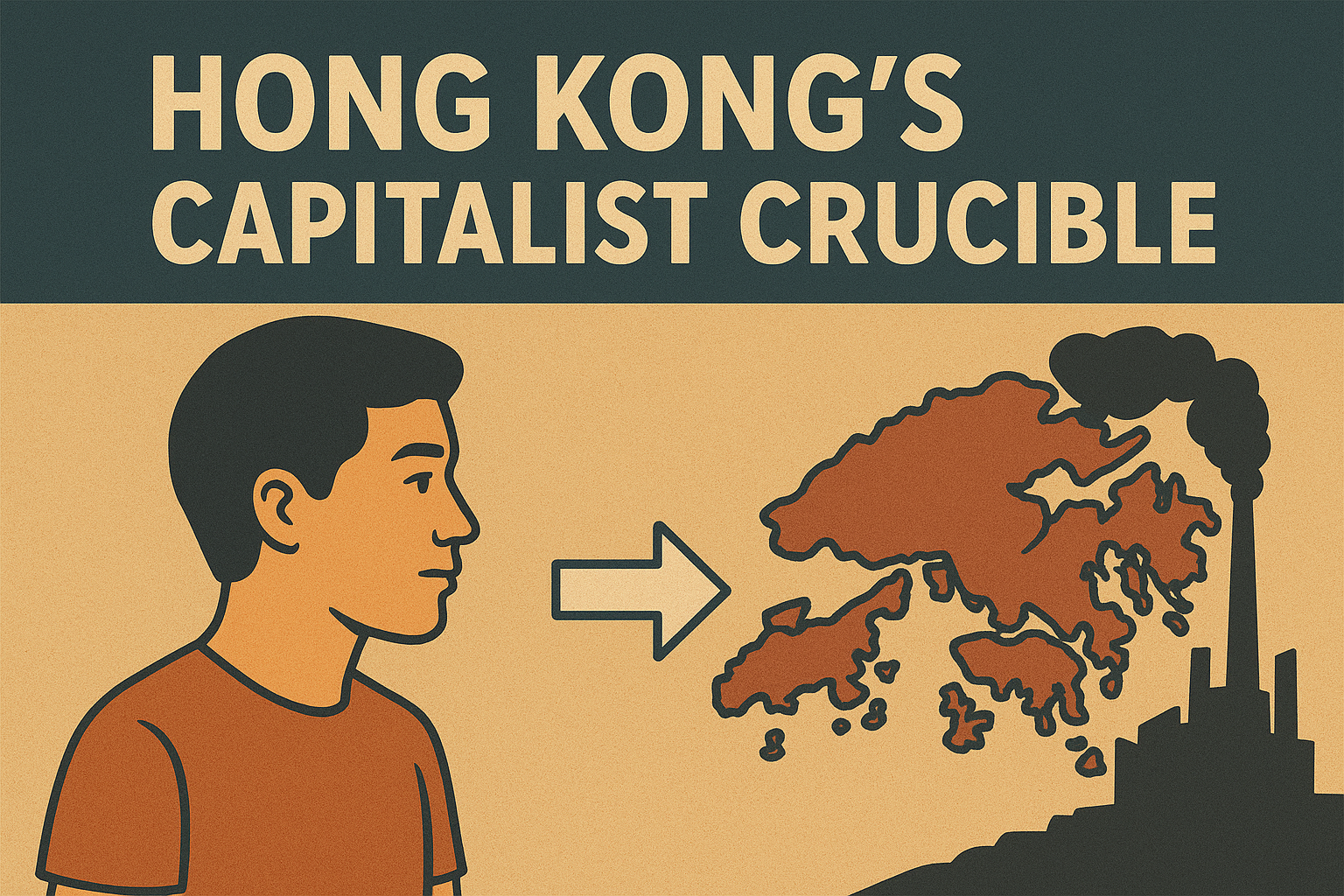
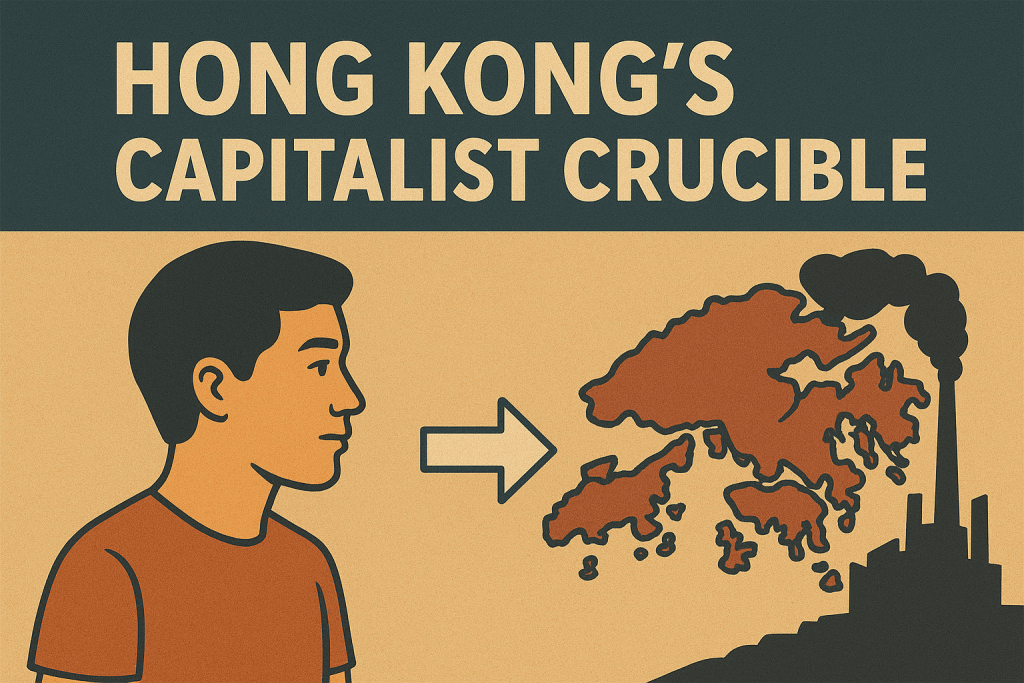
Hong Kong’s Capitalist Crucible
As I wandered through Possession Point, the unassuming site where British forces first planted their flag in 1841, the weight of history felt palpable. This modest waterfront, now overshadowed by modern skyscrapers, marks the genesis of Hong Kong’s colonial era. Nearby, Tai Kwun—a former prison, police station, and magistracy complex—stands as a restored testament to the enforcement of imperial order. Yet it was the Hong Kong Maritime Museum, with its vivid exhibits on seafaring trade routes and opium clippers, that crystallized the city’s intricate bond with capitalism and commerce. Hong Kong emerged not merely as a spoil of the Opium Wars but as a pivot in global trade dynamics, where economic imperatives clashed with sovereignty and morality.
The Opium Wars (1839–1842 and 1856–1860) are often framed as conflicts over narcotics, but at their core, they were trade disputes. The British Empire, facing a severe silver drain from its tea imports from Qing China, sought to balance the ledger by exporting opium grown in India. When Qing officials resisted, destroying opium stockpiles in Canton, Britain responded with military force, culminating in the cession of Hong Kong under the Treaty of Nanking. This narrative underscores a philosophical tension: capitalism’s relentless pursuit of efficiency and profit often overrides ethical boundaries, transforming trade into a tool of coercion. As philosopher Adam Smith might observe, the “invisible hand” of the market can wield visible swords when imbalances threaten accumulation.
This historical entanglement profoundly shapes Hong Kong’s culture, embedding a pragmatic ethos of adaptability and enterprise. From its inception as a barren rock, as Lord Palmerston dismissively called it, Hong Kong evolved into a free port, exempt from tariffs and open to all traders. This laissez-faire foundation fostered a society where commerce is not just an activity but a cultural imperative. Cantonese merchants, blending Confucian values of diligence with Western mercantilism, created a hybrid vigor evident in the city’s bustling wet markets, stock exchange, and entrepreneurial startups. The Maritime Museum’s displays of junks alongside British steamships illustrate this synthesis: trade routes that once carried silk and spices now underpin a global financial hub.
Philosophically, Hong Kong embodies Hegelian dialectics—the thesis of imperial imposition meeting the antithesis of local resilience, yielding a synthesis of hyper-capitalism. The city’s residents, or Hongkongers, navigate this legacy with a stoic pragmatism, viewing economic freedom as both a colonial inheritance and a bulwark against uncertainty. This is seen in cultural artifacts like the annual Dragon Boat Festival, which honors ancient maritime traditions while symbolizing competitive unity in a trade-driven society. Tai Kwun’s transformation from a site of colonial justice to a cultural center reflects a cultural reappropriation, where history is commodified for tourism, further entrenching capitalism’s narrative. Yet this influence is double-edged: while it promotes innovation and wealth, it also exacerbates inequalities, as evidenced by the city’s stark wealth gaps and housing crises. In Aristotelian terms, Hong Kong pursues eudaimonia—human flourishing—through economic virtue, but at the risk of reducing human relations to transactional exchanges.
Neutral observers must acknowledge that this capitalist imprint has enabled Hong Kong’s ascent as Asia’s world city, attracting global talent and investment. However, it stems from an unequal power dynamic, where trade wars masked as moral crusades reshaped destinies. The Opium Wars’ legacy ties into broader philosophical debates on free trade versus protectionism, echoing John Stuart Mill’s advocacy for liberty while critiquing utilitarian excesses that justify exploitation.
Extending this conclusion to Hollywood narratives offers fertile ground for storytelling. Hollywood often romanticizes or critiques capitalism through tales of empire and ambition, much like Hong Kong’s saga. Consider films such as The Opium War (1997), which dramatizes the conflicts, or more broadly, Pirates of the Caribbean series, where trade routes devolve into high-seas adventures blending commerce with conquest. A Hong Kong-inspired plot could explore a protagonist—a modern trader or historian—uncovering family ties to the opium trade, grappling with inherited wealth’s moral ambiguities. This mirrors There Will Be Blood (2007), where oil barons embody unchecked capitalism, or The Wolf of Wall Street (2013), dissecting excess in financial hubs.
Philosophically, such stories could apply Hong Kong’s lessons to examine how trade shapes identity. A narrative arc might follow a character’s Hegelian journey: from colonial victimhood to capitalist empowerment, culminating in ethical reckoning. Hollywood could draw parallels to contemporary trade wars, like U.S.-China tariffs, portraying characters navigating global supply chains amid geopolitical tensions. Films like Margin Call (2011) already echo this, showing how economic imbalances precipitate crises. By applying Hong Kong’s history, screenwriters could craft unbiased explorations of capitalism’s dual nature—innovative yet invasive—encouraging audiences to question whether trade liberates or subjugates.
In essence, Hong Kong’s relationship with capitalism and trade is a philosophical mosaic: forged in conflict, refined through adaptation, and perpetually evolving. Its cultural fabric, woven from imperial threads, offers timeless insights for both real-world economies and cinematic fables.