Hong Kong’s Hidden Hierarchies: Part 3 – Clubs, Couture, and Curated Pursuits
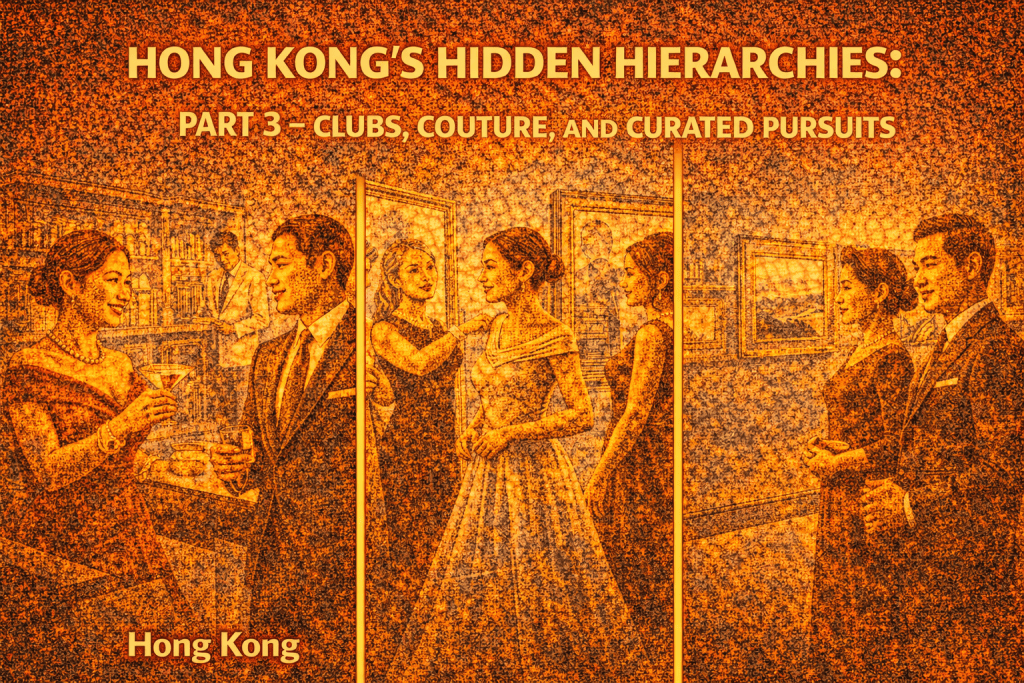
As I wrap up this three-part exploration into Hong Kong’s distinctive status symbols, I turn my attention to the intangible yet profoundly telling markers of elite standing. In the first part, we examined the prestige of luxury vehicles and coveted license plates; the second delved into prime addresses that whisper of inherited wealth and strategic positioning. Now, in this final installment, I focus on membership in exclusive private clubs, the artistry of bespoke tailoring, and the orchestration of personalized experiences. These elements are woven into the fabric of Hong Kong’s upper echelons, reflecting a blend of colonial legacies, cultural resilience, and modern affluence. Unlike broader global symbols, these are uniquely shaped by Hong Kong’s history as a British colony and its evolution into a financial powerhouse, where access and exclusivity define social capital.
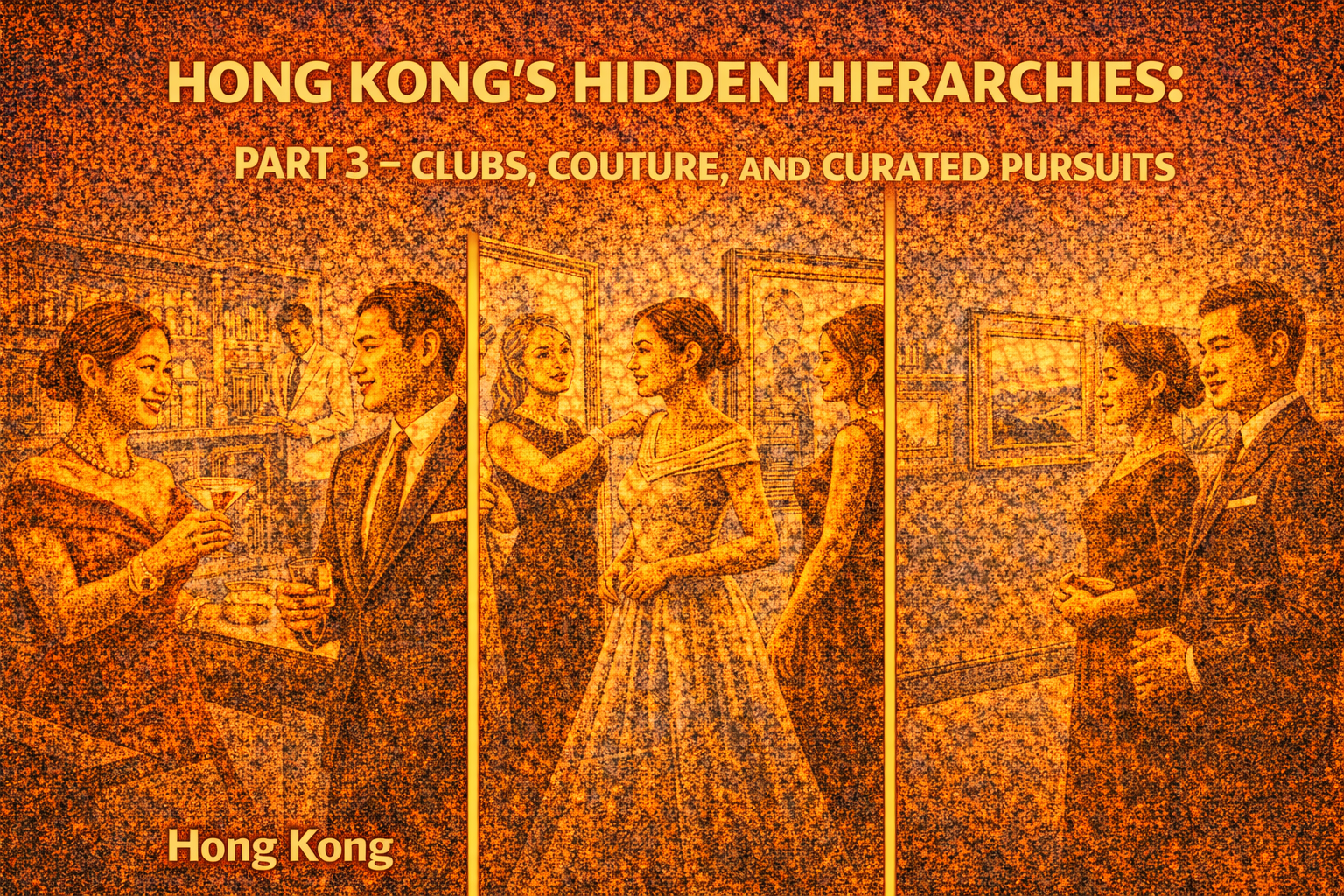
Let’s start with private clubs, which serve as sanctuaries for the city’s power brokers. The Hong Kong Club, established in 1846, stands as a prime example. Historically, it embodied colonial exclusivity, barring Han Chinese residents until the mid-20th century—a policy that mirrored the era’s racial hierarchies. Today, membership is no longer overtly restricted by ethnicity, but it remains a rarified domain, requiring nominations from existing members and often a demonstration of substantial influence or wealth. Admission isn’t just about paying dues; it’s a vetting process that assesses one’s network and contributions to Hong Kong’s business landscape. For the upper class, belonging to such a club signals not merely affluence but a place in the continuum of the city’s elite history. It’s where deals are sealed over afternoon tea in wood-paneled rooms overlooking Victoria Harbour, reinforcing bonds among tycoons, expatriate executives, and local magnates. Other clubs, like the Royal Hong Kong Yacht Club or the Jockey Club, carry similar weight, each with its own niche—maritime prestige or equestrian pursuits—that aligns with Hong Kong’s identity as a global trading hub and leisure enclave for the wealthy.
This exclusivity extends to bespoke tailoring, a craft that elevates personal style into a statement of discernment. In Hong Kong, tailors along Nathan Road or in hidden ateliers in Central craft suits and garments that are far more than clothing; they are personalized emblems of status. Drawing from a tradition influenced by Savile Row but adapted to local tastes, these pieces incorporate subtle details like custom linings embroidered with family crests or fabrics sourced from rare mills. For the upper class, commissioning a bespoke wardrobe isn’t a luxury—it’s a ritual. It reflects an appreciation for precision and heritage, often passed down through generations. A well-tailored cheongsam or a double-breasted suit from a master like those in the Peninsula Arcade isn’t flashy; it’s understated elegance that distinguishes the truly refined from the nouveau riche. This practice ties into Hong Kong’s role as a crossroads of East and West, where tailoring blends British formality with Cantonese subtlety, creating attire that fits seamlessly into boardrooms or high-society galas.
Complementing these are curated experiences, which represent the pinnacle of personalized luxury. Hong Kong’s elite don’t settle for off-the-shelf adventures; they commission bespoke journeys that underscore their unique position. This might involve a private helicopter tour of the New Territories, arranged through exclusive concierges, or a tailored culinary expedition led by a Michelin-starred chef in a secluded villa. Such experiences are often facilitated by networks within private clubs or high-end hotels like the Mandarin Oriental, where discretion is paramount. They highlight a cultural emphasis on guanxi—relationships—and the value placed on intangible assets like time and privacy in a densely populated city.
For the upper crust, these pursuits aren’t about ostentation but about crafting narratives of sophistication, from yacht charters in the South China Sea to invitation-only art viewings at hidden galleries. They embody Hong Kong’s fusion of tradition and innovation, where ancient feng shui principles might inform a custom wellness retreat, blending old-world wisdom with contemporary opulence.
For Hollywood filmmakers seeking to authentically portray Hong Kong’s upper class, incorporating these symbols can add layers of cultural depth. Imagine a thriller where a protagonist’s entry into the Hong Kong Club reveals a web of colonial-era secrets, emphasizing how such venues perpetuate subtle power dynamics in a post-handover society. This fits culturally by showing the club’s role as a neutral ground for East-West negotiations, mirroring real-life business intricacies. In a drama, a character’s bespoke tailoring session could symbolize their ascent or internal conflict, highlighting the meticulous craftsmanship that resonates with Hong Kong’s artisanal heritage—provoking viewers to consider themes of identity and adaptation without Americanizing the narrative. For experiences, a scene depicting a curated yacht soiree could illustrate the elite’s insulated world, where conversations flow amid harbor lights, underscoring guanxi’s influence on plot twists. These elements avoid clichés, instead grounding stories in Hong Kong’s specific socio-economic tapestry, where status is earned through quiet networks rather than overt displays.
In reflecting on this series, I’ve aimed to illuminate how these symbols—vehicles, addresses, clubs, couture, and experiences—form a mosaic of Hong Kong’s elite identity. They provoke thought on social stratification while remaining grounded in observable realities. As Hong Kong navigates its future, these markers endure, subtly shaping the city’s narrative of ambition and exclusivity.