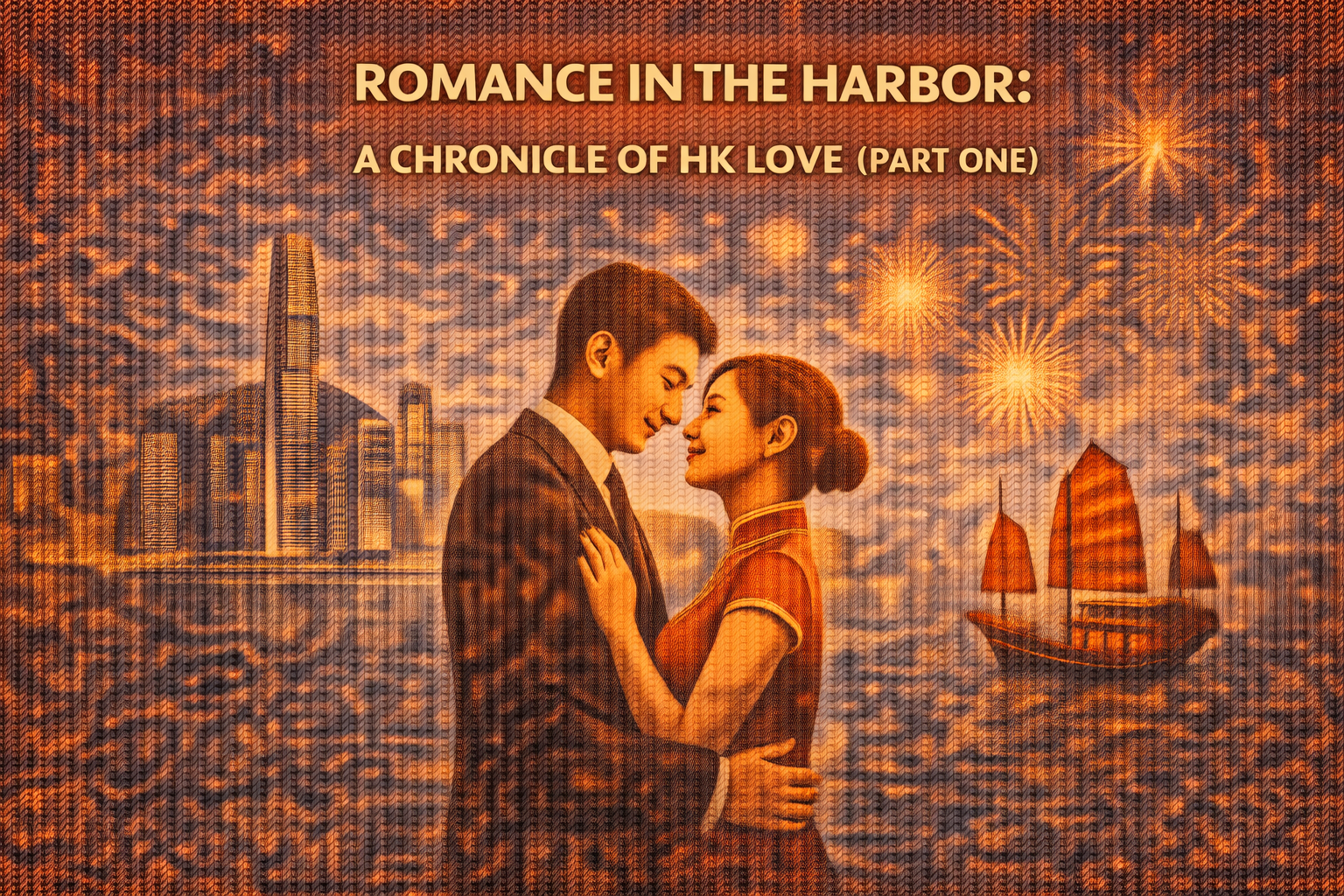
Romance in the Harbor: A Chronicle of HK Love (Part One)
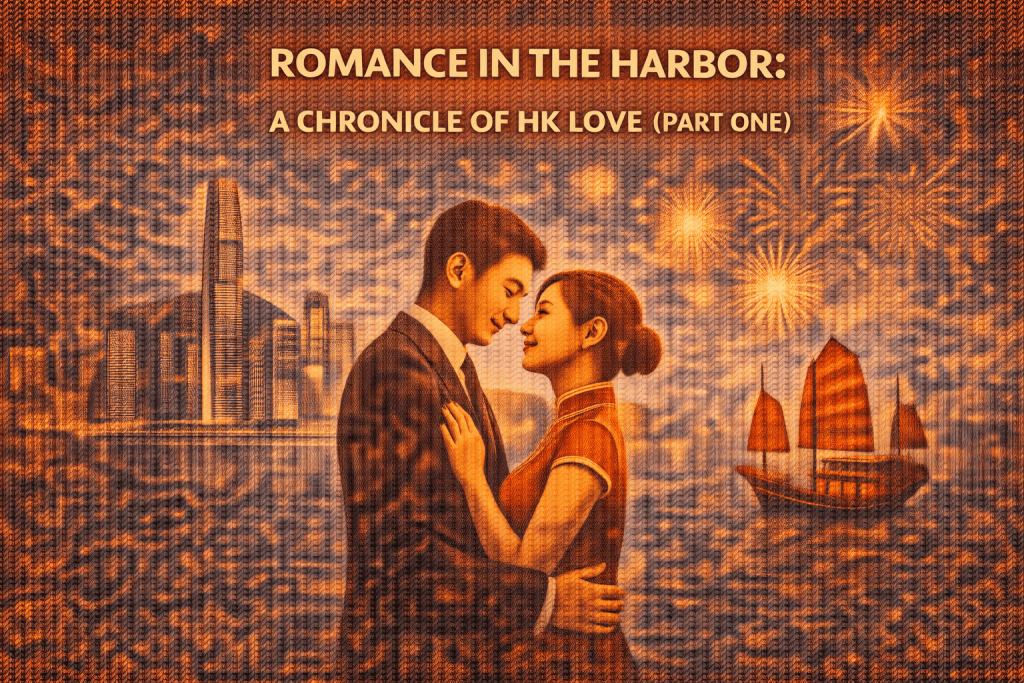
It is February, a specific designation in the calendar that compels the collective human consciousness toward the concept of affection. As we approach St. Valentine’s Day, it becomes necessary to observe how love operates within the dense, vertical topography of Hong Kong. However, to understand the present, one must examine the architecture of the past. History acts as the blueprint for current behavior, and nowhere is this more evident than in the romantic traditions of this territory. This entry marks the beginning of a nine-part inquiry into the phenomenon of love in Hong Kong. We shall proceed methodically. This first installment concerns the historical Cantonese celebrations of love. Following this, we will analyze contemporary Cantonese practices, historical Western influences, modern Western iterations, and the unique habits of the local upper class. We will then transition into the influence of cinema and Cantopop, the specific geography of courtship in public spaces, and the complex history of cross-cultural unions, before concluding our study in the final entry.
To observe the historical Han Chinese population in Hong Kong—predominantly Cantonese linguistically and culturally—is to observe a society where romance was not traditionally a public spectacle. In the 19th and early 20th centuries, particularly within the walled villages of the New Territories or the boat communities of Aberdeen, affection was a pragmatic matter. It was about survival, lineage, and the stability of the clan. The Western concept of “dating,” characterized by recreational courtship, was largely absent. Unions were governed by the San Shu Liu Li—the Three Letters and Six Etiquettes. Marriage was a contract between families, negotiated by matchmakers, where love was not a prerequisite but a hopeful outcome of duty. It was a slow-burning cultivation rather than a spontaneous combustion of emotion.
Despite this rigid social structure, it would be inaccurate to claim that romance did not exist. It was simply codified differently, utilizing specific festivals as authorized outlets for interaction. The primary vehicle for this was Yuanxiao, celebrated on the 15th day of the Lunar New Year. Historically, respectable Cantonese women, particularly those from wealthy households, were confined to the domestic sphere, restricted from walking the streets unchaperoned. Yuanxiao was the anomaly. Under the cover of the first full moon of the year, curfews were relaxed, and women were permitted to walk outdoors to view lantern displays. This night functioned as a de facto Valentine’s Day. It allowed young men and women to see one another—a rare visual exchange in a segregated society. The interactions were subtle; a glance exchanged near a temple, the solving of riddles written on paper lanterns, or a poem composed on the spot represented the height of flirtation. It was a time of immense possibility, fueled by the transient freedom of the night.
While Yuanxiao offered a chance for interaction, the Qixi Festival, or the Double Seventh, provided a more introspective, spiritual avenue for romance. Rooted in the celestial legend of the Cowherd and the Weaver Girl—lovers separated by the Milky Way and permitted to meet only once a year—this day held profound significance for unmarried Cantonese women. In old Hong Kong, this was not a day for couples to dine in restaurants. It was a day for women to demonstrate domestic proficiency. They would display intricate needlework and carve melons into elaborate shapes to prove their suitability as wives. They prayed to the Weaver Girl for wisdom, skill, and, crucially, a good husband. The atmosphere was one of solemn hope rather than celebration. There is a specific geographic nuance to this practice in Hong Kong: the worship of the Seven Sisters. The Lovers’ Rock on Bowen Road stands as a geological testament to this tradition. Historically, women would ascend the hill to burn incense and pray to the rock for fertility and happy marriages. Unlike the broader traditions of the mainland, the Hong Kong iteration of these rituals was often infused with local superstition and distinct folklore related to the landscape itself.
The exchange of affection in this era was equally tangible and understated. In the absence of digital communication, physical objects carried the weight of emotion. A lover did not give ephemeral gifts like flowers or chocolates; they gave durable tokens. A comb was a significant gift, symbolizing the phrase Bai Tou Xie Lao—growing old together until the hair turns white. Red beans were also symbolic of longing and remembrance. These interactions were quiet and restrained, defined by what was not said and by the dutiful fulfillment of roles within the family structure.
The narrative potential of these historical practices offers a rich vein of inspiration for the Hollywood film industry, which currently tends to depict Hong Kong through the tropes of high-tech espionage or triad violence. A production company could pivot to historical drama, focusing on the visual tension of the Yuanxiao festival during the late Qing or early colonial period. The cinematic contrast of bright, chaotic lantern light against the rigid, shadowed social restrictions provides a compelling texture for a story about forbidden love. A script could be built around the silence of the exchange—where a look or a dropped handkerchief carries the stakes of a life-or-death decision, offering a drama of restraint distinct from Western grand gestures. Furthermore, the mythology of the Seven Sisters and the Weaver Girl offers fertile ground for the fantasy or sci-fi genre. Rather than recycling European fairy tales, a studio could adapt the celestial separation of the Cowherd and Weaver Girl into a high-concept narrative, utilizing the Lovers’ Rock as a tangible, mystical anchor point. Even the prop departments could find inspiration in the symbolism of the comb or red bean, utilizing these objects as narrative keys in mystery projects, replacing the cliché of the diamond ring or the love letter with items of deeper cultural durability.
In observing the historical Cantonese landscape, one sees that love was woven into the fabric of duty and seasonal rhythm. It was not loud. It did not demand attention. It was a steadfast, quiet force. As we move forward to the next entry, we shall examine how these ancient traditions have mutated, survived, or vanished in the neon glow of the modern city, and how the contemporary Cantonese population navigates the complexities of romance today.