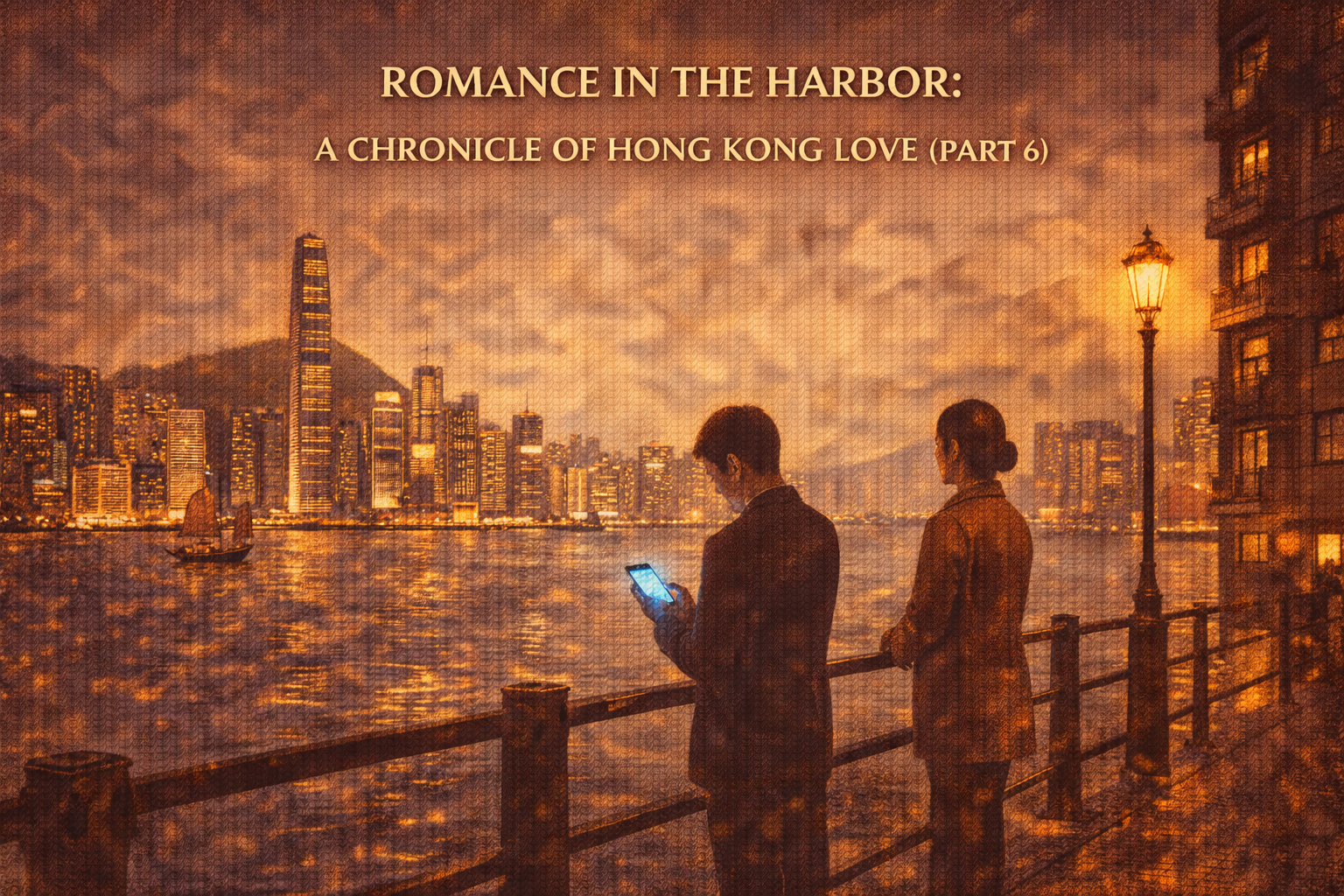
Romance in the Harbor: A Chronicle of Hong Kong Love (Part 6)
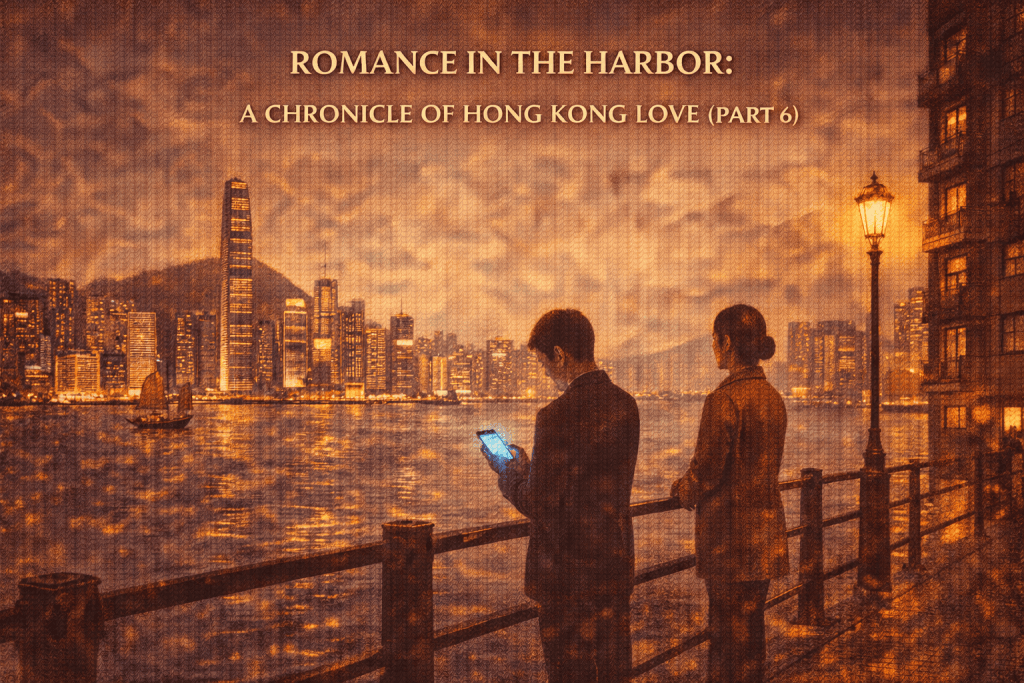
We have examined the tangible structures of Hong Kong romance: the public housing estates, the colonial hotels, the expatriate bars, and the tycoon banquet halls. However, human behavior is rarely driven by architecture alone. It is driven by stories. This is Part 6 of our inquiry. Here, we analyze the influence of *Pop Culture* on the romantic ideals of the city. We observe how cinema, Cantopop, and luxury branding provide scripts for the upper class, and how these specific cultural mechanisms offer fertile ground for Western filmmakers seeking new narratives.
To understand the romantic aesthetic of Hong Kong, one must acknowledge the overwhelming influence of its local cinema. Films such as In the Mood for Love codified a specific type of Hong Kong romance: one defined by restraint and missed connections. While the working class lives this reality out of necessity, the upper class consumes it as an aesthetic, most visibly in the “pre-wedding photography” industry. Couples spend significant sums to act out cinematic fantasies in exotic locations like Prague or Kyoto, months before the actual wedding.
For Hollywood, this presents a unique twist on the romantic comedy genre. Rather than focusing on the wedding day, a script could center entirely on the “Pre-Wedding Tour.” The narrative conflict would arise from the disparity between the perfect, high-gloss images being captured and the crumbling reality of the relationship behind the lens. It creates a visual metaphor for modern love: a meticulously curated performance that hides a lack of genuine connection.
Soundtrack plays an equally pivotal role. The “Cantopop” ballad is the dominant musical form, often focusing on tragic devotion. For the upper class, this cultural thread is woven into nuptials through celebrity appearances. It is a status symbol to hire a famous pop star to perform at a banquet. This blurs the line between the fictional love of the idol and the real-world union of the couple. A compelling drama could explore this through the eyes of the hired celebrity—a “Wedding Singer” narrative, but set within the high-stakes, high-pressure environment of a billionaire’s banquet, contrasting the fading fame of the performer with the rising dynasty of the newlyweds.
Furthermore, we must look at the importation of Western “fairy tale” narratives. The “Disneyfication” of romance is literal here; Hong Kong Disneyland is a prime venue for high-end weddings. This introduces a fascinating cultural collision: the “White Wedding” (individualism) versus the “Red Banquet” (Confucian filial piety). The modern elite bride must navigate both roles in a single day. This offers a rich structural device for a film: a story told in two distinct acts on the same day. The “Morning Act” features the Western gown and the fairy tale vow, while the “Evening Act” features the gold Qipao and the tea ceremony. The protagonist’s internal conflict—torn between modern Western desires and traditional Eastern obligations—would be externalized through these costume changes.
Finally, the gossip magazines serve as the enforcement mechanism for these scripts. The romantic lives of the rich are consumed by the public as a serialized drama. The upper class is acutely aware of this gaze; public displays of affection are often calculated press releases. A Hollywood thriller or corporate drama could focus not on the lovers, but on the “Image Consultant” or “Fixer.” This character’s job would be to manage the narrative of a tycoon’s dating life, spinning scandals into fairy tales to protect the family’s stock price. It shifts the genre from romance to crisis management, highlighting the commodification of love.
We see, therefore, that love in Hong Kong is a performance where life imitates art. However, every script requires a stage. In a city defined by extreme density and verticality, the specific location of a romantic encounter is as critical as the partner chosen. In Part 7, we will map the *Geography of Love*. We will examine how the upper class utilizes private members’ clubs, high-altitude dining, and luxury marine vessels to create sanctuaries of privacy, effectively turning the map of Hong Kong into an exercise in exclusion.