
The Elite Lens: Eight High-Society Incongruities in SK Global & PCCW Media’s ‘The Season’.
The air is still, yet the spirit remains restless. Welcome to Wednesday’s Personal Opinion-Editorial.
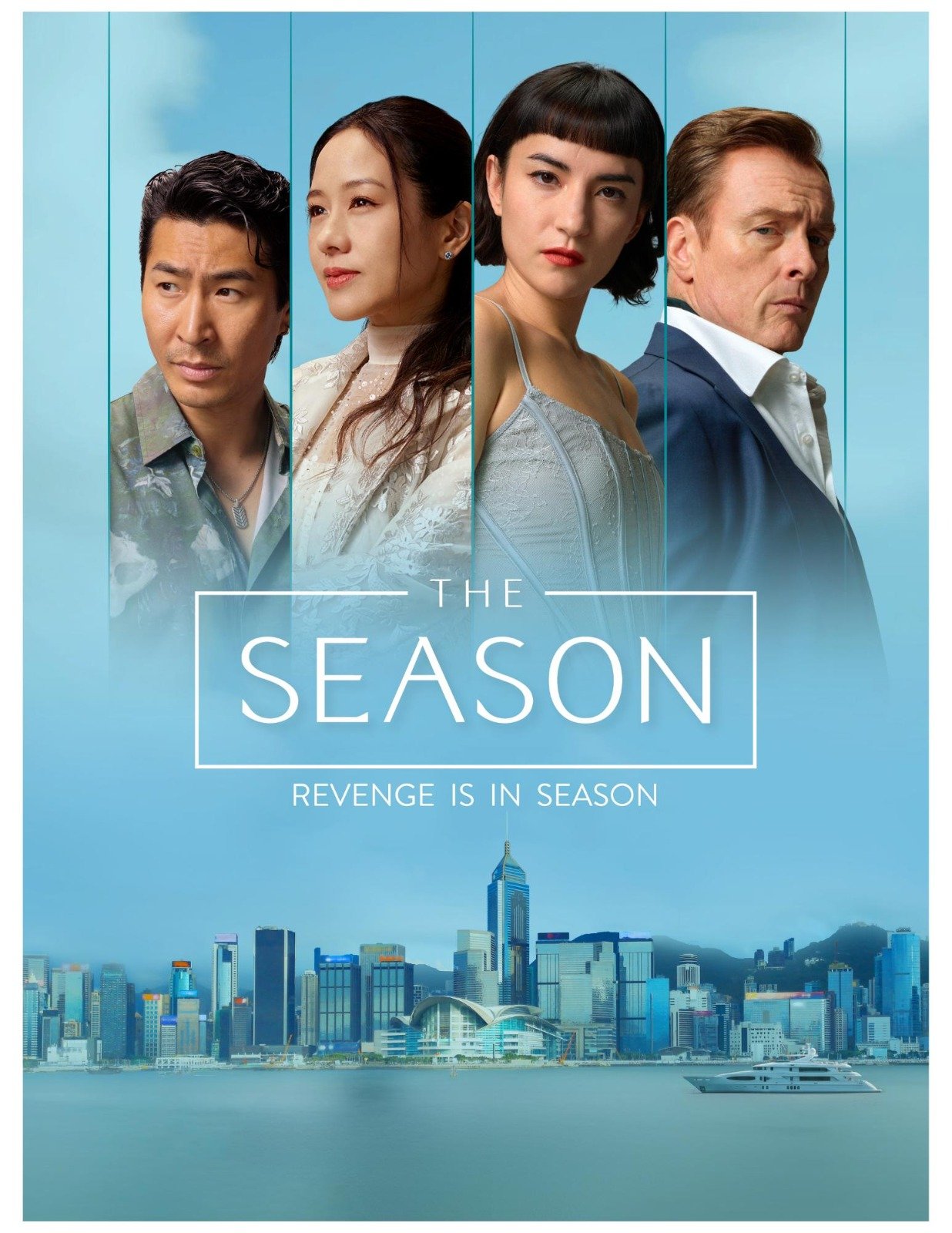
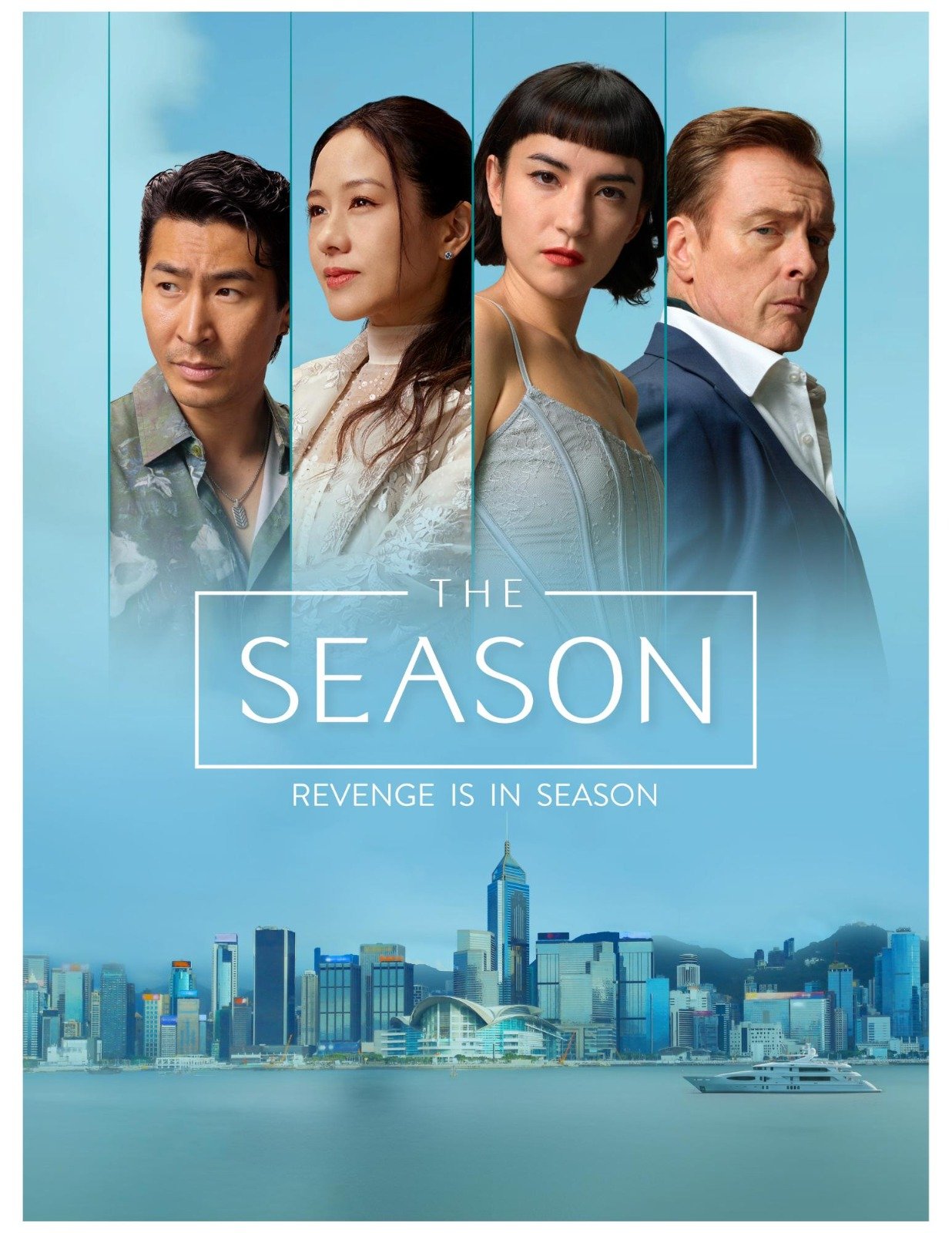
It is Wednesday, the 24th of June 2026. As an independent, Hong Kong-based and raised producer with a privileged and academic background, watching local stories hit the global stage is always a high-stakes exercise in observation. Tonight, I am dissecting SK Global and PCCW Media’s 6-episode premium series, The Season—set and shot entirely on location in our city, directed under the vision of showrunner Yalun Tu, and boasting an elite ensemble cast including Jessie Mei-Li, Toby Stephens, Karena Lam, Yvonne Chapman, Chris Pang, and Justin Chien.
From a strict producer’s perspective, the $18M USD production budget is an absolute masterclass in capital utility. The show is beautifully textured, polished, and does not look out of place for a single second in the prestige libraries of Netflix, Amazon Prime, Apple TV, or HBO Max. Showrunner Yalun Tu managed to stretch $18M USD to look every bit as lush, cinematic, and expensive as the $24M USD inaugural season of HBO’s The White Lotus. As an independent executive who knows exactly how grueling it is to stretch the American dollar in high-cost production hubs, I find this fiscal efficiency to be an incredibly commendable feat.
However, from the vantage point of my own upbringing and 18 years of direct experience navigating Hong Kong’s elite circles, my immersion was repeatedly fractured. Showrunner Yalun Tu reportedly drew from his own nearly ten-year corporate banking memories as a Goldman Sachs investment banker in Central and the maritime shipping sectors, choosing to bypass cultural consultants. While his financial core is tight, the social, institutional, and legal nuances of Hong Kong high society suffered from eight distinct inauthenticities and incongruities that pulled me right out of the narrative.
The Eight Incongruities of High-Society Hong Kong
1. The Myth of the “Private Box”
This may seem like a granular nitpick to an international audience, but to anyone raised in Hong Kong’s legacy circles, it is glaring: private individual boxes do not exist at either of the Hong Kong Jockey Club’s (HKJC) racecourses in Sha Tin or Happy Valley. It is structurally impossible for the billionaire Hext family to own an isolated “private box.” The Owners’ Box and the Voting Members’ Box take up entire, massive floors of the grandstands to accommodate horse owners and Voting Members collectively. The absolute maximum an elite patron can do is reserve a private suite segment—for example, Voting Members Private Box B706 (Rooms A & B combined). Given that the Hext family is positioned as an “old money” Hong Kong institution akin to the Jardines, Kadoories, or Hotungs, Christopher Hext would undoubtedly be an elite Voting Member of the HKJC. A line or two of dialogue explaining this institutional hierarchy was desperately needed, as regular horse owners have absolutely no access to the Voting Members’ floor.
2. The Betting Counter Ledger
On a related turf note, one does not write down or shout out personal names when placing a wager at the HKJC. The mechanics are simple: you place the bet, cash or account voucher, and you take your physical betting ticket with you. Throughout my 18 years of personal experience attending both the Owners and Voting Members Boxes at Sha Tin and Happy Valley, I have never once witnessed a Jockey Club employee walk out of the betting counter holding a ticket aloud, searching for a specific individual by name. It is entirely unrealistic and breaks the operational reality of the track.
3. The Reality of Hong Kong Drug Laws
Hong Kong maintains some of the most unforgiving, zero-tolerance drug laws on the planet, extending strictly to recreational substances, cannabis, and even over-the-counter CBD products.
• Trafficking & Manufacturing: Penalties scale up to life imprisonment and a maximum fine of HK$5,000,000. Under the statute, “trafficking” legally includes merely carrying, selling, or even casually sharing small amounts with friends.
• Possession & Consumption: Penalties scale up to 7 years in prison and a fine of HK$1,000,000.
While I am well aware that hyper-wealthy archetypes statistically possess a higher probability of substance access, the sheer professional risk makes the show’s choices highly improbable. High-earning financial advisors like Carrie Shen or elite barristers like David Ho would never risk immediate, career-ending imprisonment or disbarment over recreational narcotics. They could easily be written as severe alcoholics to cope with the pressure, but never street-level druggies.
4. The Misallocation of Lamma Rainbow
The pilot episode features an upscale seafood dinner, but the choice of venue feels entirely misaligned with old-money behavior. The production chose Rainbow Seafood Restaurant—Lamma Rainbow—located in Sok Kwu Wan (索罟灣). While iconic, Lamma Rainbow is a highly public, tourist-heavy, and exposed waterfront space. It is a completely wrong vibe for a reclusive billionaire dynasty. If the show runner required an upscale, spacious indoor banquet hall, the historic Dragon Inn Seafood Restaurant in Tuen Mun would have been perfect.
Alternatively, if they wanted waterfront dining, legacy options along the Sai Kung Seafood Promenade (such as Chuen Kee Seafood Restaurant or Hung Kee Seafood Restaurant) or the genuine, historic Lamma Hilton fishing village restaurants would have felt far more authentic. Lamma Rainbow was simply too exposed for the Hexts.
5. The Colonial Aesthetics of the Household Manager
While the narrative provides historical and narrative reasons for Christopher Hext to employ Gloria Reyes as his central household manager, the visual sociology feels off. To represent true, old-money Hong Kong colonialism, it would be far more authentic for the Hext family’s manager to be a traditional local Hong Kong amah or a highly seasoned local housekeeper. In Hong Kong’s complex social hierarchy, Filipino domestic helpers occupy a socio-economic space highly similar to Mexican, Latin American, or Black domestic workers in the United States. For an elite institution mirroring the century-old power of the Jardines, what better way to visually signify raw, deep-rooted local authority than to employ a highly paid, multilingual, local Hong Kong manager to run the estate?
6. The Intern’s Asymmetric Access
The character Cola Pierce Li manages to infiltrate the inner sanctum of the Hext family with absurd ease. She begins the series as a mere intern or summer associate at Carrie Shen’s wealth management firm. Yet, she is somehow granted endless, exclusive one-on-one mentorship and FaceTime with her ultimate boss. In reality, a firm managing the multi-billion dollar assets of a family like the Hexts would have an army of Ivy League interns and senior associates competing for attention. Carrie Shen owning the firm makes her the equivalent of Amy Lo (UBS’s Chairwoman of Global Wealth Management Asia). A high-level executive of that stature does not personally spend her days mentoring a single summer associate; it shatters corporate realism.
7. The SoHo Flat Conundrum
This leads directly to a massive real estate plot hole. Given that a major narrative engine is the Hext family eventually discovering Cola’s true identity as their former chauffeur’s daughter, it is established that Carrie Shen did not know this secret beforehand. This means Carrie could not have been secretly sponsoring Cola’s lifestyle. Yet, Cola resides in a remarkably spacious apartment on Elgin Street, right in the absolute heart of SoHo. Rent for that specific footprint sits at a steep premium of roughly HK$16,000 to HK$25,000 per month (approx. $2,050 to $3,205 USD/month). Paying that level of rent on a basic summer associate or intern stipend is financially impossible without an external benefactor.
8. The Ambiguity of the Dollar
Finally, as an internationally distributed streaming series, the show frequently refers to monetary figures without clarifying the denomination. While global audiences automatically assume the currency is USD, local viewers embedded in the setting naturally presume the figures represent Hong Kong Dollars (HKD). Given the massive 7.8 exchange rate differential, leaving the currency completely implicit causes unnecessary friction. It would take very little script editing to explicitly state the currency, anchoring the true stakes of the financial warfare.
The Blueprint for Future Slate
Despite these eight prominent incongruities, I want to emphasize that I thoroughly enjoyed The Season as a complete piece of entertainment. It is a vital, high-gloss addition to our city’s cinematic canon, and it has left me profoundly inspired.
As I look ahead to developing my own future slate, I am actively synthesizing the premium aesthetic of The Season with the sharp, rapid-fire corporate pacing of local hits like The Queen of News (新聞女王), IT Specialist (IT狗), and The Trading Floor (東方華爾街). Furthermore, I am looking back at the golden era of classic TVB “Tycoon War” sagas—the ruthless structural ambition of At the Threshold (創世紀) and the raw, psychological brilliance of The Greed of Man (大時代).
My experiences may differ from Yalun Tu’s, but his work proves that Hong Kong stories have immense global value. For now, my task is to keep my head down, master my financial literacy, and ensure my career moves with systematic execution. We will not rush, nor will we try to reach the sky in a single bound—“jat1 bou6 dang1 tin1” (一步登天). We build the infrastructure first, ensuring that when the time comes to shoot Eurasia Rising and Kushiel’s Legacy: The Terminus, our authenticity is absolute and flawless.
The fire within me burns steady, analyzing the frame to perfect the craft.
Until the wind shifts again.
— Zephyr Chan