The Gilded Equinox: Lunar New Year Among Hong Kong’s Elite
Part 8: The Celestial Bureaucracy and the Sugarcane Forest
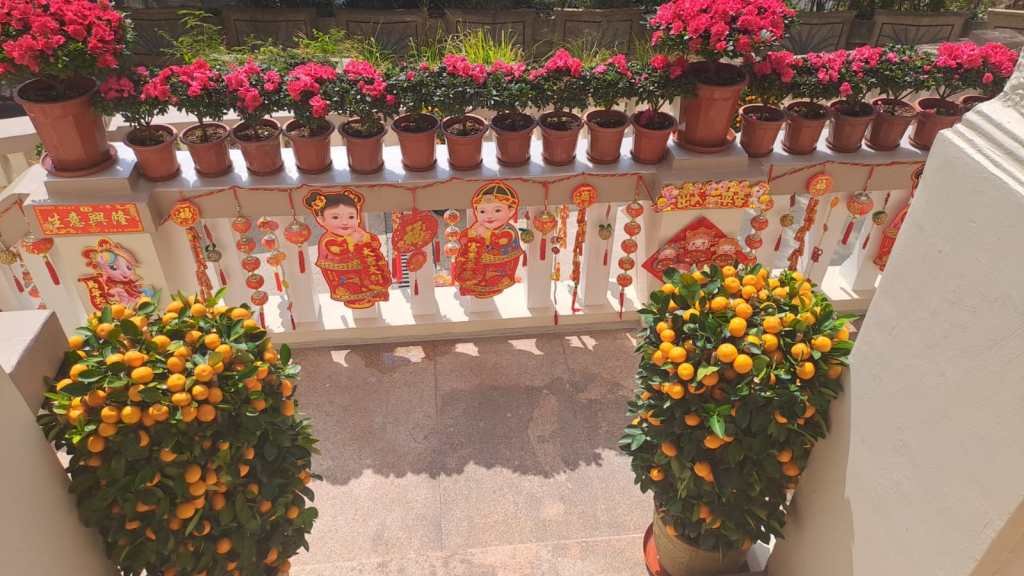
As the sun sets on Tuesday, the 24th of February—Chor Baat—the atmosphere in the upper echelons of Hong Kong society shifts from the biological preservation of Renri to high-stakes metaphysical diplomacy. We approach the Zi hour (11:00 PM to 1:00 AM), which technically bridges the eighth and ninth days. This transition marks the Eve of the Birthday of the Jade Emperor (Thi Kong Seh). While the Cantonese traditions dominate the early festival, this night belongs to the Hokkien community and, by extension, the business elite who recognize the Jade Emperor not merely as a deity, but as the supreme administrator of the cosmos—the CEO of Heaven.
The sociological fascination of this night lies in its spatial arrangement. Unlike other rituals that require a pilgrimage to a temple, the veneration of the Jade Emperor transforms the domestic sphere. The altar is erected outdoors, often on the balconies of Mid-Levels penthouses or the manicured lawns of Deep Water Bay, facing directly toward the heavens. The visual signature of this ritual is the sugarcane. Two tall stalks of sugarcane, complete with roots and leaves, are tied to the sides of the altar table, forming an archway. Historically, this symbolizes the Hokkien people hiding in sugarcane fields to survive a massacre; in the modern context, the nodes of the cane represent a step-by-step ascent in status and wealth.
For the production designer in Hollywood, this specific aesthetic offers a profound visual language that has yet to be fully utilized in Western cinema. The juxtaposition of raw, agrarian symbols—tall, green stalks of sugarcane—against the chrome and glass of a hyper-modern skyline creates a jarring, surreal beauty. A filmmaker like Denis Villeneuve, known for integrating brutalist architecture with organic elements, could utilize this imagery to depict a future where ancient rites are the only grounding force in a technological dystopia. The image of a protagonist in a tuxedo walking through a “forest” of sugarcane on a 50th-floor terrace to burn incense creates a narrative tension between the primitive and the futuristic.
The ritual itself is a transactional audit. The offerings laid out—roast pig, pagodas made of sugar, and intricate paper folds representing gold bullion—are not merely gifts; they are tax payments to the celestial government. The Jade Emperor is viewed through a bureaucratic lens; he grants the “mandate” for the year’s earnings. As the clock strikes 11:00 PM, the “Midnight Incense” is lit. This is the moment of direct communication.
Here, the screenwriter finds a compelling structural device for a character study. In a narrative focused on power dynamics, such as The Godfather or House of Cards, the act of bowing to an invisible, higher authority humanizes the antagonist. It suggests that even the untouchable tycoon fears a higher audit. A scene constructed around the silence of this midnight ritual—interrupted only by the crackle of burning “gold paper” in a furnace—serves as a cinematic pause, a moment of introspection where the audience realizes the protagonist believes their power is on loan, not owned.
As the smoke rises into the night sky, carrying requests for hegemony and stability, the festival reaches its theological apex. The “market” is now spiritually open, sanctioned by the highest order.
Join me for the conclusion, Part 9: Chor Kau (Day 9). As the Birthday of the Jade Emperor fully arrives, we will discuss the “Closing of the Account,” the integration of the festive energy into the mundane reality, and the final thoughts on how the elite prepare to execute the year’s grand design.