
Hong Kong’s Hidden Urban Pulse: A Cross-Cultural Infrastructure Dive
As a well-traveled individual who’s lived in Hong Kong my entire life, I’ve always been fascinated by how cities build their unseen skeletons—the infrastructure that keeps life flowing beyond the obvious veins of roads, highways, and transit lines. Hong Kong, with its dense, vertical sprawl, offers a masterclass in this. In this post, I’ll dissect HK’s lesser-discussed urban planning elements, then stack them against eight American counterparts: San Francisco, Los Angeles, New York City, Atlanta, New Orleans, Miami, Dallas, and Boston. My aim is straightforward: highlight contrasts without bias, provoking thought on what makes cities resilient. Finally, I’ll suggest how these insights could infuse Hollywood film and TV projects, tailoring them to resonate with Hong Kong’s upper class through cultural finesse.
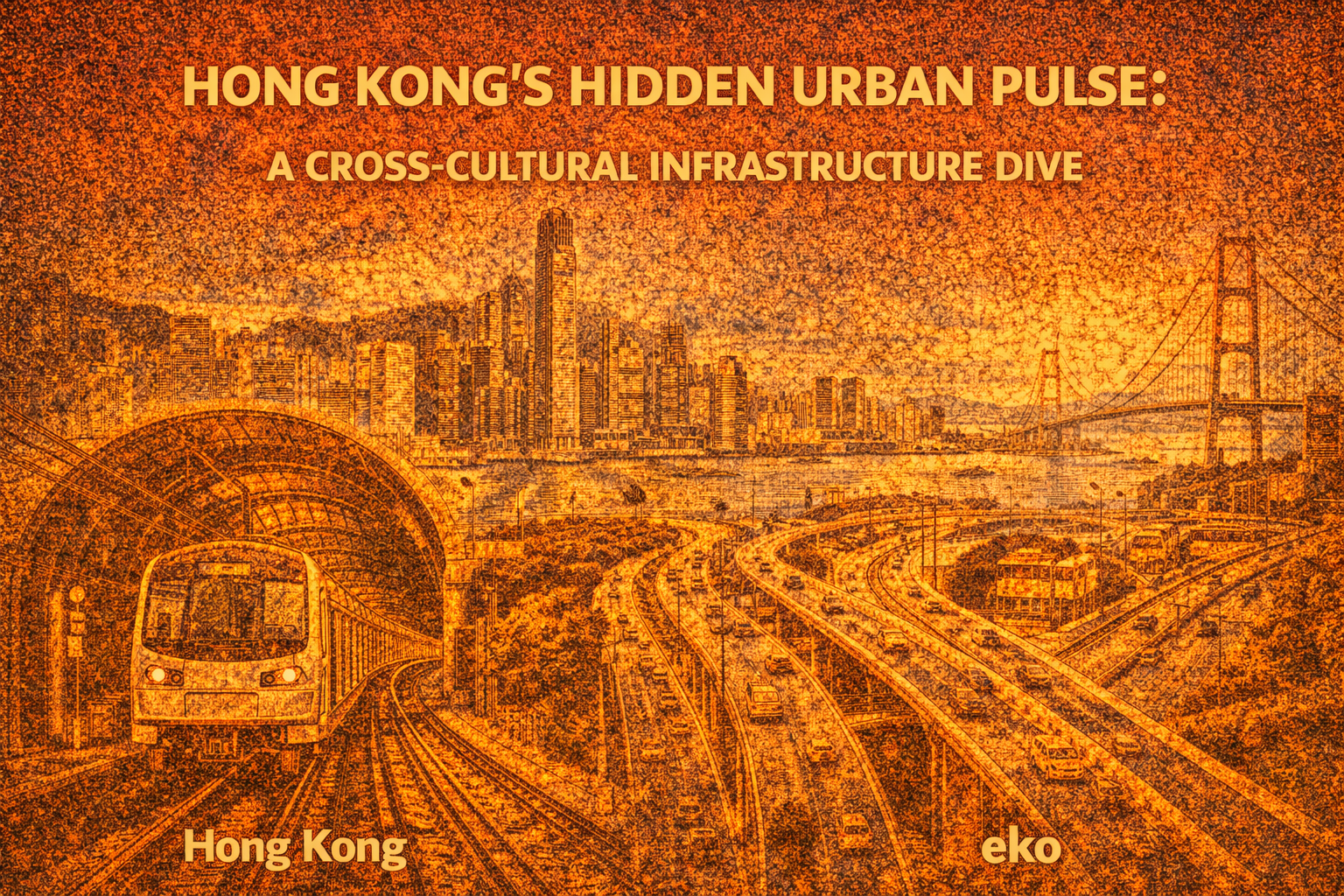
Hong Kong’s infrastructure thrives on verticality and integration, a necessity born from its mountainous terrain and limited land. Take the city’s extensive network of elevated walkways and footbridges—these aren’t just paths; they’re a seamless web connecting skyscrapers, malls, and residential towers, minimizing ground-level chaos. The Central-Mid-Levels Escalator, the world’s longest outdoor covered escalator system, exemplifies this, ferrying 85,000 people daily uphill without relying on vehicles. Then there’s water management: HK’s reservoirs, like Tai Tam, integrate with urban fabric through hidden tunnels and desalination plants, ensuring supply amid typhoons. Green spaces are ingeniously layered—rooftop gardens and vertical forests on buildings combat heat islands, while waste systems use pneumatic tubes in high-rises for efficient recycling. Utilities like smart grids and fiber-optic underlays support a hyper-connected populace, with data centers embedded in basements to power fintech hubs. This setup prioritizes density over sprawl, fostering efficiency in a city of 7.5 million on just 1,100 square kilometers.
Now, let’s contrast this with American cities, starting with San Francisco. SF’s hilly layout echoes HK’s, but its infrastructure leans on seismic retrofits and cable car relics rather than escalators—think underground BART extensions, yet pedestrian links are fragmented compared to HK’s cohesive skywalks. Water-wise, SF’s Hetch Hetchy aqueduct is a marvel, but it lacks HK’s desalination edge, making it vulnerable to droughts. Los Angeles, by contrast, sprawls horizontally; its stormwater channels (like the LA River) are concrete behemoths for flood control, unlike HK’s integrated reservoirs. LA’s green initiatives, such as pocket parks, feel scattered next to HK’s vertical greening, though both cities grapple with earthquakes—LA’s building codes are robust, but HK’s high-rises incorporate more flexible damping systems.
New York City mirrors HK in density, with its subterranean utility vaults powering Manhattan’s grid. However, NYC’s pedestrian infrastructure, like High Line parks, repurposes old rail lines innovatively, differing from HK’s purpose-built escalators. Waste management in NYC relies on truck-hauling, less efficient than HK’s pneumatic tech, but NYC’s stormwater tunnels handle deluges better in flat terrain. Atlanta, with its suburban spread, contrasts sharply—its green belts and MARTA-adjacent trails promote car-lite living, but without HK’s vertical density, utilities sprawl inefficiently, leading to higher energy loss. New Orleans stands out for resilience: post-Katrina levees and pumps rival HK’s typhoon defenses, yet its below-sea-level layout demands constant pumping, unlike HK’s elevated reservoirs. Miami’s flood barriers and mangrove restorations address rising seas, similar to HK’s coastal protections, but Miami’s art deco low-rises lack HK’s skyscraper integration, making vertical greening a missed opportunity.
Dallas embodies Texan expanse with vast utility grids and data centers, akin to HK’s tech underbelly, but its pedestrian networks are minimal—think air-conditioned skywalks in downtown, yet they’re isolated compared to HK’s comprehensive system. Boston, with its historic core, integrates modern infrastructure subtly: buried power lines and green roofs on universities echo HK’s layering, but Boston’s cold winters demand insulated utilities absent in subtropical HK. Overall, American cities often prioritize horizontal expansion and retrofitting, leading to inefficiencies in density, while HK excels in compact, adaptive systems—provocative in how it challenges sprawl as unsustainable, yet each approach suits its geography objectively.
These contrasts spark ideas for Hollywood projects, where urban elements can drive narratives that culturally align with Hong Kong’s upper class—think affluent professionals who value efficiency, luxury, and subtle status symbols. Incorporate HK’s elevated walkways into a thriller set in a futuristic LA, symbolizing elite escapism from street-level grit; this fits HK elites’ preference for seamless, high-end mobility, evoking their own sky-high lifestyles without overt glamour. For a NYC-based drama, blend HK’s vertical gardens into rooftop scenes, portraying characters as eco-conscious tycoons—resonating with HK’s upper echelons who invest in sustainable luxury, like private green terraces, to signal refined taste. In an Atlanta or Dallas storyline, use HK-inspired pneumatic waste systems in smart homes, highlighting tech-savvy protagonists; this appeals to HK’s wealthy by mirroring their discreet, efficient domestic tech, avoiding flashy displays.
Provocatively, Hollywood could contrast HK’s water resilience in a Miami flood epic, with characters navigating hidden reservoirs—tailoring to HK elites’ cultural emphasis on preparedness amid typhoons, positioning survival as a mark of sophistication. For SF or Boston settings, embed escalator chases drawing from HK’s Mid-Levels, infusing action with intellectual depth; this culturally suits HK’s upper class, who appreciate narratives blending urban ingenuity with personal agency, free from melodrama. Even in New Orleans or LA tales, HK’s utility grids could underpin cyber-thrillers, where elite hackers exploit seamless networks—echoing HK affluents’ fintech world, emphasizing control and subtlety over chaos.
In essence, HK’s infrastructure provokes a reevaluation of urban norms, offering lessons in density that American cities adapt variably. By weaving these into Hollywood scripts, creators can craft stories that subtly honor HK’s elite ethos: efficiency as elegance, innovation as status. This cross-pollination isn’t about superiority—it’s a neutral call to blend strengths for more livable futures.