
HK Status Symbols: Plates and Power
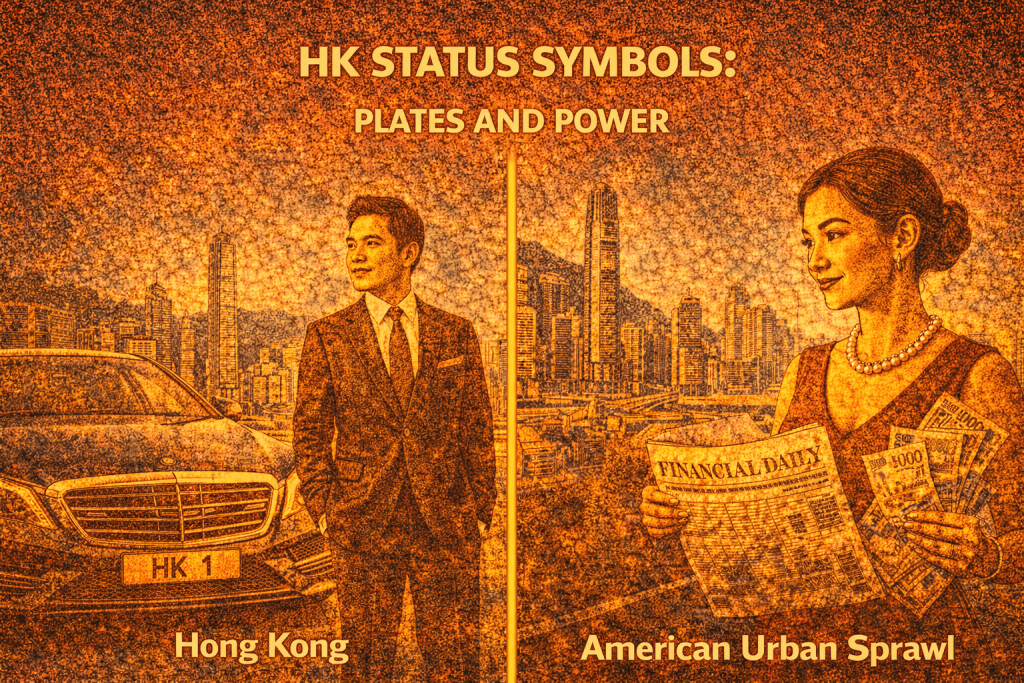
As a keen observer of Hong Kong’s vibrant socio-economic landscape, I’ve always been fascinated by the subtle yet powerful ways status is signaled in this bustling metropolis. In this three-part blog series, we’ll explore the unique status symbols that define Hong Kong’s elite, from the tangible to the intangible. Unlike broader global markers, these are distinctly shaped by HK’s dense urban fabric, colonial history, and relentless pursuit of prestige. This first installment zeroes in on cars—not just any vehicles, but the marques that scream success—and the coveted license plates that elevate them. We’ll delve into their cultural significance and, provocatively, how Hollywood could weave them into narratives to authentically capture HK’s upper echelons. Let’s drive in.
In Hong Kong, where space is a premium commodity and public transport reigns supreme for most, owning a car is already a bold statement of affluence. The city’s geography, with its steep hills, narrow roads, and limited parking, makes car ownership a logistical challenge that only the well-heeled can afford. Annual vehicle registration fees, import duties, and the sheer cost of fuel and maintenance amplify this barrier. Yet, for the upper class, a car isn’t merely transportation; it’s a mobile emblem of achievement. Luxury brands like Mercedes-Benz, BMW, and Rolls-Royce dominate, but it’s the ultra-premium models that truly set the tone. Think of a sleek Maybach S-Class gliding through Central’s traffic or a Bentley Continental parked outside a high-end club in Lan Kwai Fong. These aren’t just vehicles; they’re extensions of personal brand, signaling not only wealth but also global connectivity in a city that prides itself on being Asia’s financial hub.
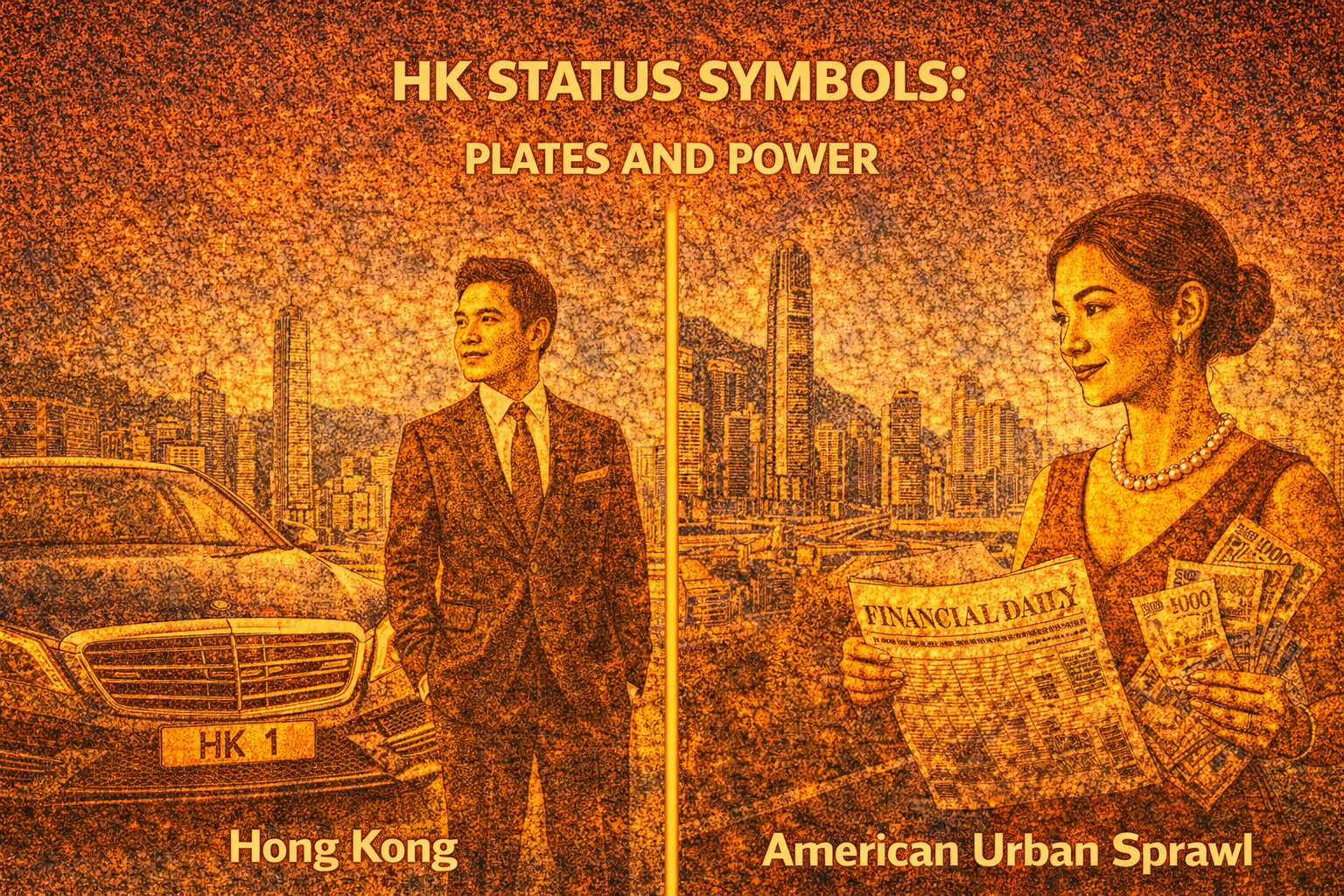
What makes cars a uniquely HK status symbol? It’s the context of constraint. With over 7 million people crammed into 1,100 square kilometers, private vehicles are rare—fewer than 10% of households own one. This scarcity turns car ownership into an exclusive club. The elite often opt for chauffeur-driven rides, underscoring a lifestyle where time is money and convenience is king. A Ferrari SF90 Stradale, for instance, isn’t about speed on HK’s congested roads; it’s about the roar of the engine echoing through Admiralty, announcing arrival. This contrasts sharply with sprawling cities elsewhere, where cars are commonplace. In HK, they’re a deliberate flex, a way to navigate the vertical cityscape while broadcasting social standing.
Now, let’s shift gears to license plates, the ultimate accessory that transforms a luxury car into a rolling masterpiece of prestige. In Hong Kong, vehicle registration numbers aren’t random; they’re auctioned by the Transport Department, with vanity plates fetching astronomical sums. These aren’t mere identifiers—they’re investments and status boosters. Plates with auspicious numbers, drawing from Chinese numerology, are particularly prized. The number 8, symbolizing prosperity, can command millions. For example, a plate like “8” or “888” isn’t just lucky; it’s a cultural talisman of enduring wealth. In 2016, a single-digit “2” plate sold for HK$18.1 million (about US$2.3 million), outstripping the cost of many luxury cars themselves.
Why do these plates resonate so deeply in HK’s upper class? It’s rooted in a blend of superstition, heritage, and exclusivity. Cantonese culture reveres numerology—4 is avoided for its phonetic similarity to “death,” while 9 evokes longevity. Elite families pass down these plates like heirlooms, embedding them in legacies. A tycoon’s limousine bearing “VIP1” or a sequence of eights isn’t subtle; it’s a provocative declaration in a society where face (mianzi) is paramount. Unlike standard plates, these are customizable and transferable, making them liquid assets. Spot one on a Porsche 911 in Tsim Sha Tsui, and you’re witnessing not just wealth, but a calculated display of cultural savvy and financial muscle.
Provocatively, these elements offer rich fodder for Hollywood projects aiming to portray HK’s elite authentically. Imagine a thriller set in the city’s boardrooms: a protagonist, a shadowy billionaire, arrives at a high-stakes meeting in a blacked-out Rolls-Royce Phantom with a plate reading “8888.” This isn’t gratuitous bling; it culturally anchors the character in HK’s upper crust, where such details signify unassailable status and perhaps a nod to triad influences or old-money networks. Directors could use this to heighten tension— the plate’s auction history revealed in a plot twist, exposing rivalries. Or in a romance drama, a young heiress’s Ferrari with a single-digit plate becomes a symbol of her entrapment in familial expectations, contrasting her desires with societal pressures. These incorporations fit seamlessly because they reflect real HK dynamics: cars and plates aren’t American-style ostentation but understated power plays in a compact, hierarchical world. Hollywood often glosses over such nuances; integrating them could provoke audiences to question global wealth disparities while staying true to HK’s ethos.
To weave these into scripts, filmmakers might consult HK locals for accuracy—ensuring plates align with numerological preferences and cars match the elite’s understated elegance. This approach avoids stereotypes, presenting a neutral lens on how status operates in a city where every detail counts.
As we wrap this first part, remember: in HK, wheels and plates aren’t just about mobility; they’re about mobility in the social ladder. Stay tuned for part two, where we’ll explore prestigious addresses and their role in defining elite territories. What status symbols intrigue you most in your city? Share in the comments—let’s keep the conversation rolling.