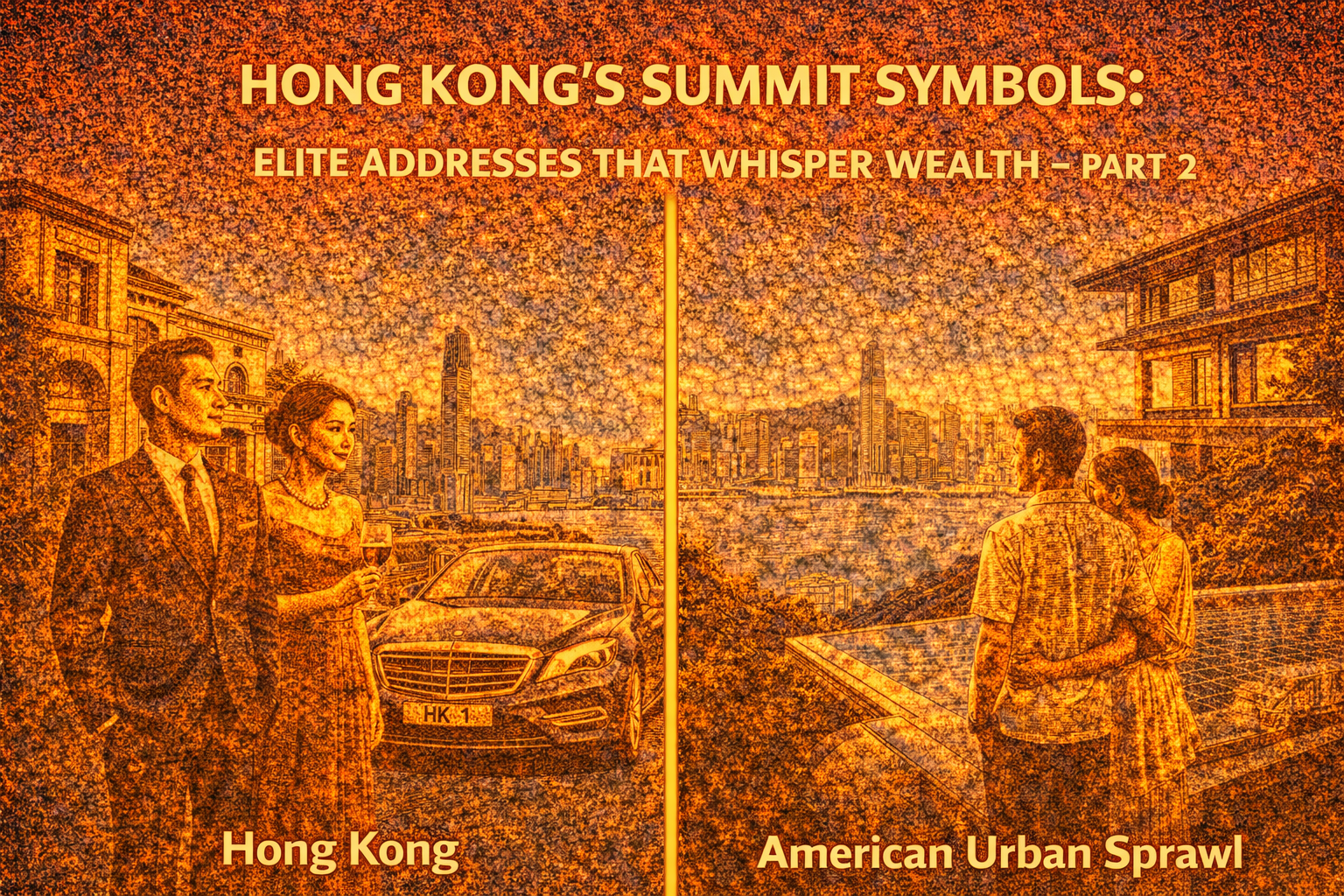
Hong Kong’s Summit Symbols: Elite Addresses That Whisper Wealth – Part 2
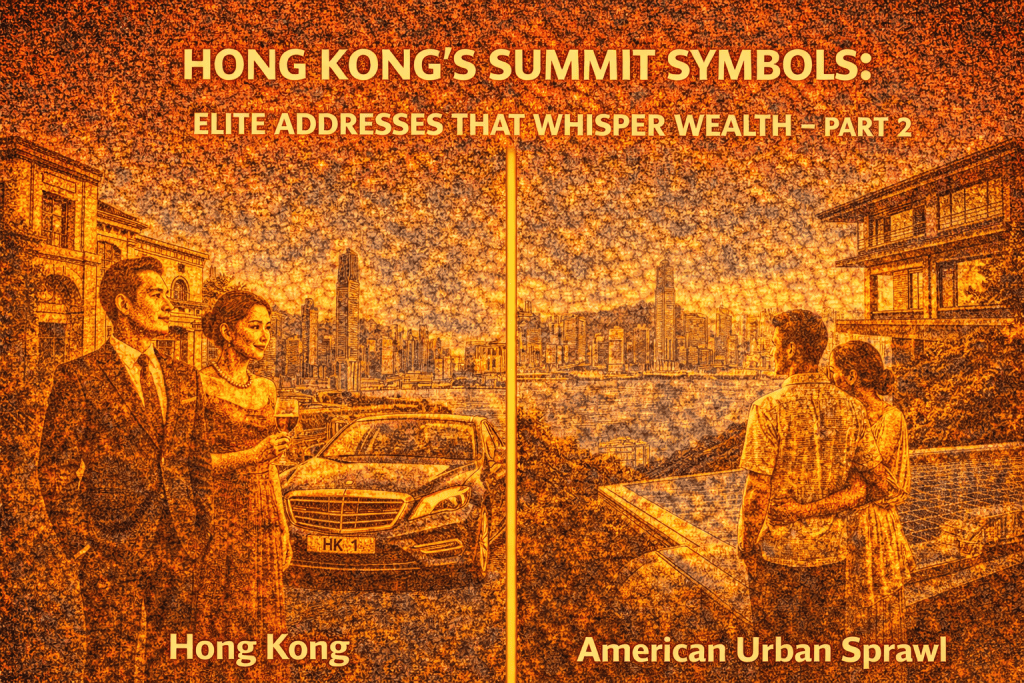
As I delve deeper into Hong Kong’s distinctive status symbols in this three-part series, I shift from the gleaming license plates and luxury vehicles of Part 1 to the subtler, yet profoundly telling realm of addresses. In a city where space is a premium and history layers every hillside, certain locations aren’t just homes—they’re declarations of ascent. Unlike the sprawling estates of other global cities, Hong Kong’s elite addresses carry a colonial echo, embodying exclusion and prestige in ways that feel intrinsically local. Here, I explore how places like Victoria Peak have evolved into emblems of upper-class identity, provoking questions about legacy, access, and social hierarchy without drawing parallels to foreign counterparts.
Victoria Peak stands as the pinnacle—literally and figuratively—of Hong Kong’s residential status symbols. Perched atop the island’s highest point, it offers panoramic views that stretch from the glittering harbor to the distant skyline, a vantage point that has long signified dominance. In the late 19th and early 20th centuries, during British colonial rule, the Peak was designated a European-only enclave. Regulations like the Peak Reservation Ordinance of 1904 explicitly barred non-Europeans, including Han Chinese residents, from owning or residing there, enforcing a racial divide that mirrored the era’s imperial structures. This wasn’t merely about elevation; it was a spatial manifestation of power, where cooler air and isolation from the bustling city below reinforced social stratification.
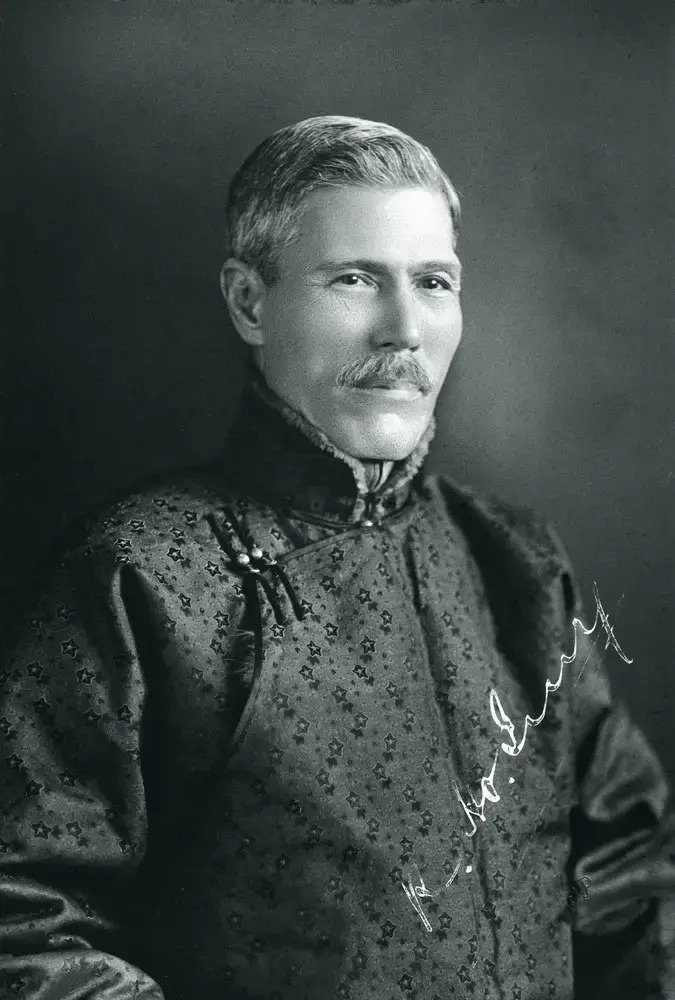
The turning point came with figures like Sir Robert Hotung, a prominent Eurasian businessman and philanthropist who challenged these barriers. In 1906, Hotung acquired a property on the Peak, becoming one of the first non-Europeans to breach this exclusive domain. His success wasn’t just personal; it symbolized a gradual erosion of colonial restrictions, paving the way for other affluent locals to claim space in what had been a forbidden zone. Today, the Peak remains a bastion for Hong Kong’s elite—tycoons, financiers, and heirs to family empires. Addresses here, such as those on Barker Road or Plantation Road, aren’t flaunted like a flashy car; they’re whispered in boardrooms or etched on invitations, signaling not just wealth but a lineage of overcoming historical gates.
What makes these addresses uniquely Hong Kong is their blend of colonial residue and modern capitalism. Properties on the Peak command astronomical prices—think multimillion-dollar mansions with private helipads—yet their value transcends money. They represent a cultural narrative of resilience and reinvention, where upper-class families host dim sum brunches overlooking the city they helped build, or negotiate deals in homes that once excluded their ancestors. This isn’t about ostentation; it’s a quiet assertion of belonging in a society where vertical living defines status. Other addresses echo this, like those in Repulse Bay or Deep Water Bay, where beachfront villas evoke a serene escape from urban density, but the Peak’s history adds a provocative layer: it reminds us how status in Hong Kong is often tied to reclaiming spaces once denied.
Provocatively, these symbols highlight enduring inequalities. In a city of towering public housing estates, a Peak address underscores the chasm between the haves and have-nots, where elevation equates to elevation in society.
Yet, this is no moral judgment; it’s an observation of how geography shapes identity. For Hong Kong’s upper class, such addresses foster a sense of continuity—family compounds passed down generations, blending feng shui principles with Western architecture, hosting gatherings that mix Cantonese traditions with global influences.
For Hollywood projects aiming to capture Hong Kong’s essence, incorporating these addresses can add authentic depth, especially in portraying the upper class’s cultural nuances. Imagine a thriller where a protagonist infiltrates a Peak mansion during a typhoon, the storm mirroring the character’s internal turmoil while highlighting the residents’ insulated world—dinner parties continuing amid chaos, underscoring their detachment from the city’s grit. This fits culturally because Hong Kong elites often view the Peak as a sanctuary for legacy-building, not mere luxury; scripts could weave in subtle references to colonial history, like a family heirloom from Hotung’s era, to show how status is inherited resilience. In a romantic drama, a scene at a Repulse Bay villa could depict cross-class tensions, with the address symbolizing barriers to entry, provoking viewers to question social mobility without overt preaching. Directors might film establishing shots from the Peak Tram, emphasizing the ascent as a metaphor for ambition, aligning with the upper class’s ethos of strategic positioning in a competitive landscape.
These elements provoke without sensationalizing, grounding stories in Hong Kong’s reality. As I wrap up Part 2, consider how addresses like these aren’t just locations—they’re narratives etched into the city’s slopes. In Part 3, I’ll turn to the intangible symbols, from exclusive clubs to bespoke tailoring, completing our exploration of what makes Hong Kong’s status uniquely its own.