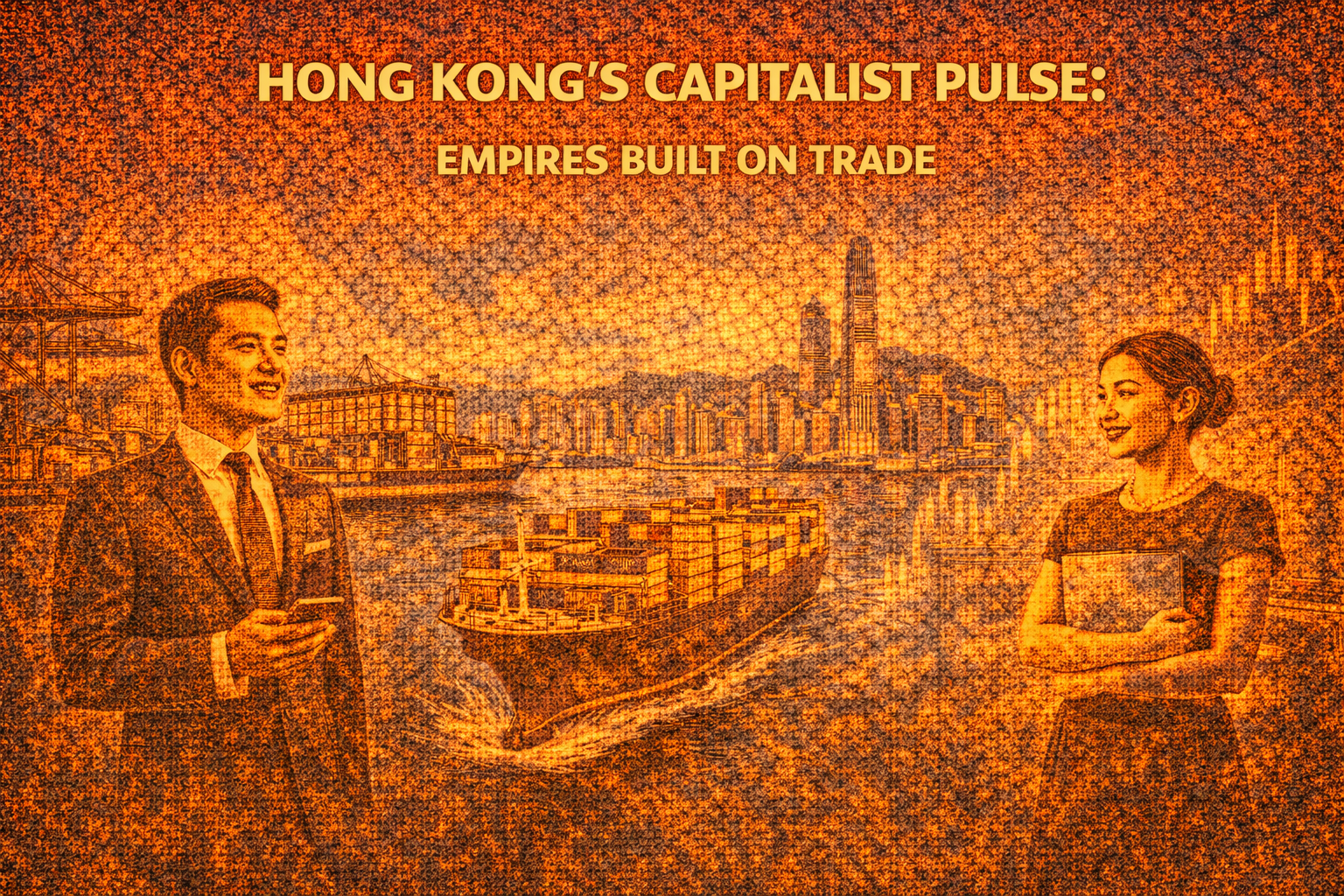
Hong Kong’s Capitalist Pulse: Empires Built on Trade
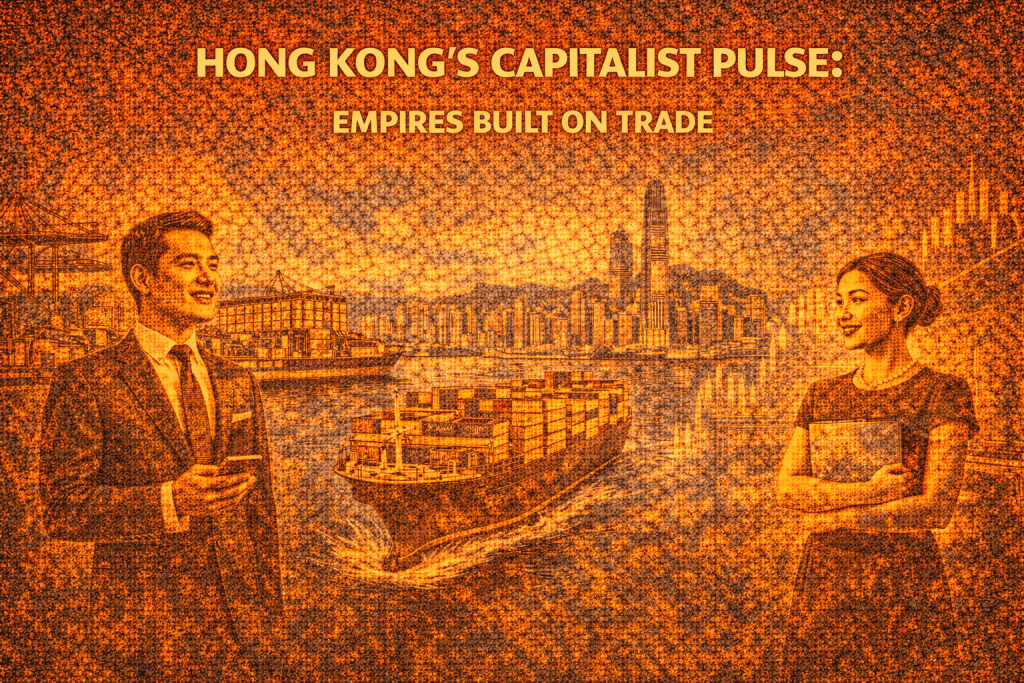
I’m diving into a five-part series exploring the intricate dance between Hong Kong and capitalism. As someone who’s observed the city’s economic heartbeat up close, I’ll unpack its layers in a straightforward, objective manner—provocative enough to question assumptions, yet grounded in facts. This isn’t about glorifying or critiquing; it’s about examining how capitalism has shaped, and been shaped by, Hong Kong’s unique position as a global crossroads. We’ll steer clear of biases, focusing on historical and structural realities.
In this first installment, we zero in on Hong Kong’s oldest trading houses—titans like Jardine Matheson and Swire—that laid the foundations of the city’s capitalist framework. These entities didn’t just trade goods; they engineered empires that intertwined commerce with colonial power, setting the stage for modern Hong Kong’s economic identity. Future parts will cover the big three family dynasties (Part 2), banking’s pivotal role (Part 3), the tech surge (Part 4), and the consulting world’s influence (Part 5). Let’s get started.
Hong Kong’s story as a capitalist hub begins in the 19th century, when British merchants transformed a rocky outpost into a trading nexus. Jardine Matheson, established in 1832 by Scotsmen William Jardine and James Matheson, exemplifies this era. Initially focused on importing opium from India to China—a commodity that fueled Britain’s trade imbalance with the Qing Dynasty—the firm quickly diversified. By the time of the Opium Wars, Jardine and Matheson were lobbying the British government for military intervention, blending business acumen with geopolitical maneuvering. This wasn’t mere opportunism; it was a calculated fusion of commerce and influence that propelled Hong Kong’s lease as a British colony in 1842.
Fast forward, and Jardine Matheson evolved into a conglomerate spanning real estate, retail, and logistics. Its Hongkong Land subsidiary controls prime Central District properties, while Dairy Farm operates supermarkets across Asia. The company’s structure—a web of interlocking holdings—mirrors capitalism’s adaptive nature, where survival means pivoting from controversial trades to sustainable enterprises. Provocatively, one might ask: Does this legacy reveal capitalism’s inherent pragmatism, where ethical lines blur in pursuit of profit? Objectively, it’s a testament to how early trading houses embedded themselves in Hong Kong’s DNA, fostering a system where private enterprise drives public infrastructure.
Swire, founded even earlier in 1816 by Liverpool merchant John Swire, followed a parallel path. Starting with textiles and expanding into shipping via the China Navigation Company, Swire capitalized on Hong Kong’s harbor as a gateway to the East. By the mid-20th century, it had stakes in aviation through Cathay Pacific and beverages via partnerships with global brands. Unlike Jardine’s opium roots, Swire’s growth emphasized maritime trade and later diversification into property and consumer goods. Today, Swire Pacific oversees vast assets, including the Taikoo Place development, a symbol of Hong Kong’s skyline transformation.
These houses aren’t relics; they’re active players in Hong Kong’s economy. Jardine Matheson reported revenues exceeding $40 billion in recent years, while Swire’s portfolio includes everything from airlines to sugar refineries. Their longevity stems from a capitalist model that rewards resilience—adapting to wars, handovers, and market shifts. Straightforwardly, they illustrate how Hong Kong’s capitalism thrives on hybridity: British origins fused with Chinese markets, creating a neutral ground for global capital.
Beyond economics, these trading houses embody Hong Kong’s upper class ethos—discreet, networked, and globally oriented. The tai-pans (as leaders were once called) cultivated a culture of understated power, where boardrooms overlook Victoria Harbour and decisions ripple worldwide.
This isn’t about ostentation; it’s a pragmatic elegance, blending Western efficiency with Eastern relational ties.
Imagine weaving these elements into Hollywood projects. For a thriller like a modern “James Bond” sequel set in Asia, Jardine Matheson’s historical opium ties could inspire a subplot involving a shadowy conglomerate manipulating global supply chains. The protagonist infiltrates a high-society gala at a Swire-owned property, where elite attendees—dressed in bespoke suits and cheongsams—network amid harbor views. This fits culturally because Hong Kong’s upper class values discretion; such scenes would authentically depict their world as one of quiet influence, not flashy excess. The provocation? It challenges viewers to see capitalism’s underbelly without bias, showing how trading legacies fuel intrigue.
In a drama akin to “Succession,” Swire’s family-run structure could model a dynasty navigating boardroom betrayals. Emphasize cultural fit: Hong Kong elites prioritize legacy and harmony, so portray characters in colonial-era clubs, sipping tea while plotting mergers. This neutrality highlights capitalism’s human side—ambition tempered by tradition—making the narrative relatable yet provocative.
For a biopic series, draw from Jardine’s founders as anti-heroes who built empires amid moral ambiguity. Scenes in opulent Mid-Levels homes would underscore the upper class’s insulated bubble, where global deals are sealed over dim sum. Objectively, this incorporation provokes thought on capitalism’s origins without judgment, aligning with Hollywood’s appetite for complex characters.
These oldest trading houses aren’t just historical footnotes; they’re the bedrock of Hong Kong’s capitalist identity, proving how adaptability turns trade into lasting power. Provocatively, they prompt us to consider if such foundations inevitably lead to inequality—or if they’re simply efficient engines of growth. Stay tuned for Part 2, where we’ll explore the family dynasties that personalized this capitalist saga.