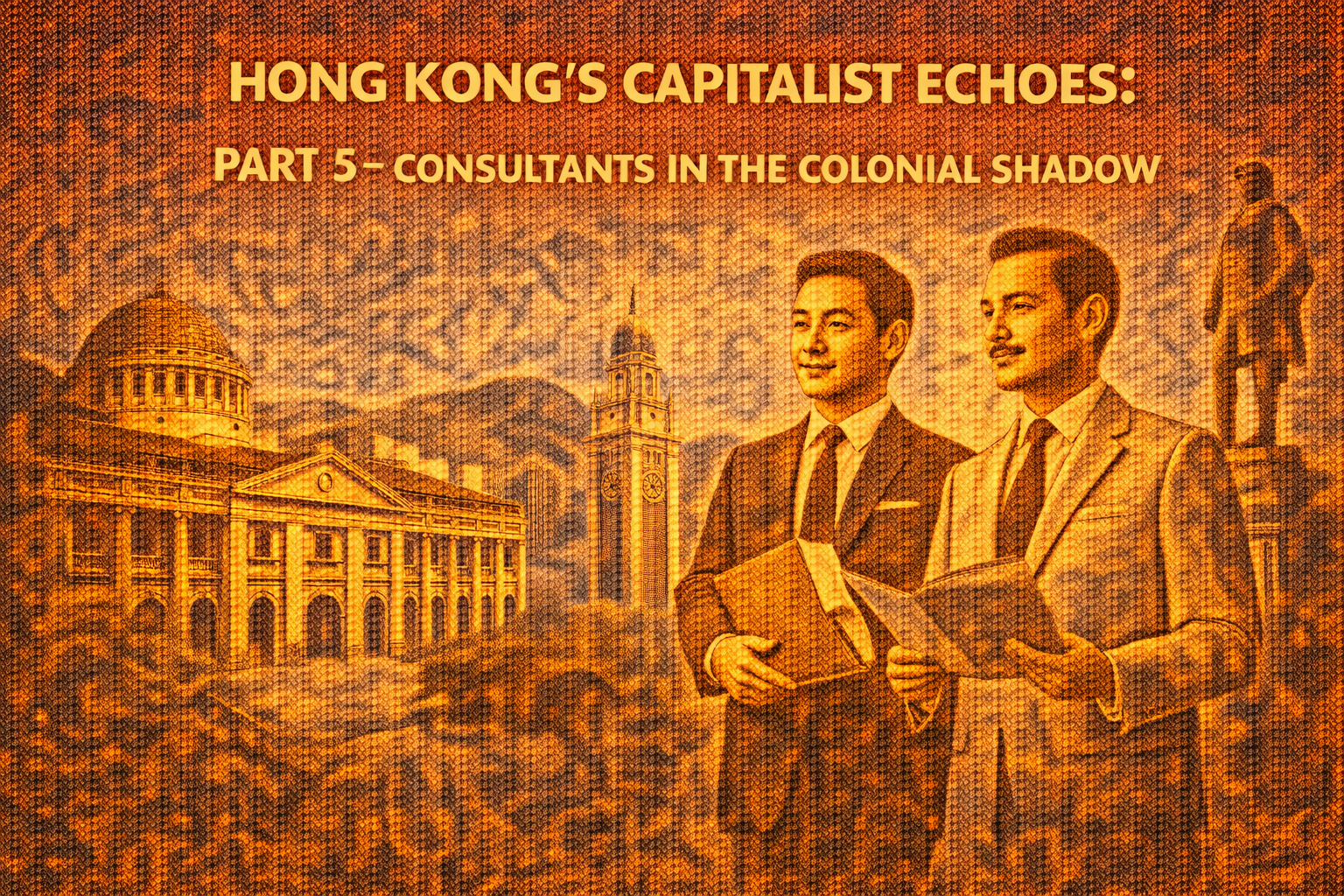
Hong Kong’s Capitalist Echoes: Part 5 – Consultants in the Colonial Shadow
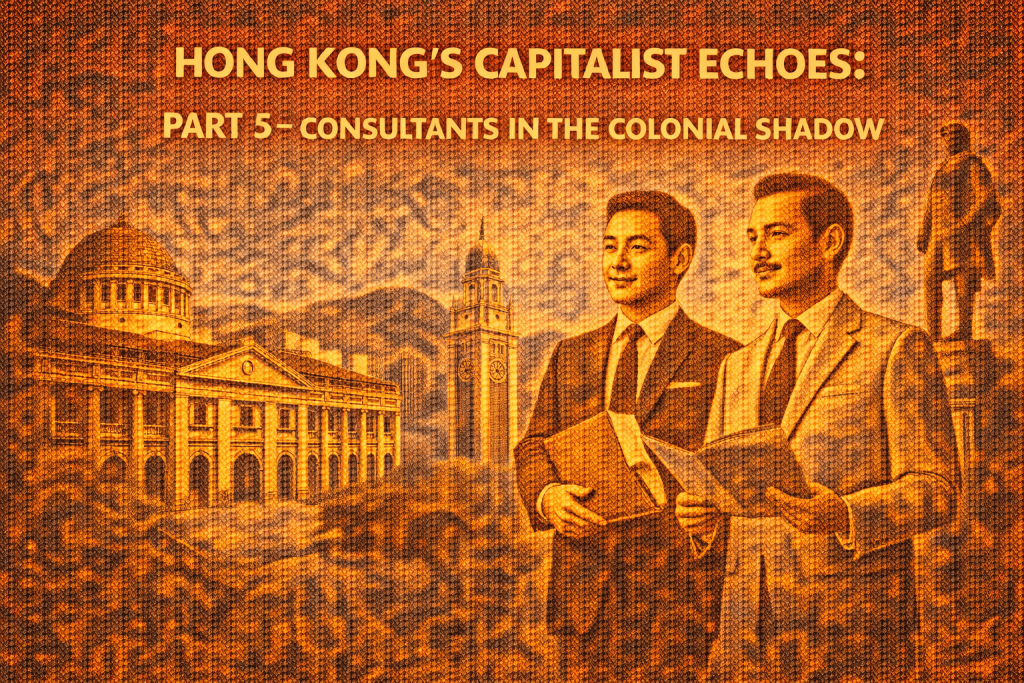
As I wrap up this series on Hong Kong’s intricate dance with capitalism, I turn my lens to the consultants who have shaped its economic narrative. In this final installment, I explore the origins of consulting in Hong Kong’s context, the distinctions between consultants and advisors, and the intriguing role of compradors. Drawing from historical records and economic analyses, I’ll maintain an objective stance, provoking thought without bias. Finally, I’ll suggest how these elements could integrate into Hollywood projects, particularly through my venture, *Echoes of Empire*, which positions me as a cultural consultant and producer bridging Hong Kong’s heritage with global storytelling.
The roots of consulting in Hong Kong trace back to the mid-19th century, amid the British colonial era following the Opium Wars. The first consultants, in a proto-modern sense, emerged as European traders and officials sought expertise to navigate the unfamiliar terrain of Chinese commerce. These early figures were often British or European merchants who advised on trade logistics, local customs, and market entry strategies for entities like the East India Company and later Jardine Matheson & Co. They consulted primarily for foreign enterprises aiming to exploit Hong Kong’s position as a free port. For instance, records from the Hong Kong Chamber of Commerce highlight how these consultants facilitated opium trade routes and tea exports, providing insights into tariff negotiations and labor management. This was not formalized consulting as we know it today—think McKinsey or Deloitte—but a pragmatic advisory role born of necessity. Provocatively, one might argue this laid the groundwork for capitalism’s consultative backbone, where knowledge became a commodity in imperial expansion. Who benefited? Predominantly Western firms, though local elites indirectly gained through alliances.
To clarify the landscape, consultants and advisors occupy overlapping yet distinct spaces in Hong Kong’s capitalist ecosystem. Consultants are typically external specialists hired for finite projects, delivering data-driven recommendations with measurable outcomes. They operate on a fee-for-service model, emphasizing objectivity and expertise in areas like strategy or operations. In Hong Kong’s history, this mirrors the post-World War II influx of management consultants from firms like Arthur D. Little, who aided in industrial restructuring during the 1950s economic boom. Advisors, conversely, often provide ongoing, relational guidance without the same detachment. They might be internal board members or trusted confidants, focusing on long-term strategy rather than tactical fixes. For example, in Hong Kong’s family-run conglomerates like Li Ka-shing’s CK Hutchison, advisors could be elder statesmen offering wisdom on succession, whereas consultants might be brought in for a one-off merger analysis. The difference is provocative: consultants commodify knowledge for efficiency, while advisors embed it in personal networks, reflecting Hong Kong’s blend of Western efficiency and Confucian relationalism. Objectively, neither is superior; their utility depends on context.
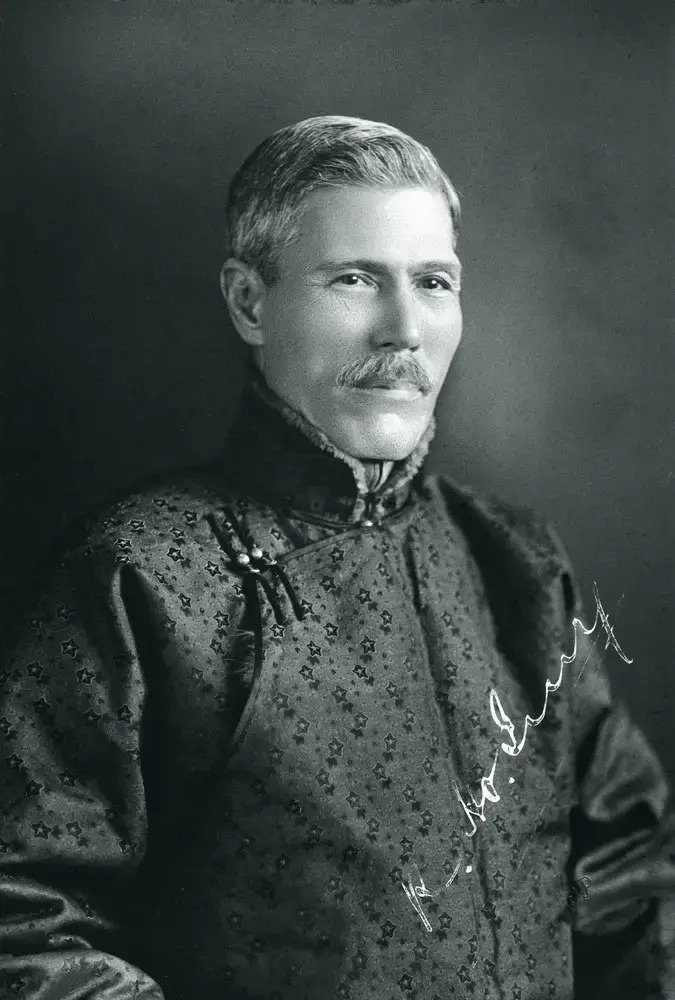
This brings us to a key question: were compradors consultants? This inquiry invites scrutiny of Hong Kong’s colonial intermediaries. Compradors, from the Portuguese “comprador” meaning buyer, were Chinese agents employed by foreign firms in the 19th and early 20th centuries. They handled procurement, negotiations, and cultural translations, often for companies like HSBC or Swire Group. Figures like Robert Hotung, a prominent Eurasian comprador, amassed wealth by advising on local markets and labor, effectively consulting on behalf of British interests. In essence, yes, compradors functioned as consultants: they provided specialized, external expertise to bridge cultural and economic divides.
However, they differed from modern consultants in their embedded loyalty—often tied to a single firm—and their role in perpetuating colonial hierarchies. Historical accounts from the Hong Kong Public Records Office depict them as vital cogs in capitalism’s machine, facilitating trade while navigating anti-foreign sentiments. Provocatively, this raises questions about agency: were they empowered entrepreneurs or mere puppets in empire-building? Neutrally, they embodied a hybrid form of consulting that fueled Hong Kong’s rise as a capitalist hub.
These historical threads resonate deeply with Hong Kong’s upper class, where consulting has evolved into a status symbol. The elite, often educated abroad and fluent in global business, view consultants as extensions of their networks—much like compradors once were. This cultural fit stems from a legacy of pragmatism and adaptability, where knowledge brokerage secures social capital. In today’s Hong Kong, firms like Bain & Company serve tycoons in property and finance, echoing comprador roles but with Ivy League polish.
Through *Echoes of Empire*, I aim to infuse these concepts into Hollywood narratives, emphasizing their cultural alignment with Hong Kong’s upper class. Imagine a thriller where a modern consultant uncovers comprador-era secrets in a high-stakes merger, fitting the elite’s world of discreet boardrooms and yacht clubs. This portrayal authentically captures the upper class’s reverence for strategic expertise, portraying consultants not as villains but as nuanced players in capitalist legacies. For a biopic series, depict the first consultants advising on colonial trades, highlighting their advisory distinctions to provoke discussions on ethics without judgment. Such stories resonate culturally, as Hong Kong’s affluent see themselves in these archetypes—global connectors blending East and West. As a producer, I’d consult on scripts to ensure accuracy, suggesting scenes in opulent settings like the Peninsula Hotel, where upper-class deals unfold. This approach not only educates but provokes: how does consulting perpetuate or challenge imperial echoes? *Echoes of Empire* thus becomes a gateway, offering Hollywood a fresh, unbiased lens on Hong Kong’s capitalist soul.
In closing this series, Hong Kong’s story with capitalism reveals consultants as enduring architects of its identity. Thank you for joining me on this exploration.