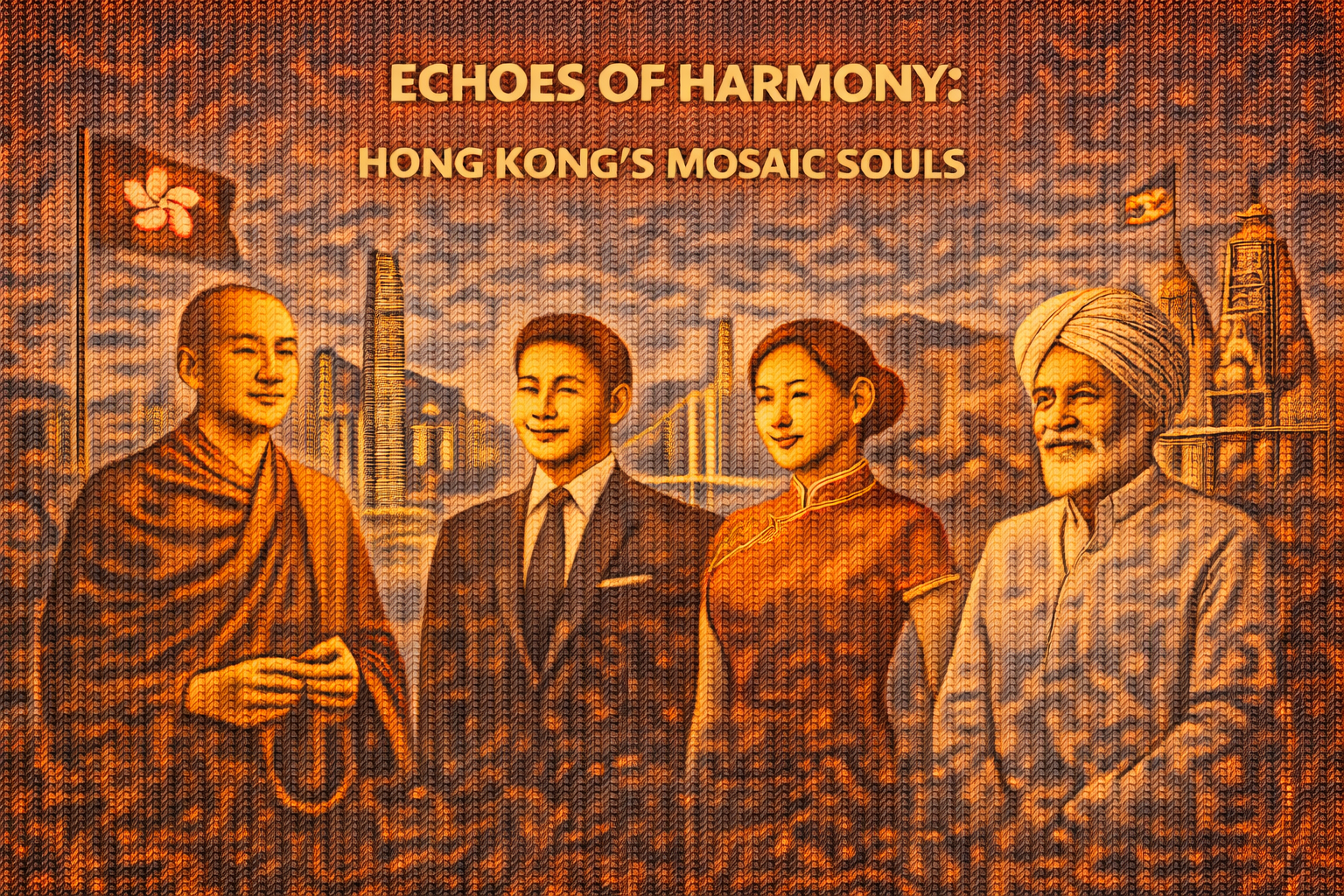
Echoes of Harmony: Hong Kong’s Mosaic Souls
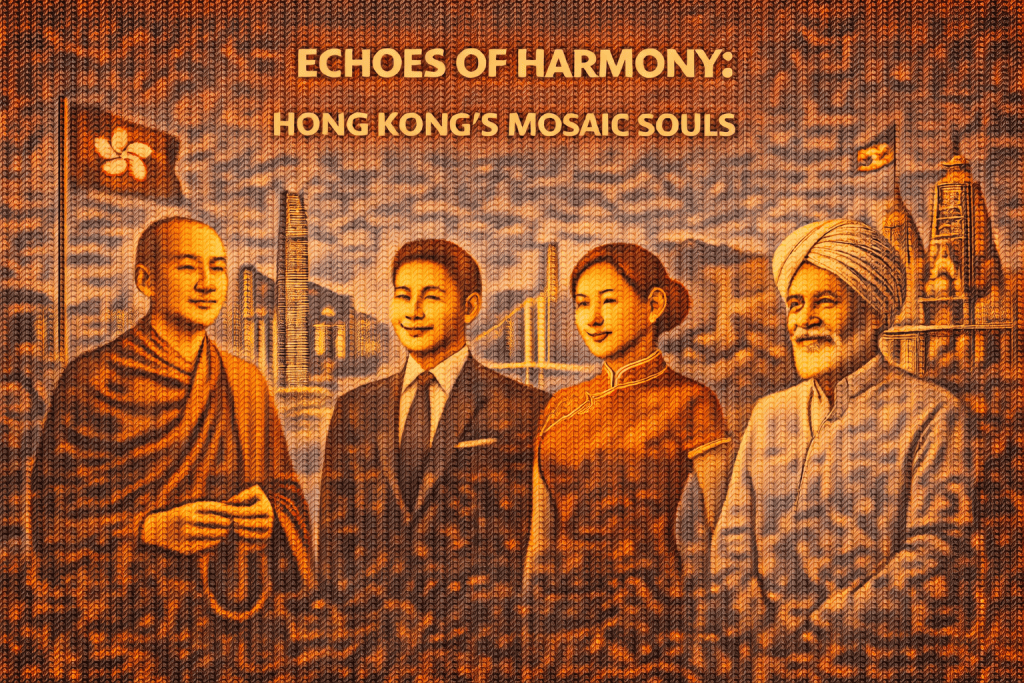
As we progress through this five-part series on Hong Kong society, I invite readers to consider the intricate web of historical forces that have molded its demographic landscape. In the spirit of Tiantai Buddhist philosophy, which posits the mutual interpenetration of all phenomena—wherein each element contains and is contained by the whole—we approach this examination with scholarly detachment. This is Part 4: Immigration Laws and Cultural Formation – From 1842 to 2026. Building upon the demographic analyses in prior installments, this section objectively traces Hong Kong’s immigration policies from the colonial inception in 1842 to the present day, Tuesday, February 3, 2026, emphasizing their role in shaping cultural dynamics, particularly within the upper class. Data are derived from official Hong Kong government archives, legislative council records, and academic studies from institutions such as the University of Hong Kong. We conclude with suggestions for cinematic representations, before advancing to Part 5’s synthesis.
Hong Kong’s immigration framework originated in 1842, following the Treaty of Nanking, which ceded the island to Britain as a crown colony. Early policies were laissez-faire, facilitating the influx of merchants, laborers, and opportunists to support entrepôt trade. The Immigration Ordinance of 1857 formalized controls, prioritizing British and European settlers while managing Chinese migration through head taxes and quotas. This era fostered a stratified society: upper-class culture emerged as a fusion of Victorian propriety and Cantonese entrepreneurship, with elite networks forming around expatriate clubs and trading houses. Tiantai’s principle of harmonious containment is evident here, as diverse inflows interwove to create a resilient cultural mosaic, evident in the philanthropy of early tycoons who blended Western education with local customs.
By the early 20th century, ordinances like the 1917 Immigration Restriction Ordinance tightened borders amid global conflicts, restricting non-British entries while encouraging skilled professionals. Post-World War II reforms, including the 1949 amendments, accommodated refugees from mainland China, swelling the population and enriching upper-class diversity. Families of means, often with mixed heritages, leveraged these policies to establish dynasties in finance and real estate, shaping elite culture toward cosmopolitanism—think exclusive societies where British afternoon tea coexisted with Confucian banquets, embodying Tiantai’s non-dual integration.
The 1970s and 1980s saw liberalization through the Touch Base Policy, allowing illegal immigrants to legalize upon reaching urban areas, until its 1980 abolition amid economic booms. This period attracted global talent, fortifying upper-class networks with professionals from South Asia and the West. Cultural impacts included the proliferation of international schools and multicultural galas, where Tiantai-like mutual possession manifested in hybrid identities—upper echelons blending Eastern spirituality with Western rationalism, as seen in charitable foundations promoting cross-cultural dialogues.
The 1997 Handover introduced the Basic Law, maintaining Hong Kong’s autonomy under “one country, two systems.” Immigration policies evolved with schemes like the 2003 Capital Investment Entrant Scheme (suspended in 2015) and the ongoing Quality Migrant Admission Scheme, targeting high-net-worth individuals and skilled workers. These facilitated elite immigration, enhancing upper-class diversity; for instance, inflows of mainland entrepreneurs post-2000s integrated Mandarin influences into high society, fostering a culture of pragmatic alliances and Tiantai-inspired harmony amid geopolitical shifts.
The 2019 protests and subsequent National Security Law (NSL) of June 30, 2020, prompted policy adjustments, including expedited emigration pathways like Britain’s BNO visa scheme, leading to outflows of over 100,000 residents by 2023 per government estimates. Concurrently, mainland integration accelerated via the Greater Bay Area initiatives, easing cross-border movements. By 2026, recent amendments to the Immigration Ordinance—enacted in 2024—have streamlined talent attraction from Belt and Road countries, countering brain drain with incentives for tech and finance experts. Objectively, these changes have reshaped upper-class culture: emigration has diluted some traditional networks, yet inflows have introduced fresh diversities, such as African and Middle Eastern professionals in elite circles. This has cultivated a more introspective high society, emphasizing discreet philanthropy and global adaptability, where Tiantai’s interconnected flux underscores resilience—cultural practices now blend virtual networks with heritage traditions, maintaining Hong Kong’s role as a global nexus.
Straightforwardly, immigration laws have not merely regulated borders but sculpted a dynamic upper-class ethos: from colonial exclusivity to post-Handover inclusivity, and now NSL-era pragmatism. Academic analyses from the Hong Kong Policy Research Institute note a 15% rise in multicultural upper-class marriages since 1997, reflecting policy-driven evolutions without implying causation or judgment.
For Hollywood, consider integrating these themes into period dramas: a film chronicling a fictional upper-class family’s saga from 1842 to 2026, using Tiantai motifs to symbolize cultural interpenetration—perhaps a narrative arc where immigration policies force characters to harmonize conflicting identities, authentically portraying elite resilience. Alternatively, a contemporary thriller could depict NSL-era migrations, highlighting upper-class adaptations in a neutral light, provoking audiences to reflect on global mobility’s cultural imprints.
This concludes Part 4. In Part 5, we synthesize these threads into a cohesive conclusion.