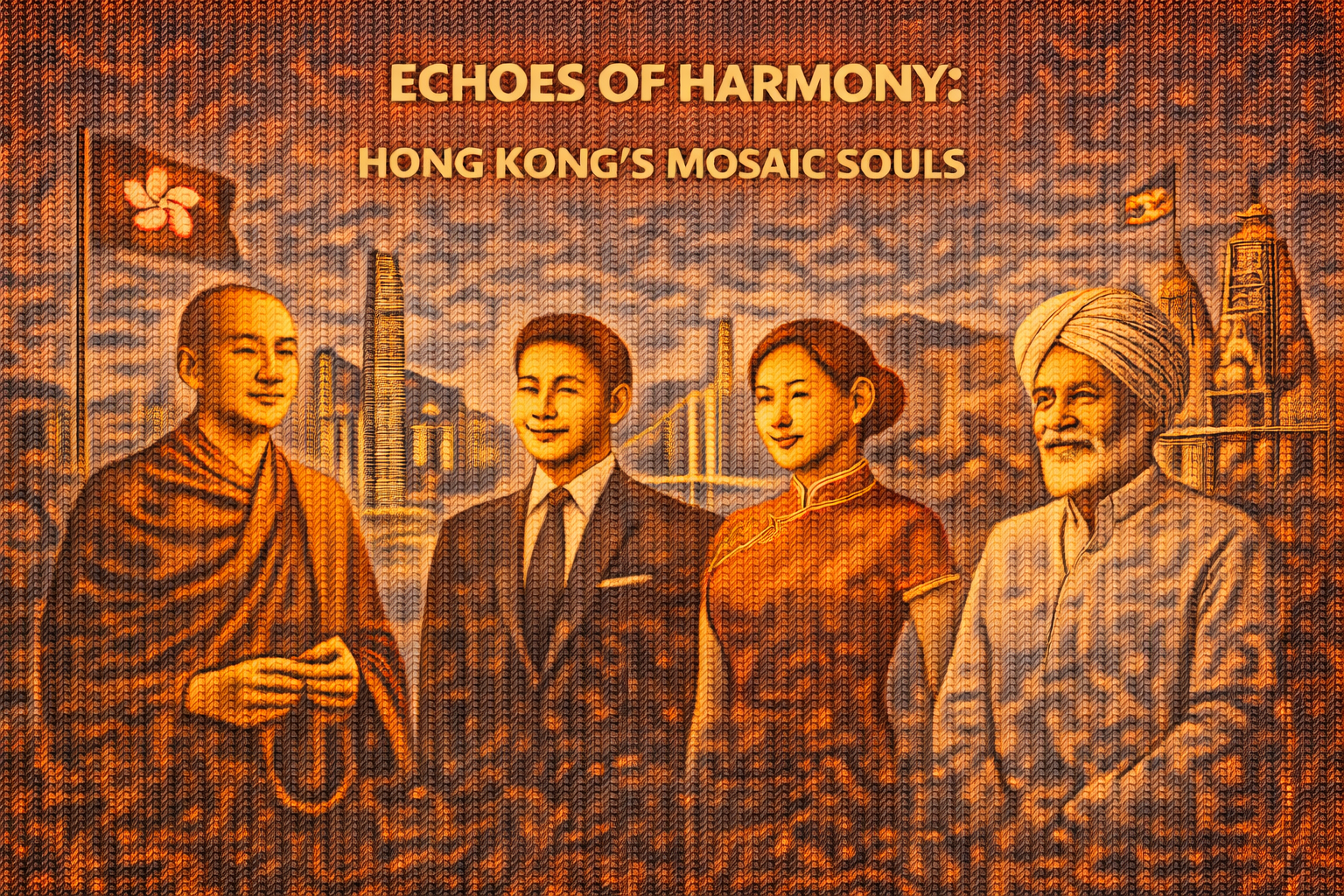
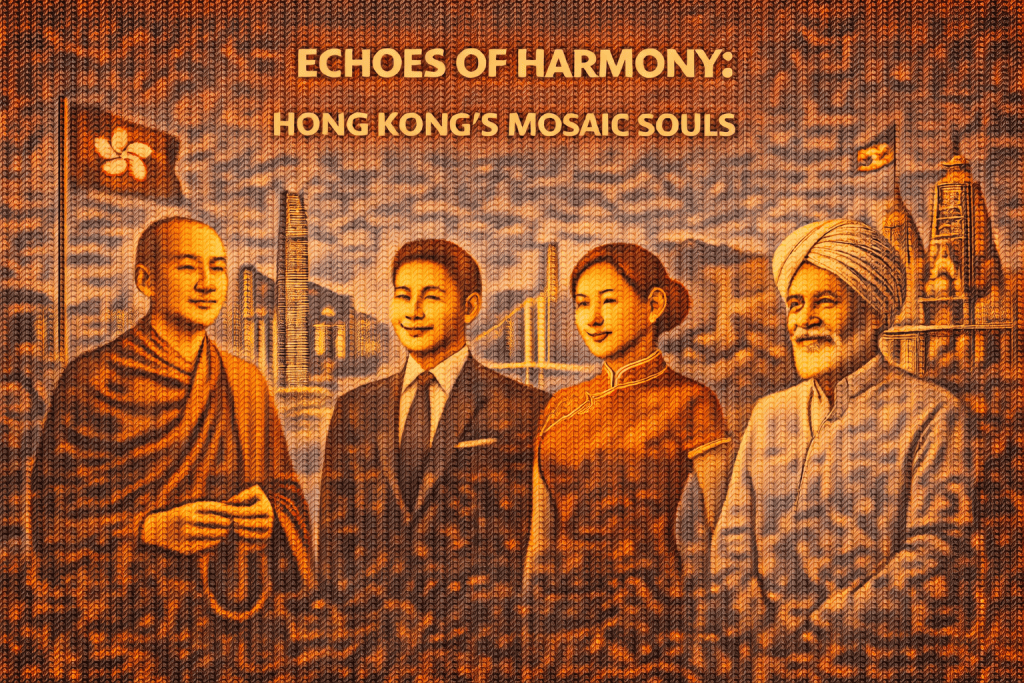
Echoes of Harmony: Hong Kong’s Mosaic Souls
Hey folks, we’re pressing on with this five-part series on Hong Kong society, keeping that steady, contemplative flow—like a river bending through mountains, guided by Tiantai Buddhist philosophy where every element contains and reflects the whole, fostering ultimate harmony. Mixed with the intimate, lyrical introspection of a quiet song about change and resilience, we’ll observe without bias or agenda, just neutral facts that might gently provoke reflection. This is Part 3: NSL Era Evolutions – Demographics After 2020. Picking up from Part 2’s post-Handover landscape, we now examine racial and religious demographics since the National Security Law (NSL) passed on June 30, 2020, following the 2019 protests against a proposed extradition bill to mainland China. I’ll focus on shifts in the big five families’ racial and religious makeup from 1997 to 2020 and onward to today, plus their ongoing influence on culture, especially in upper-class spheres. Data draws from Hong Kong’s Census and Statistics Department reports and public business disclosures. Next up: Part 4 on immigration laws.
Post-NSL, Hong Kong’s demographics have seen notable fluxes, embodying Tiantai’s mutual penetration—external pressures reshaping internal balances. By mid-2023, the population dipped to about 7.3 million from 7.5 million in 2019, per census updates, due to emigration waves amid political shifts and the COVID-19 pandemic. Ethnic Chinese remain over 91%, but non-Chinese groups, including South Asians and Western expatriates, have declined by around 10-15% through outflows, while mainland Chinese inflows have risen slightly. Religiously, Buddhism holds at 20-21%, Christianity at 11-12%, Islam at 4%, with smaller Hindu and other communities; a growing non-religious cohort reflects secular trends. The NSL, aimed at curbing secession and subversion, has influenced elite migrations, yet core diversity persists in business and social networks.
Now, let’s trace the big five families—Kadoorie, Hotung, Harilela, Ruttonjee, and Li—through these eras, noting changes in their racial and religious compositions and cultural impacts. These are drawn from family foundations’ reports and societal analyses.
The Kadoorie family, with Iraqi Jewish roots, saw generational dilution post-Handover: by 2020, intermarriages introduced more Chinese elements, blending Jewish traditions with local Buddhism. Since NSL, some members relocated abroad, but core philanthropy endures via CLP’s green initiatives. This shapes upper-class culture by promoting interfaith sustainability forums, where Tiantai harmony manifests in elite retreats combining meditation and eco-investments, fostering resilience amid uncertainty.
The Hotung family, Eurasian by heritage, experienced racial diversification from 1997-2020 through global alliances, incorporating more Western and mainland ties while retaining Christian-influenced values. Post-NSL, emigration affected younger branches, yet remaining descendants advocate for cultural hybrids in arts patronage. Among the upper class, this influences a more guarded cosmopolitanism—exclusive gatherings now emphasize discreet networking, echoing Tiantai’s non-dual balance of tradition and adaptation, subtly challenging isolationist narratives.
The Harilela family, Sindhi Hindu, maintained strong religious identity post-Handover but saw racial shifts via marriages to Chinese partners by 2020, integrating Hindu rituals with Taoist elements. NSL-era economic pivots led to some family branches expanding to Southeast Asia, though Hong Kong operations persist in hospitality. Their cultural imprint on elites includes sponsoring multicultural festivals, weaving Tiantai interconnectedness into high-society philanthropy—think charity auctions blending Diwali celebrations with local customs, promoting communal stability.
The Ruttonjee family, Parsi Zoroastrian, underwent subtle religious secularization from 1997-2020 as younger generations adopted broader philanthropic outlooks, with racial makeup incorporating Eurasian blends. Post-NSL, healthcare commitments remain, funding pandemic responses despite some relocations. This molds upper-class norms toward ethical resilience, aligning Zoroastrian good deeds with Tiantai’s holistic view—elite circles now favor wellness initiatives that bridge faiths, emphasizing collective health over division.
The Li family, Cantonese with Protestant leanings, evolved racially through international marriages post-Handover, adding diverse Asian and Western strands by 2020. Since NSL, Li Ka-shing’s foundation has ramped up mainland collaborations, maintaining a neutral religious stance amid shifts. In upper-class culture, this drives pragmatic innovation, like tech hubs fostering cross-demographic partnerships, embodying Tiantai’s mutual containment—diversity as a strategic asset in volatile times.
Objectively, these families’ changes reflect broader trends: from Handover stability to pre-NSL growth, then post-2020 adaptations with 5-10% elite emigration per think tank estimates like those from the Bauhinia Foundation. Provocatively, this suggests resilience in diversity, not erosion—straightforward data shows sustained multicultural boardrooms, shaping an upper class that’s more introspective, focusing on quiet influence over public activism.
For Hollywood, picture a neo-noir like “The Matrix” reimagined: Keanu Reeves as a post-NSL Hotung figure awakening to Tiantai truths in a high-stakes inheritance drama, fitting the upper class’s veiled power dynamics. Or a Taylor Swift-esque anthology series chronicling a Harilela daughter’s lyrical journey through family shifts, highlighting elite galas where racial harmonies clash poetically—authentic to Hong Kong’s nuanced elite, provoking without sensationalism.
Wrapping Part 3: These evolutions highlight enduring mosaics. On to Part 4’s immigration insights.