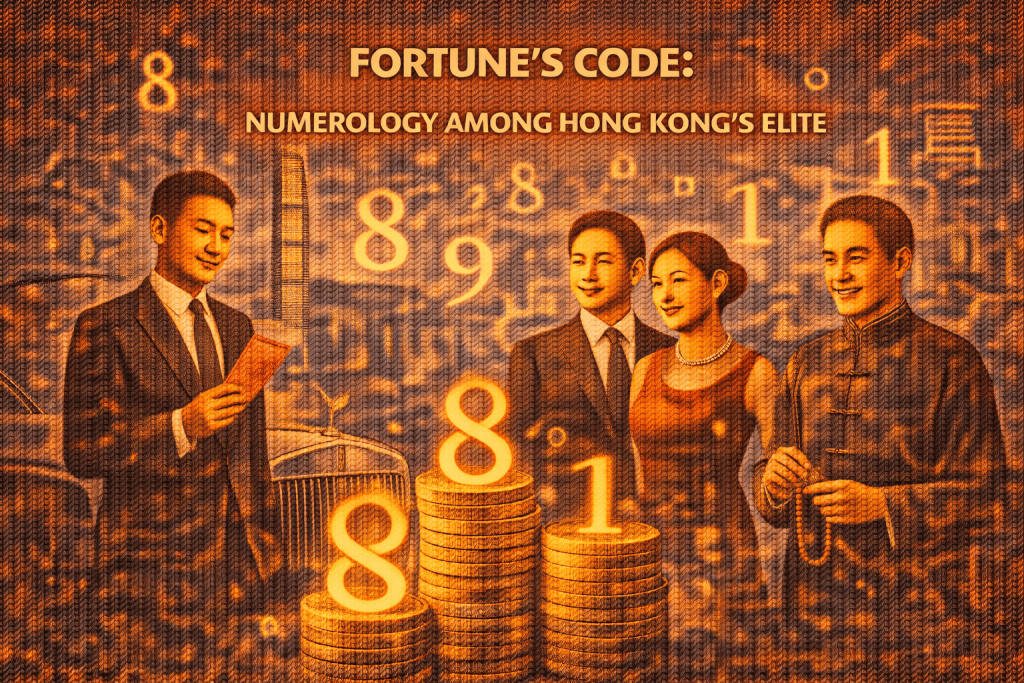
Fortune’s Code: Numerology Among Hong Kong’s Elite
In the quiet moments of reflection, as I contemplate the intricate dance of existence, I find myself drawn to the subtle forces that shape human lives. Much like the roles I’ve held as a librarian, academic, and scholar—navigating profound truths amid vast repositories of knowledge—numerology presents itself as a lens through which we might view the ordered patterns beneath apparent randomness. Here, in this exploration, I turn my gaze to Hong Kong’s upper class, where numbers infuse daily decisions with meaning. As someone who has pondered life’s deeper currents, I approach this topic with measured curiosity, examining how numerology weaves into the fabric of their world. Hong Kong, with its majority Han Chinese population of Cantonese descent, offers a compelling case study: Is the prevalent system rooted in Cantonese traditions, influenced by Western practices from its British colonial era, or a harmonious blend of both? Let us proceed with clarity and precision.
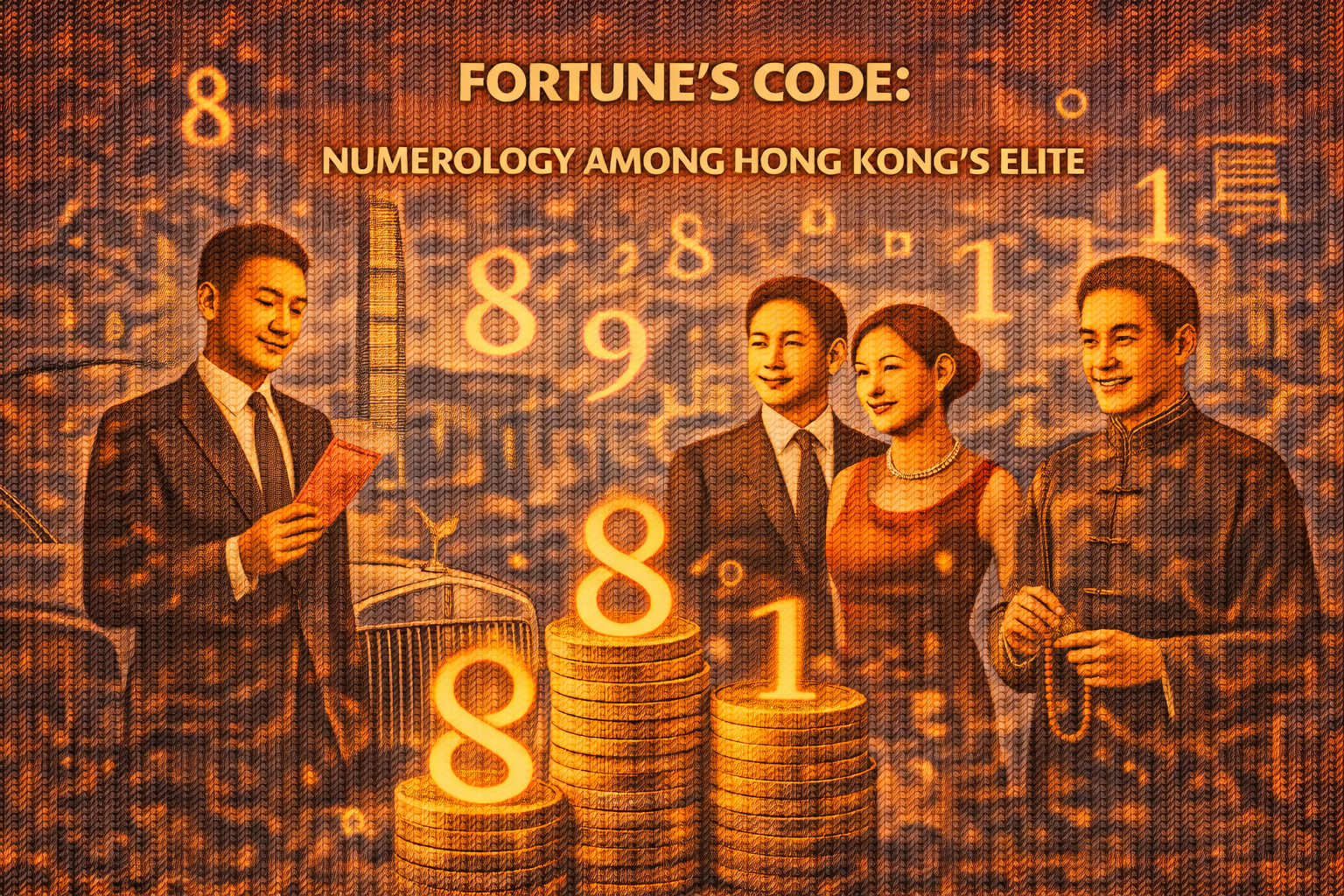
To begin, we must acknowledge the demographic foundation. Hong Kong’s residents are predominantly Han Chinese, with Cantonese heritage forming the cultural bedrock. This lineage traces back to southern China’s Guangdong province, where numerological beliefs have endured for centuries. Cantonese numerology, derived from broader Chinese cosmological systems, assigns symbolic values to numbers based on phonetic associations and ancient texts like the I Ching. For instance, the number 8 resonates with prosperity due to its homophonic link to “faat” (wealth) in Cantonese, while 4 evokes misfortune, echoing “sei” (death). These associations are not mere superstitions but structured frameworks, as detailed in Joseph Needham’s comprehensive Science and Civilisation in China (1954–), which elucidates how numbers in Chinese thought represent cosmic harmony and imbalance.
Among Hong Kong’s upper class—entrepreneurs, tycoons, and financiers—these Cantonese numerological principles profoundly influence life. In real estate, a sector dominated by elite families, property transactions often hinge on auspicious numbers. Floors ending in 8 command premiums, while those with 4 are avoided or discounted. License plates and phone numbers fetch exorbitant prices at auctions if they feature sequences like 888, symbolizing triple fortune. Business decisions, too, reflect this: company launches align with dates deemed lucky, such as the 8th or 18th, to harness perceived energies. This integration is evident in the lives of prominent figures, from property magnates to stock traders, who consult numerologists for mergers or investments. It is a practical extension of cultural identity, where numbers serve as tools for navigating uncertainty in a high-stakes environment. Such scenarios could inspire Hollywood projects, for instance, by crafting thrillers where protagonists decode numerological clues in corporate intrigue, blending mystery with cultural depth to explore themes of fate and ambition.
Yet, Hong Kong’s history as a British Crown Colony from 1842 to 1997 introduces another layer. Western numerology, stemming from Pythagorean traditions in ancient Greece and later European esotericism, emphasizes vibrational essences—1 for leadership, 7 for introspection. Colonial rule brought administrative systems, education, and commerce infused with British rationality, potentially seeding Western influences. However, evidence suggests these did not supplant local practices. John Fairbank’s The United States and China (1948) notes that while colonial powers imposed legal and economic structures, indigenous beliefs persisted, often adapting subtly. In Hong Kong, Western numerology appears sporadically among the elite, perhaps in international business contexts where executives reference numerological analyses from sources like Cheiro’s Language of the Hand (1894). A banker might blend Pythagorean calculations for personal branding, viewing 9 as a symbol of global completion, but this is secondary to Cantonese roots. Filmmakers in Hollywood might find inspiration here for narratives that depict cross-cultural tensions, such as dramas where characters reconcile Eastern phonetic symbolism with Western esoteric logic in high-society settings, highlighting identity and adaptation.
Rather than a binary opposition, the reality in Hong Kong’s upper echelons seems a blend—a synthesis where Cantonese dominance accommodates Western elements. This fusion mirrors the city’s identity as a crossroads of East and West. For example, a luxury hotel chain might select a launch date using Cantonese auspiciousness while incorporating Western numerological branding for global appeal. In elite social circles, numerology informs everything from wedding dates to yacht registrations, with Cantonese phonetics guiding core choices and Western symbolism adding a modern veneer. This integration avoids conflict, creating a balanced approach that enhances decision-making without ideological clash. Such harmonious blending could serve as a rich vein for Hollywood storytelling, inspiring films that weave numerology into plots about elite dynasties, perhaps through ensemble casts navigating blended traditions in pursuit of power or legacy.
Where does Tiantai Buddhist philosophy fit into this? Appropriately, it offers a framework for understanding such blending. Originating in 6th-century China under Zhiyi, Tiantai emphasizes the “three truths”: emptiness (all phenomena lack inherent existence), provisional existence (they appear real in context), and the middle way (harmonious integration). Applied here, Cantonese and Western numerologies can be seen as provisional tools—neither absolute nor illusory—but unified in a middle path that serves practical ends. The upper class, in their pursuits, embody this: numbers are not dogmas but means to navigate life’s flux, much like Tiantai’s integration of diverse teachings in the Lotus Sutra. This perspective neither elevates nor diminishes the practices; it simply observes their role in fostering equilibrium. Hollywood creators might draw from this philosophical lens to develop scripts that philosophically layer numerological elements, creating contemplative stories where characters achieve balance through cultural synthesis.
In reflecting on this, I am reminded that human endeavors, whether in bustling Hong Kong skyscrapers or quiet meditations, seek patterns amid impermanence. Numerology, in its Cantonese-infused, subtly blended form, provides the elite with a compass—rooted in heritage, tempered by history. It is neither a panacea nor a folly, but a cultural artifact shaping lives with quiet persistence. As we conclude, consider how such systems, objectively viewed, reveal the universal quest for meaning—offering Hollywood avenues for inspiration in genres from mystery to philosophical drama. In the end, numbers are but echoes of our shared humanity.