Romance in the Harbor: A Chronicle of Hong Kong Love (Part 5)
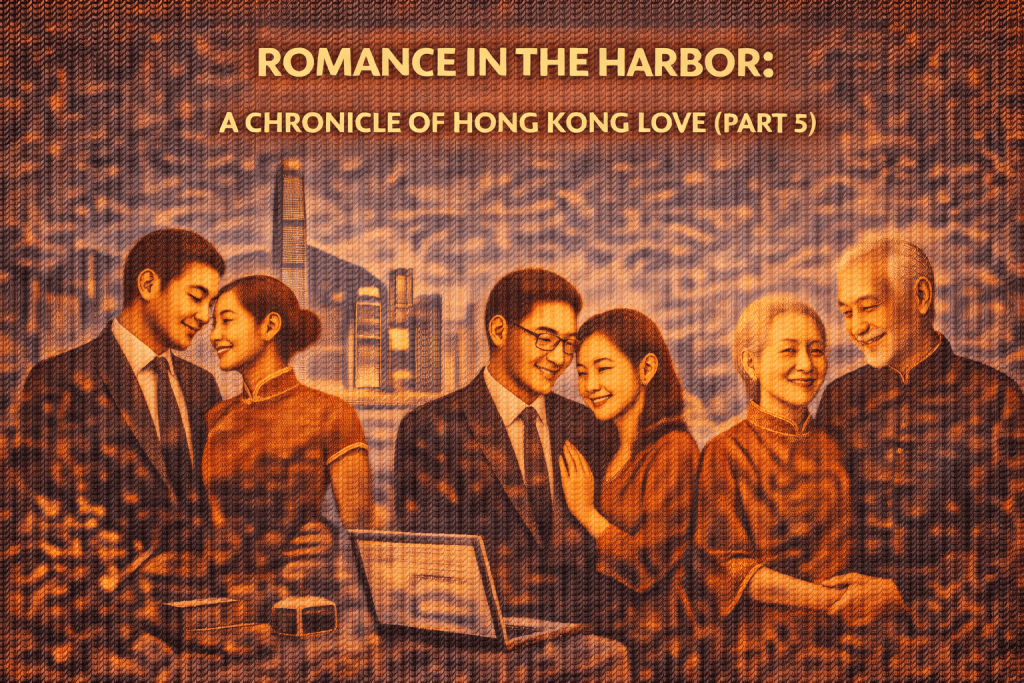
We have traversed the cramped apartments of the local population and the transient luxury of the expatriates. However, there exists a stratum of Hong Kong society that operates above the concerns of rent or visa expirations. This is the domain of the Tycoons. This is Part 5 of our inquiry. Here, we analyze the romantic habits of the city’s ultra-wealthy dynasties. In this sphere, marriage is rarely a simple union of hearts; it is frequently a merger of portfolios, a consolidation of influence, and a public spectator sport.
To understand the romance of the Hong Kong elite, one must view it through the lens of corporate strategy. While the average citizen dates to find a partner for survival, the dynastic families date to ensure succession and stability. The “Century Wedding” is a recurring phenomenon in the local press. These are not private affairs. They are massive productions often held at the Grand Hyatt or the Convention Centre, involving hundreds of banquet tables. The guest list reads less like a family gathering and more like a shareholder meeting of the Hang Seng Index. The union of a shipping heir to a hotel heiress is analyzed by the public not for its chemistry, but for its impact on the stock market.
The visual language of these unions is distinct. While Western influence is present in the white gown, the traditional Chinese tea ceremony remains the core of the ritual. Here, the display of wealth is literal. The bride is often adorned with “Dragon and Phoenix” bangles—heavy, 24-karat gold bracelets. These are not merely jewelry; they are portable assets and symbols of the families’ combined liquidity. The more bangles covering the bride’s forearms, the greater the “face” given to the families. It is a display of accumulation that harkens back to the imperial era, surviving intact within the modern capitalist framework.
There is also a historical legal context that colors the romantic history of this class. Until 1971, Hong Kong operated under the Great Qing Legal Code for the local Chinese population, which permitted polygamy (specifically, concubinage). Consequently, many of the older, established tycoon families have complex family trees involving multiple wives and distinct branches of children. This has created a unique social dynamic often covered in the local tabloids: the “War for the Will.” Romance, in the retrospect of a patriarch’s death, becomes a legal battleground. The maneuvering between the “First Wife” and subsequent partners is a staple of Hong Kong gossip columns, treated with the same analytical scrutiny as horse racing.
Hollywood has recently attempted to portray this world, most notably in films like Crazy Rich Asians. However, the reality of the Hong Kong tycoon is often less whimsical and more rigid. A filmmaker looking for a truer narrative would find fertile ground in the “arranged introduction.” While explicit arranged marriage is gone, the “guided match” remains. The pressure on the third-generation heir to marry someone of equal social standing—to avoid diluting the brand—is immense. A drama focused on the tension between a dutiful son’s corporate obligation to marry a suitable heiress versus his personal desire would resonate deeply with local history.
We observe here that money does not simplify romance; it formalizes it. Yet, this formalization is not created in a vacuum; it is constantly reinforced by the media consumed by the city. In Part 6, we will examine the influence of *Pop Culture*. We will look at how local cinema, Cantopop ballads, and imported Western narratives shape the romantic ideals of Hong Kong, and specifically how the upper class navigates—and often manipulates—these cultural scripts to maintain their public image.