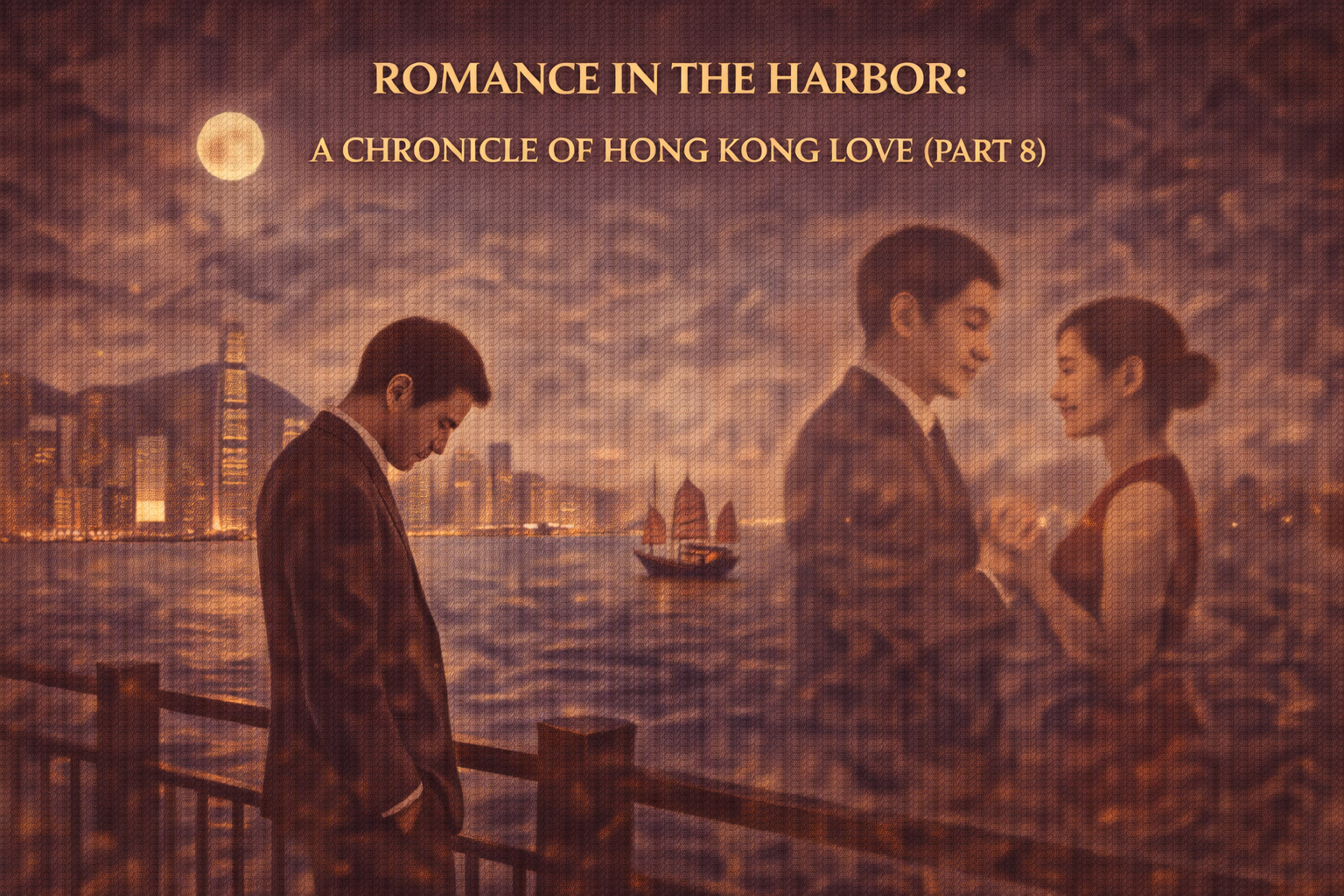
Romance in the Harbor: A Chronicle of Hong Kong Love (Part 8)
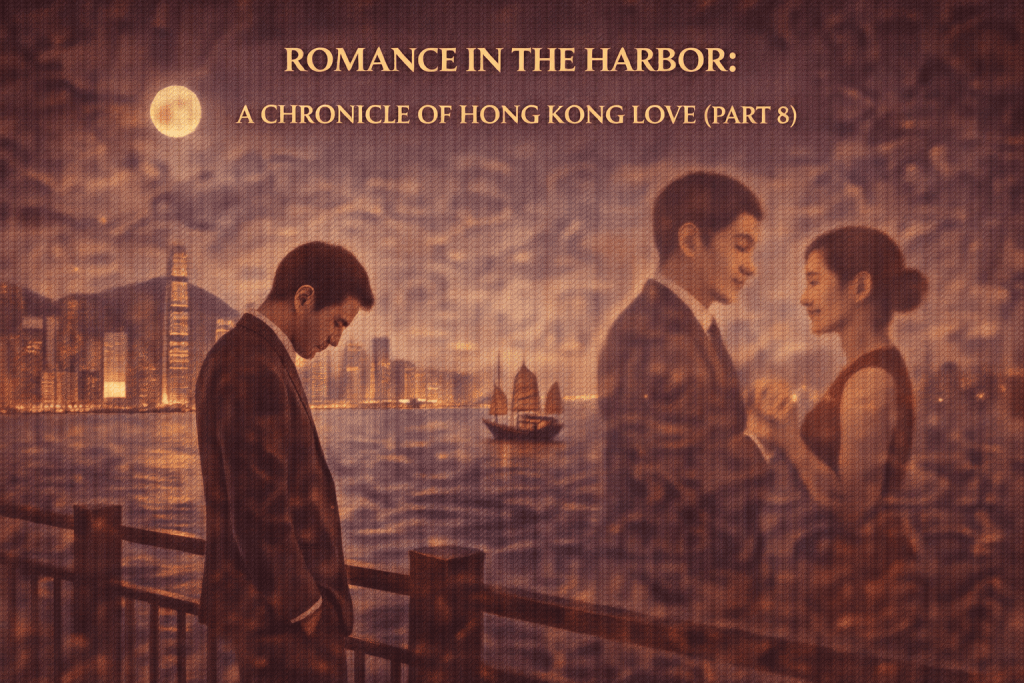
We have previously mapped the physical high ground of the city, noting how the elite utilize geography to isolate themselves. However, isolation does not guarantee simplicity. The occupants of these private clubs and luxury suites are rarely monocultural. They are often products of a specific educational migration: born in Hong Kong, educated in British boarding schools or American Ivy Leagues, and returned to the harbor to inherit the family legacy. This is Part 8 of our inquiry. Here, we analyze the *Cross-Cultural Intersection*. We observe the romantic lives of the “Third Culture Kids” (TCKs) and the “Returnees,” a demographic caught between the liberal individualism of the West and the dynastic collectivism of the East.
To understand this group, one must recognize the duality of their existence. They possess what is often described as “Western software running on Eastern hardware.” They speak English with the accents of the Home Counties or the American East Coast, yet their family obligations remain deeply Confucian. In romance, this creates a specific friction. A partner chosen during university in London or New York—based on shared interests and chemistry—may not survive the transplant back to Hong Kong, where the criteria shift to family background, social standing, and business synergy.
For Hollywood, this dynamic offers a sophisticated update to the “Culture Clash” rom-com. The conflict is not between a foreigner and a local, but within the protagonist themselves. A script could focus on the *”Code-Switcher.”* The narrative would follow a character who maintains two distinct romantic personas: the dutiful heir who attends banquets and dates approved partners from rival families, and the authentic self who maintains a secret relationship with someone “unsuitable” (an artist, a foreigner, or someone from public housing). The tension arises not from a villain, but from the exhaustion of maintaining two separate lives in a city that is geographically tiny and intensely gossipy.
We also observe the phenomenon of the “Expat Bubble” colliding with the “Local Elite.” In districts like Soho and Lan Kwai Fong, these groups mix. However, serious long-term commitment often faces the “Bamboo Ceiling” of family approval.
This structural barrier provides the foundation for a modern *Period Drama sensibility in a contemporary setting*. Just as Edith Wharton documented the rigid social codes of Old New York, a filmmaker could document the rigid codes of current Hong Kong. The “Tea Ceremony” serves as the ultimate cinematic set piece. It is a visual ritual of submission and integration. A dramatic scene could center on a Western partner attempting to navigate this ritual. The suspense is derived from the minutiae of etiquette—how low to bow, how to hold the cup—where a single slip represents a failure to respect thousands of years of tradition, potentially costing the partner the relationship.
Furthermore, we must consider the “Strategic Merger.” Among the ultra-wealthy, marriage remains a mechanism for consolidating asset classes. Romantic love is often secondary to the alignment of corporate interests.
This reality creates an opening for a *Psychological Thriller or “Domestic Noir.”* The story could center on a couple whose marriage is effectively a merger between two property conglomerates. The public face of the relationship is curated perfection (as discussed in Part 6), but the private reality is a cold war of board seats and voting rights. If one partner falls in love with an outsider, it is not just an affair; it is a breach of contract and a threat to the stock price. The film would explore the danger of treating intimacy as a transaction.
Finally, there is the narrative of the “Trailing Spouse.” In the expatriate community, one partner is often moved to Hong Kong for a high-powered finance role, while the other follows, stripped of their career and support network. This imbalance breeds a specific type of isolation amidst luxury. A poignant *Character Study* could explore the loss of identity experienced by the partner who is “left behind” in the high-rise apartment, surrounded by domestic help but devoid of purpose, seeking connection in a transient city.
In summary, the romantic life of the Hong Kong upper class is a navigation of dual identities. It is a negotiation between the person they became abroad and the person they must be at home. We have now examined the architecture, the economy, the culture, the geography, and the identity of love in this city.
In Part 9, we will conclude our series. Just in time for St. Valentine’s Day, we will synthesize these observations to answer the fundamental question: In a city built on transient capital and permanent concrete, what is the ultimate nature of the Hong Kong Love Story?