Romance in the Harbor: A Chronicle of Hong Kong Love (Part 9)
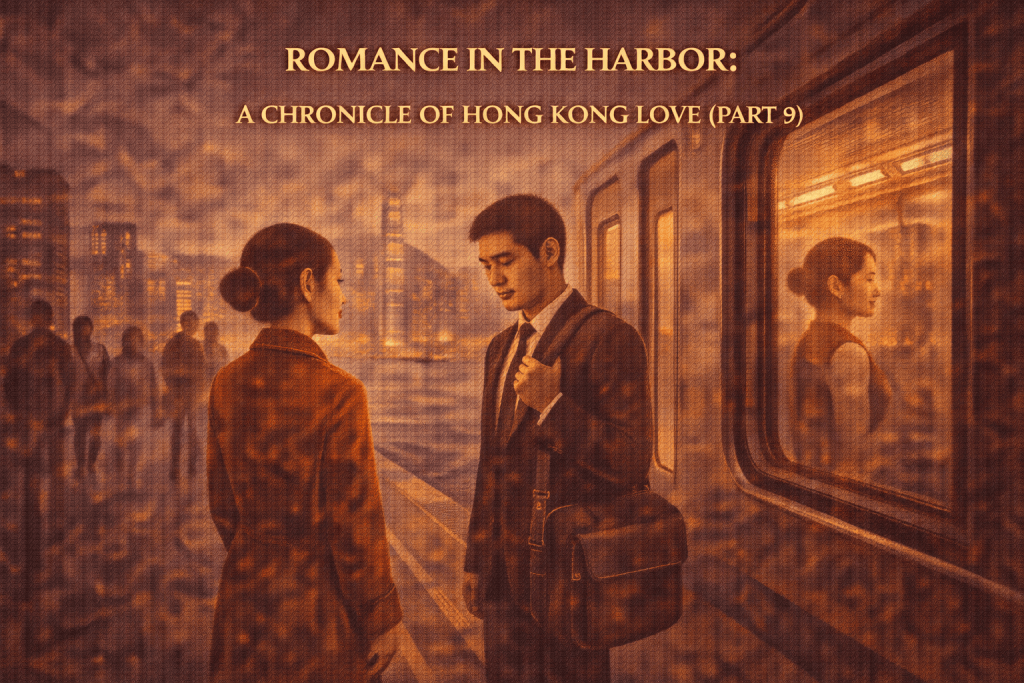
We have arrived at the conclusion of our inquiry. Over the past eight entries, we have dissected the romantic infrastructure of Hong Kong. We have analyzed the economics of the “Golden Handcuffs,” the architecture of the “Nano-Flat,” the sociology of the “Tiger Mom,” and the geography of the private club. It is fitting that we conclude this series now, as the calendar turns to St. Valentine’s Day. It is also intentional that this series concludes at Part 9.
In Cantonese numerology, the number nine (gau2) is homophonous with the word for “everlasting” or “eternity” (gau2). It is the number of longevity. While the number eight signifies wealth, the number nine signifies endurance. In the context of marriage and romance, it is the ultimate aspiration. Therefore, Part 9 is not merely an ending; it is a wish for durability.
Throughout this series, we have observed that love in Hong Kong is often characterized by pragmatism rather than idealism. Western narratives frequently prioritize the “spark”—the initial, volatile chemical reaction of falling in love. Hong Kong narratives, driven by the intense pressures of the city, prioritize the “structure”—the ability of a relationship to withstand external forces.
For Hollywood, this distinction offers a profound opportunity to redefine the romantic genre. The “Hong Kong Love Story” is arguably the antidote to the traditional “Rom-Com.”
Consider the *”Real Estate Romance.”* In a standard Hollywood film, the climax might involve a grand public declaration of love or a dash to the airport. In a Hong Kong narrative, the ultimate romantic gesture is financial cooperation. A grounded, realistic film could focus on a young couple navigating the labyrinth of the property market. The narrative arc tracks their transition from individual dreamers to a unified economic entity. The “villain” is not a rival lover, but the housing index. The proposal scene is not “Will you marry me?” but the locally famous pragmatic question: “Will you apply for public housing with me?” or “Shall we stop paying rent to a landlord and pay the bank together?” This reframes romance not as a fairy tale, but as a strategic alliance against a difficult world.
Furthermore, the concept of “Gau” (Everlasting) invites a *Generational Epic. Hollywood often focuses on the start of a relationship. Hong Kong’s history—rapidly changing from a fishing village to a colonial hub to a global financial center—provides the backdrop for a story about the *middle and the end of love. A film could follow a single couple across forty years (spanning the 1997 handover to the present day). We would see how their relationship evolves as the skyline rises around them. It would illustrate that in a city where buildings, governments, and fortunes change overnight, the only permanent structure is the partnership between two people.
We must also consider the *”Cross-Cultural Dramedy”* one final time. As we discussed in Part 8, the city is a meeting point. A final script idea could explore the “Translation of Love Languages.” A Western protagonist expects verbal affirmation (“I love you”). The Hong Kong partner expresses love through service and sacrifice (peeling fruit, paying bills, enduring family criticism). The conflict and eventual resolution come from learning to read these silent signals. It teaches the audience that romance is not a universal language, but a local dialect that must be learned.
*The Verdict*
So, what is the geography of love in Hong Kong? It is a high-pressure environment. It is squeezed by small apartments, scrutinized by extended families, and monetized by luxury brands. It is a performance in a banquet hall and a negotiation in a boardroom.
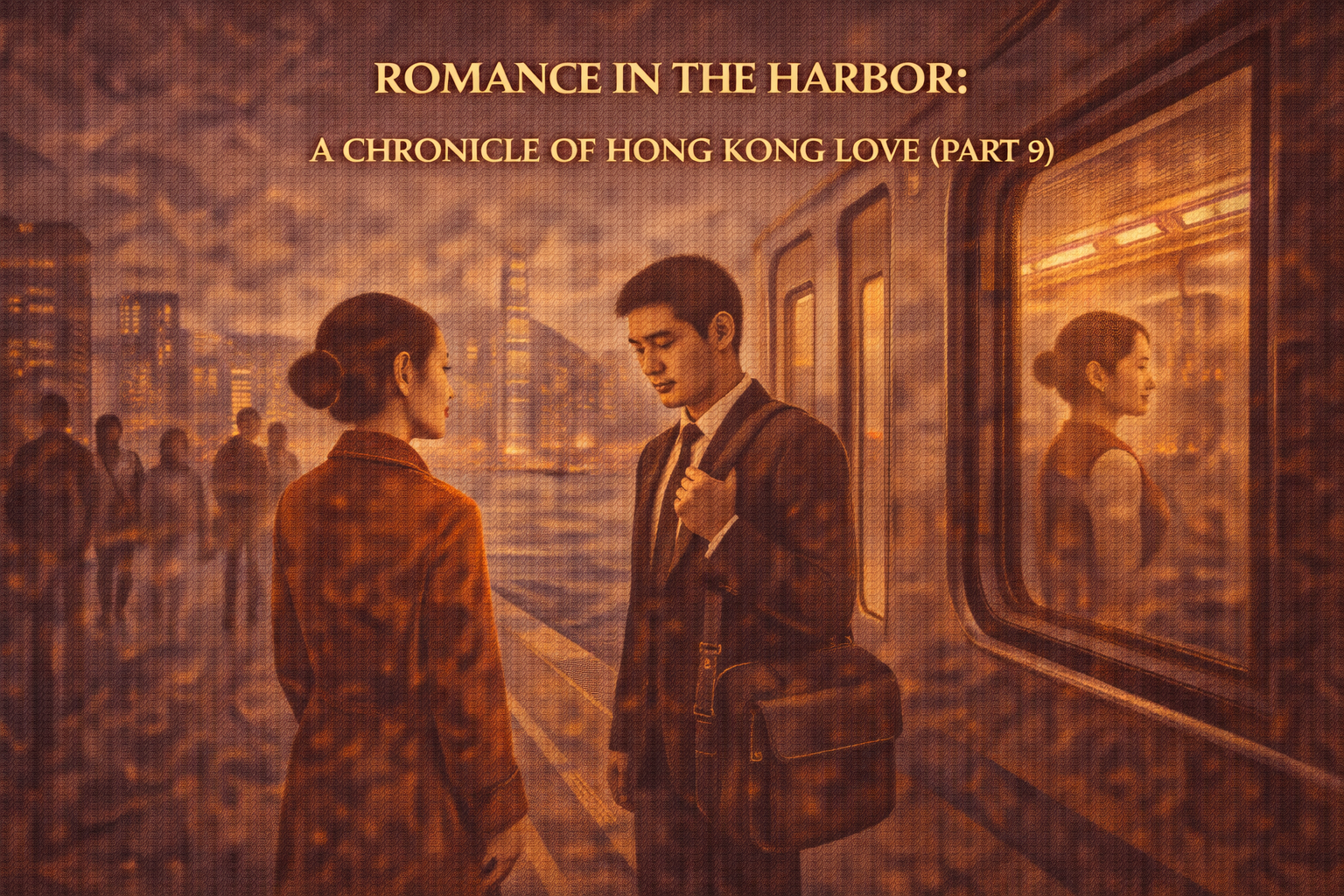
However, precisely because the environment is so hostile to relaxation, the connections that survive are incredibly strong. The couples holding hands on the Star Ferry, or sharing a cramped table in a Cha Chaan Teng, are not just lovers; they are teammates.
In a city of transience, where people and capital flow in and out like the tide in Victoria Harbor, the decision to stay—and to stay together—is the most significant act of all.
To the readers of Echoes of Empire, we hope this chronicle has provided a new lens through which to view the city. Whether you are celebrating St. Valentine’s Day with a red rose or a red packet, we wish you “Gau”—a love that lasts.