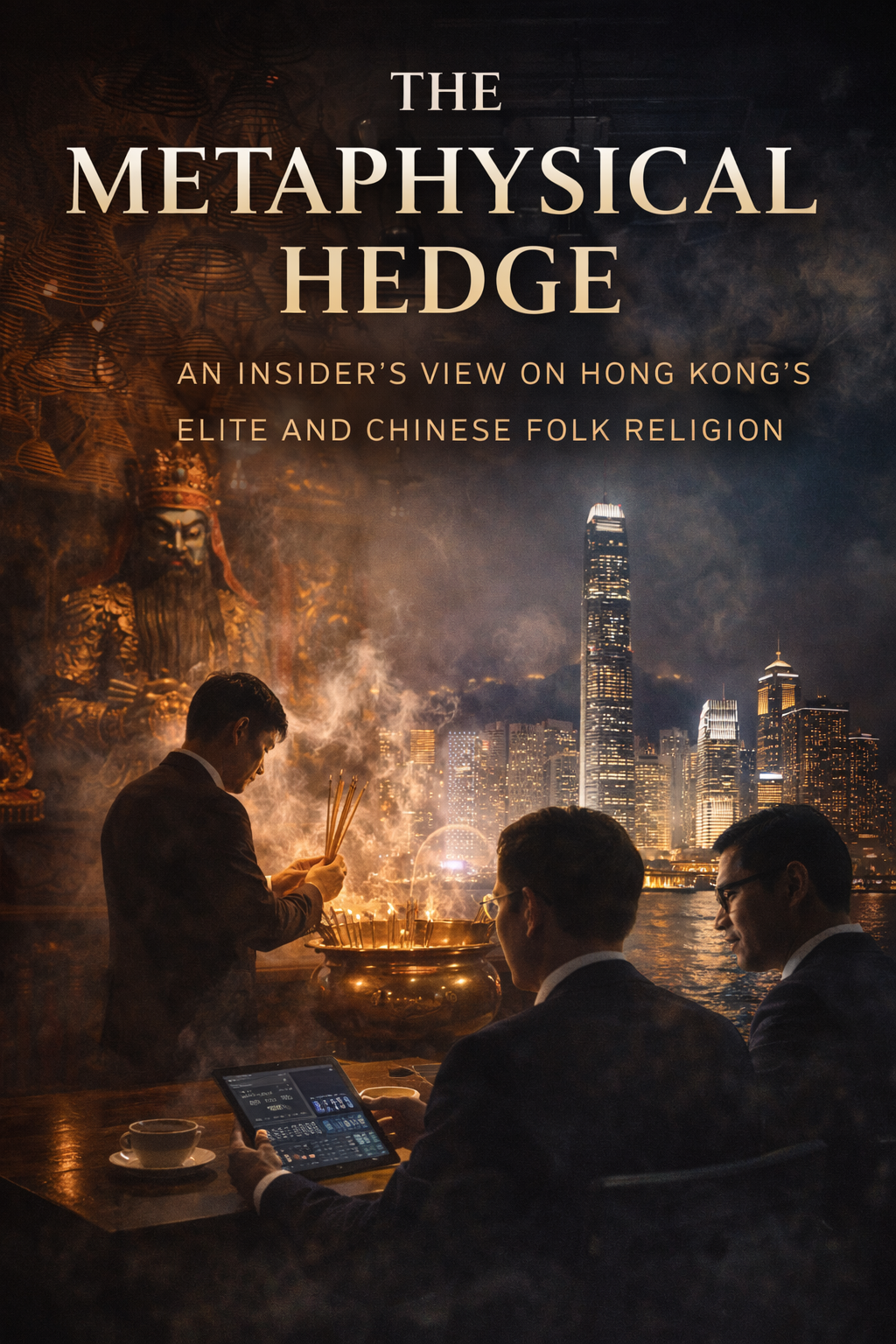
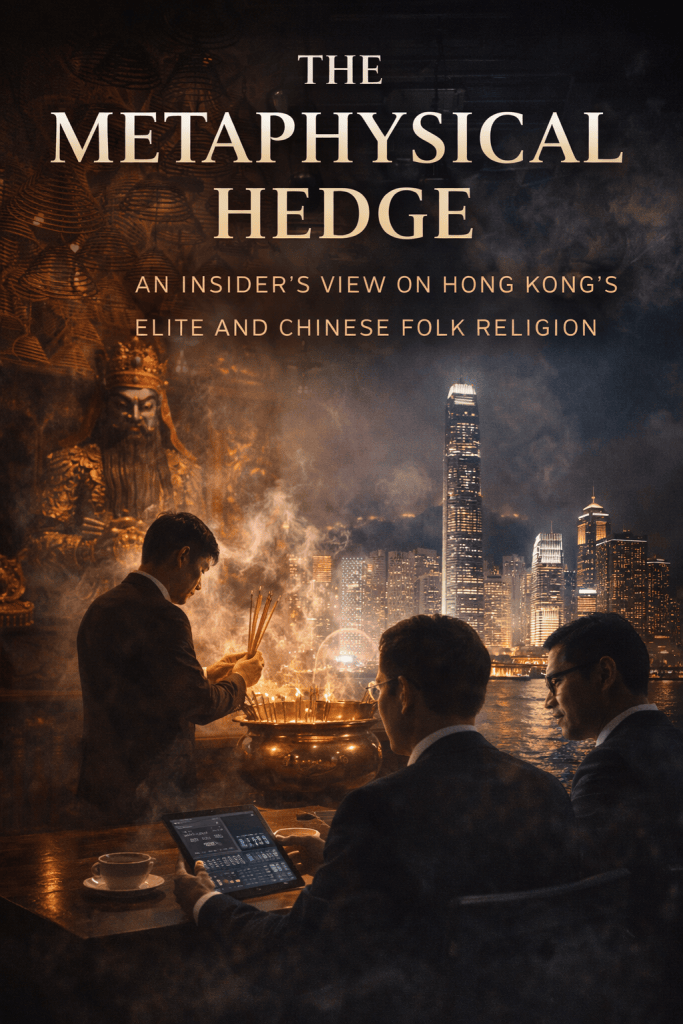
The Metaphysical Hedge: An Insider’s View on Hong Kong’s Elite and Chinese Folk Religion
Growing up in a household where the scent of sandalwood incense was as constant as the city’s humidity, I have always understood Chinese folk religion not merely as a set of rituals, but as the underlying operating system of Hong Kong life. My family practices these traditions daily, maintaining a continuity that stretches back generations. However, through my academic observation of Hong Kong’s sociological landscape, I have noted that this is not a habit abandoned by those who ascend the socioeconomic ladder. On the contrary, the city’s upper class—the tycoons, the frantic executives, and the gatekeepers of capital—adhere to these practices with a rigor that rivals their fiscal discipline. To understand the Hong Kong elite, one must recognize that for them, these rituals are a sophisticated form of metaphysical risk management, a cultural phenomenon that offers a rich, largely untapped narrative reservoir for Western media, particularly Hollywood.
The pantheon we venerate is specific and functional, chosen to align with the values required for survival and dominance in a high-stakes environment. In the quiet corners of high-rise offices and the smoke-filled halls of our temples, three deities reign supreme: Guandi, Guanyin, and Che Kung. Guandi, historically the general Guan Yu from the Three Kingdoms period, is omnipresent. While often associated with brotherhood in triads by Western cinema, his significance to the upper class is far more nuanced. He embodies loyalty, righteousness, and the sanctity of the verbal contract. When I observe a CEO bowing to Guandi, it is an affirmation of trust—a currency more volatile and valuable than any stock in the tight circles of Hong Kong commerce.
Hollywood often struggles to depict Asian spirituality without devolving into exotic mysticism or martial arts tropes. A more grounded, compelling narrative—inspired by this reverence for Guandi—would be a corporate thriller where modern business alliances are sealed not merely by legal teams, but by solemn oaths before the deity. The visual and thematic contrast of a bespoke suit against the archaic, swirling incense creates a texture that speaks to the duality of modern power, moving beyond caricature into a study of conflicting loyalties reminiscent of The Godfather, yet anchored firmly in our Eastern theology.
Complementing the martial sternness of Guandi is Guanyin, the Bodhisattva of Compassion. In the relentless pressure cooker of Hong Kong’s capital markets, she represents a necessary psychological sanctuary. I often interpret the elite’s devotion to her as a search for equilibrium; her temples serve as a spiritual counterweight to the ruthlessness required in business accumulation. Then there is Che Kung, the military commander famed for his ability to turn the tides of fortune. The brass pinwheels at his temples are not toys but tools; to spin them is to “turn” one’s luck. For the wealthy practitioner, a visit to Che Kung is an act of course-correction, an attempt to manually rotate a stagnant business cycle back into profitability.
Our engagement with the divine is frequently interactive, most notably through Kau Chim (求籤), the shaking of fortune sticks. As a practitioner, I understand the gravity of the rhythmic sound of the bamboo cylinder. For the elite, this is rarely a casual activity. It functions as an externalization of decision-making fatigue. When facing a merger or an acquisition fraught with unpredictable variables, the wealthy practitioner consults the Chim as a second opinion from a higher authority. This practice offers a profound dramatic device for storytellers: the image of a titan of industry pausing to decipher a poetic verse on a slip of paper humanizes the untouchable, revealing that even the “masters of the universe” feel subject to the whims of fate.
Perhaps the most bureaucratic and fascinating of our rituals is Sip Tai Sui (攝太歲)—appeasing the Grand Duke Jupiter. In our cosmology, the Tai Sui is the governing deity of the year, and clashing with him predicts volatility. The upper class approaches this clash with the seriousness of a pending lawsuit. To “appease” the Tai Sui is to pay a spiritual retainer fee, involving specific prayers and offerings to neutralize the conflict. I view this through the lens of hedging; just as a fund manager hedges against currency fluctuation, we hedge against cosmic misalignment. This concept of “spiritual bureaucracy” could inspire a unique sub-genre in speculative fiction, depicting a universe where the administration of luck is as rigid as the tax code, and characters must broker deals with celestial bureaucrats to ensure earthly success.
Ultimately, the practice of Chinese folk religion among Hong Kong’s upper class is not a vestige of the past, but a functional component of our present reality. Whether seeking the loyalty of Guandi, the mercy of Guanyin, or the reversal of fortune from Che Kung, these rituals provide a framework for managing uncertainty. It reveals that in this city, the boardroom and the temple are merely two different rooms in the same house of power. However, the spiritual landscape of Hong Kong’s elite is not monolithic. Join me tomorrow as we shift our focus to a different segment of the upper crust—the Catholics—and analyze what luxuries they are renouncing for Lent, and how their theology influences their approach to wealth.