
The Ascetic Executive: Lenten Discipline Among Hong Kong’s Catholic Establishment
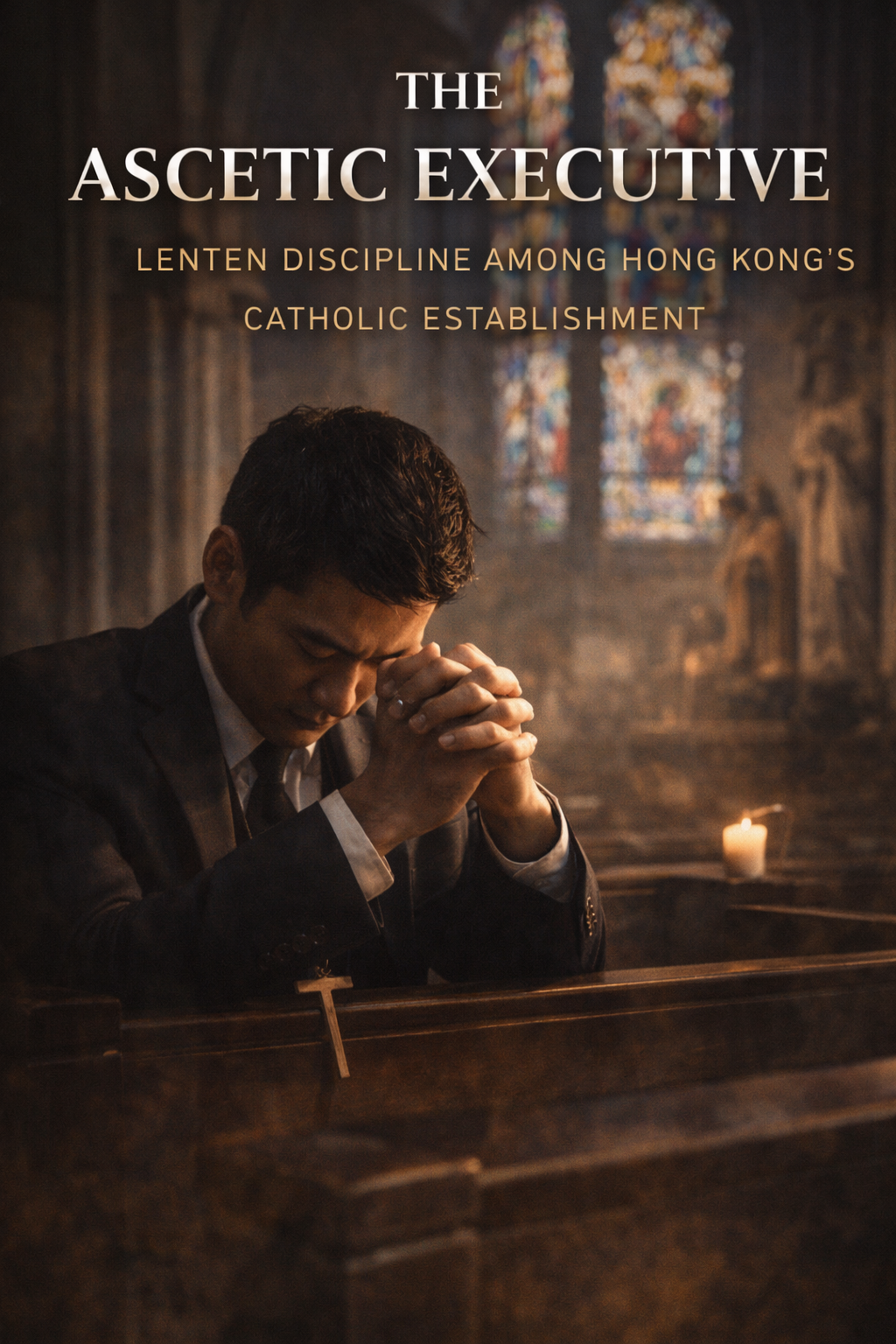
Following my previous analysis of the pragmatic, almost transactional relationship between Hong Kong’s business elite and Chinese folk religion, it is imperative to turn our sociological lens toward the other dominant spiritual force within the city’s upper crust: the Roman Catholic Church. While the scent of sandalwood and the shaking of fortune sticks characterize one segment of the wealthy, the smell of frankincense and the solemnity of the liturgy characterize another—often overlapping—demographic. In Hong Kong, Catholicism is historically intertwined with the colonial establishment, elite education, and the civil service. As we enter the season of Lent, a distinct behavioral shift occurs within this circle, offering a fascinating study in the juxtaposition of immense material wealth and performative asceticism.
Unlike the metaphysical hedging found in folk religion—where rituals are performed to solicit good fortune or ward off bad luck—the Catholic practice of the upper class during Lent is rooted in the concept of renunciation. This creates a unique paradox in a city globally defined by consumption and excess. Through my interactions with this demographic, I have observed that for the Catholic elite, Lent is not merely a religious obligation but an exercise in self-mastery. The specific luxuries renounced during these forty days reveal much about the currency of power in Hong Kong.
The most visible form of this renunciation occurs at the dining table. In a business culture heavily reliant on banquet diplomacy and the sharing of expensive wines, the decision to abstain from alcohol or fine dining is a significant disruption. I have observed high-stakes luncheons where key decision-makers—judges, senior counsels, and CEOs—opt for sparkling water over vintage Bordeaux, citing Lenten vows. This refusal is a subtle power move; it demonstrates that their spiritual discipline supersedes the social pressure of the table. From a narrative perspective, this offers a compelling visual for Western filmmakers. Rather than the cliché of the gluttonous tycoon, there is dramatic tension in the image of a powerful figure sitting amidst a feast of abalone and cognac, maintaining a fast with stoic resolve. It creates a character whose strength is defined not by what they consume, but by what they deny themselves.
Furthermore, the renunciation often extends to social visibility. The “Catholic Guilt” trope is familiar in Western media, usually depicted through the lens of Irish or Italian working-class struggles. However, applying this to the Hong Kong aristocracy opens a new vein of storytelling—a Brideshead Revisited set against the backdrop of Victoria Harbour. The struggle here is between the accumulation of capital and the theology of poverty. I have noted that some elite families retreat from the social circuit during Lent, replacing gala attendances with private masses or unpublicized philanthropy. This “quieting” of the social calendar creates a vacuum in the high-society ecosystem, altering the flow of gossip and influence. A screenwriter could effectively utilize this season as a plot device where the usual channels of influence are severed, forcing characters to navigate the business world without their usual social levers.
The visual marker of Ash Wednesday itself serves as a profound symbol in the corporate landscape. Seeing a smudge of ash on the forehead of a Supreme Court judge or a banking mogul provides a jarring reminder of mortality within institutions dedicated to permanence and legacy. It bridges the gap between the temporal and the eternal in a way that is rarely depicted in films about high finance. Hollywood often focuses on the external battles of the market; however, the internal battle of the pious executive—trying to align the ruthlessness required for market dominance with the humility required by their faith—is a far more complex psychological portrait.
Moreover, the nature of what is renounced has evolved. While traditional fasting remains, I observe a modern trend where digital silence is the new penance. Some among the elite choose to disconnect from the relentless flow of market data and social media, creating a self-imposed isolation that is antithetical to the hyper-connected nature of Hong Kong business. This choice to “unplug” is perhaps the ultimate luxury, signaling that one is powerful enough to ignore the market’s noise for the sake of spiritual reflection.
In conclusion, the observance of Lent among Hong Kong’s Catholic elite offers a counter-narrative to the city’s reputation for unbridled materialism. If Chinese folk religion allows the elite to manage external risk through the appeasement of deities, Catholicism provides a framework for managing internal discipline through the denial of the self. For the observer, this season reveals that the city’s power structures are not secular monoliths but are deeply permeated by spiritual currents. The tycoon who refuses a glass of wine or bears the mark of ash is not withdrawing from the world, but engaging with it through a different, older form of power—one that asserts that the spirit can, occasionally, dictate terms to capital.