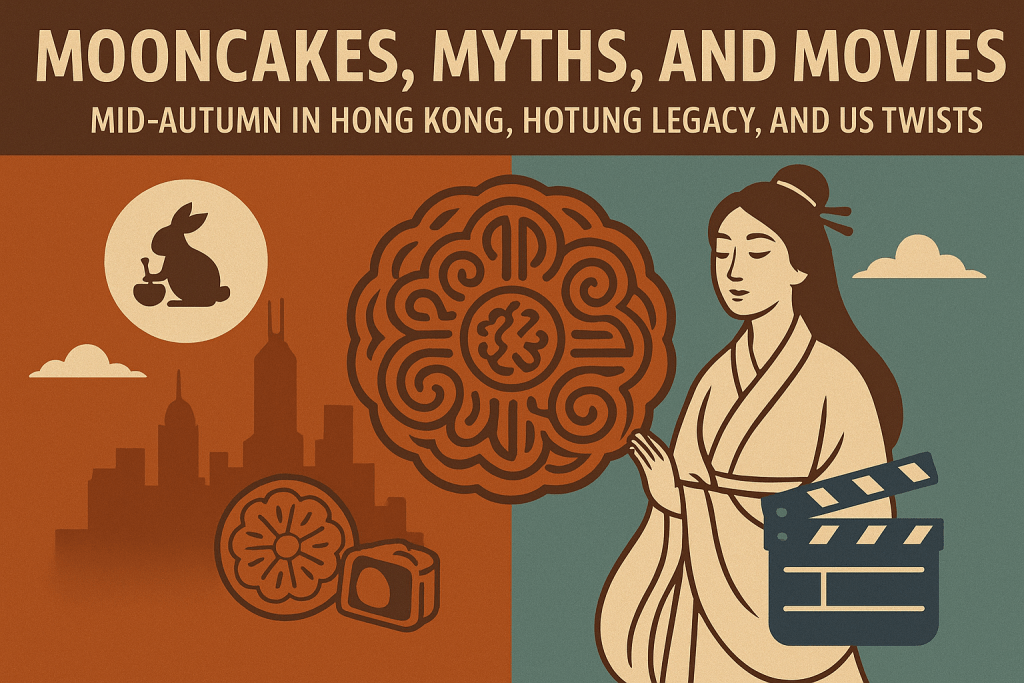
Mooncakes, Myths, and Movies: Mid-Autumn in Hong Kong, Hotung Legacy, and US Twists
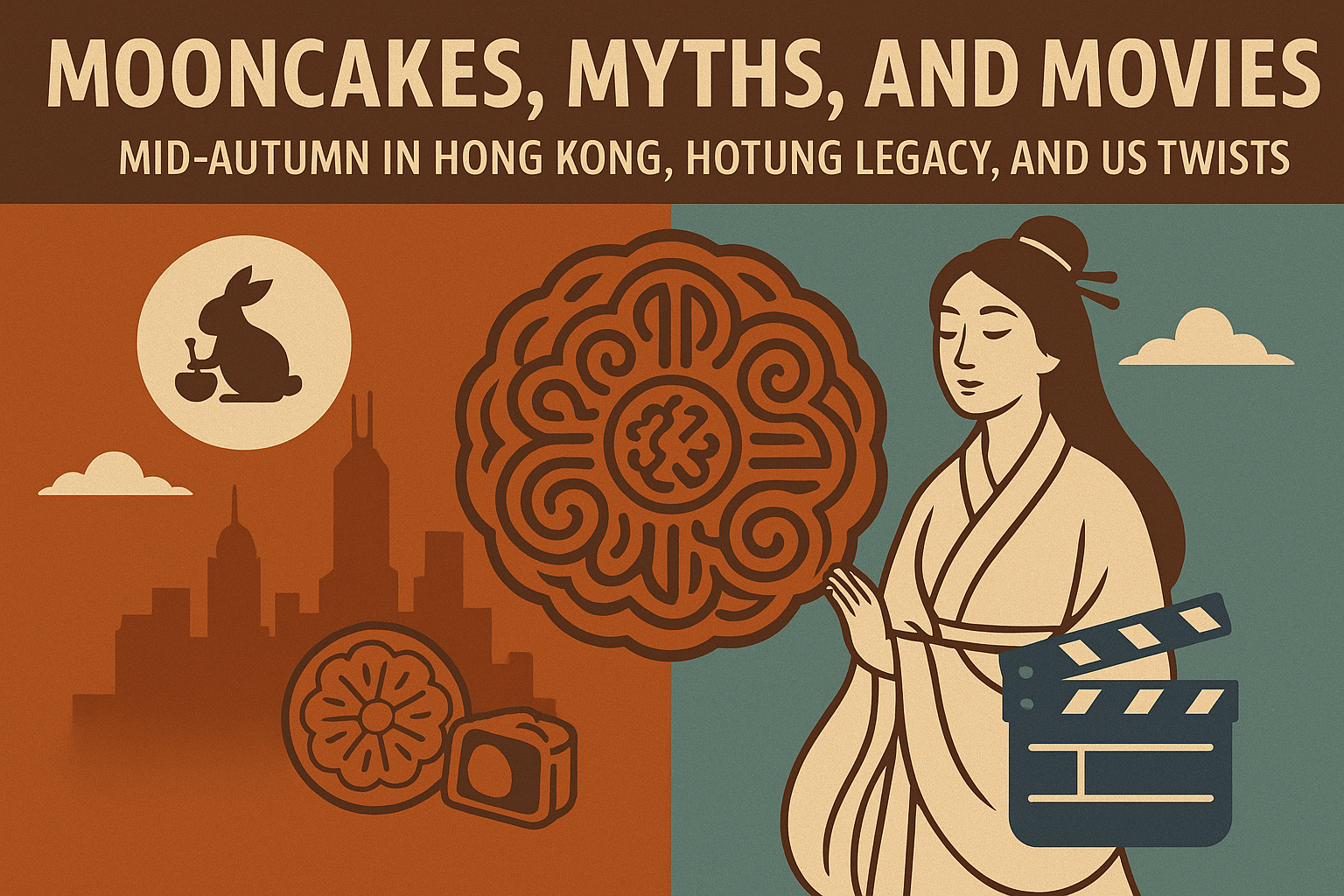
The Mid-Autumn Festival, observed on the 15th day of the eighth lunar month, is a harvest celebration with roots in Chinese culture extending over 3,000 years. It emphasizes themes of reunion, gratitude, and lunar veneration, where the full moon represents wholeness and prosperity. Core traditions include sharing mooncakes—rich pastries typically filled with lotus seed paste, salted egg yolks, or nuts—alongside lantern parades, family reunions, and moon gazing. The festival traces back to ancient moon worship during the Zhou Dynasty, evolving from agrarian rituals honoring the moon goddess Chang’e, who, according to legend, consumed an immortality elixir and ascended to the moon, into a major cultural observance focused on familial ties and seasonal bounty.
In Hong Kong, historical celebrations of the Mid-Autumn Festival have fused Cantonese practices with colonial elements, mirroring the city’s status as a British colony until 1997. Dating to the late 19th century, immigrants from mainland China adapted rural customs to urban environments, incorporating lantern carnivals where children parade colorful paper lanterns shaped as animals or fruits, often in public spaces like Victoria Park. A hallmark is the Tai Hang Fire Dragon Dance, which began in 1880 when villagers, inspired by a dream amid typhoons and plagues, constructed a dragon from incense sticks and paraded it for three nights to dispel misfortune—a ritual now recognized as intangible cultural heritage. Families historically gathered for moonlit picnics with mooncakes and pomelos, enhanced by fireworks and performances. In the mid-20th century, during post-war rebuilding, these festivities built community spirit, with lanterns embodying optimism. Contemporary versions feature widespread illuminations and themed displays, yet retain lunar timing and family meals, illustrating persistence through urban growth.
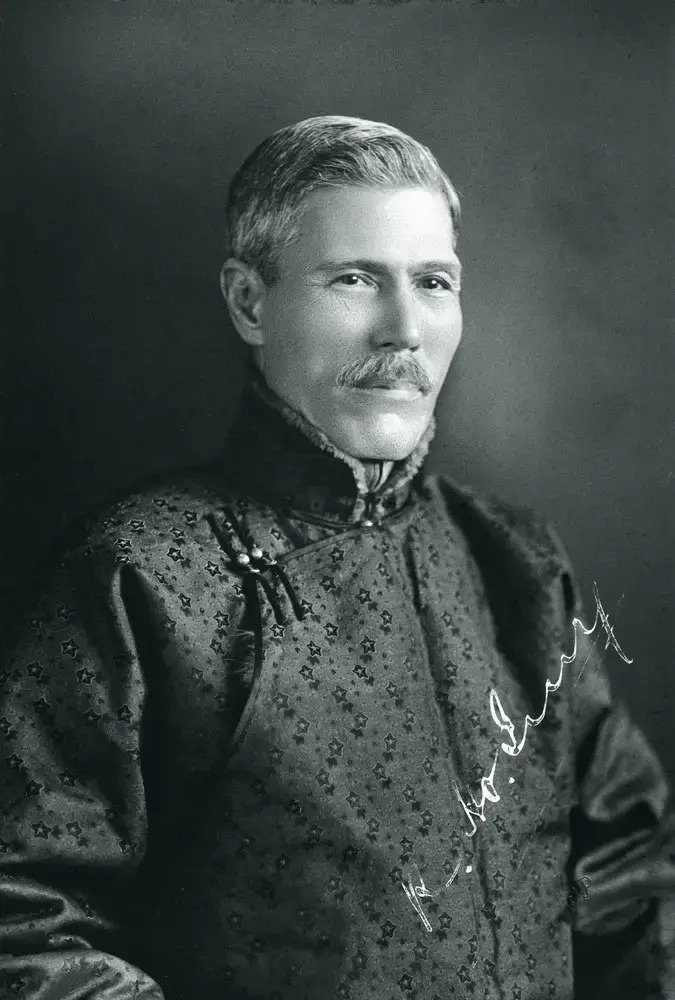
The family of Sir Robert Hotung (1862–1956), a notable Eurasian entrepreneur and philanthropist, serves as a case study in how the festival intertwined with Hong Kong’s elite circles. Of Dutch-Jewish and Chinese heritage, Hotung built his fortune as a comprador for Jardine Matheson before expanding into real estate and finance. His household, including Lady Clara and descendants, exemplified cultural fusion. Though specific records of their Mid-Autumn practices are limited, the Hotung legacy connects through philanthropy, such as the Sir Robert Ho Tung Library in Macau, funded by family donations, which has hosted festival events like musical performances and workshops, notably marking its 60th anniversary in 2018 with moon-themed activities. This implies the family saw the festival as a venue for public involvement, consistent with Hotung’s support for education and healthcare. Provocatively, Hotung’s mixed identity disrupts essentialist views of Chinese customs; his home probably blended colonial touches, like European sweets with mooncakes, showing festivals’ adaptability in diverse settings. Descendants associated with Ho Tung Gardens likely employed Mid-Autumn for elite networking, bolstering social standing while upholding lunar traditions. This example highlights the festival’s versatility, extending beyond agrarian gratitude to leverage in colonial power structures.
Adapting the Mid-Autumn Festival to the United States demonstrates evolutions driven by diaspora groups. Brought by 19th-century Chinese immigrants during the Gold Rush and railroad periods, it took hold in Chinatowns of San Francisco and New York. U.S. observances echo Hong Kong’s with lantern processions, dragon dances, and mooncake sampling, but integrate local flavors in multicultural festivals. Examples include California’s Bowers Museum hosting Asian gatherings with performances and crafts, and Texas’s Asia Times Square offering free three-day events with food and games. In 2025, sites like Newport Mansions and China Institute focus on reunions via workshops and narratives. Objectively, this shift weakens some rural origins—urban dwellers favor store-bought mooncakes over handmade—but maintains essential motifs, nurturing cultural roots against assimilation. Provocatively, it probes authenticity: American adaptations commercialize the event with branded items, yet this mutation ensures survival in pluralistic societies.
Applying this to Hollywood, the Mid-Autumn Festival provides compelling narrative elements, drawing on its lore and imagery. Netflix’s 2020 animation Over the Moon explicitly features it, depicting a girl rocketing to encounter Chang’e, merging sci-fi with cultural tribute to explore grief and unity. Hong Kong cinema like A Chinese Odyssey (1995) satirizes Chang’e myths, impacting Hollywood fantasies. Broader uses could anchor family dramas or animations, akin to Pixar stories on immigrant lives. Provocatively, Hollywood’s adoption hazards commodification—treating rituals as exotic props in lantern-illuminated spectacles—but boosts global awareness and education. Straightforwardly, embedding Mid-Autumn motifs could diversify scripts, from rom-coms with moonlit romances to horrors reimagining lunar tales. Initiatives like Metrograph’s “Mid-Autumn Movies” series, showcasing pan-Asian films, further illustrate its cinematic potential.