Harmony Without Dissent: Hong Kong’s 2025 LegCo Election
Harmony Without Dissent: Hong Kong’s 2025 LegCo Election
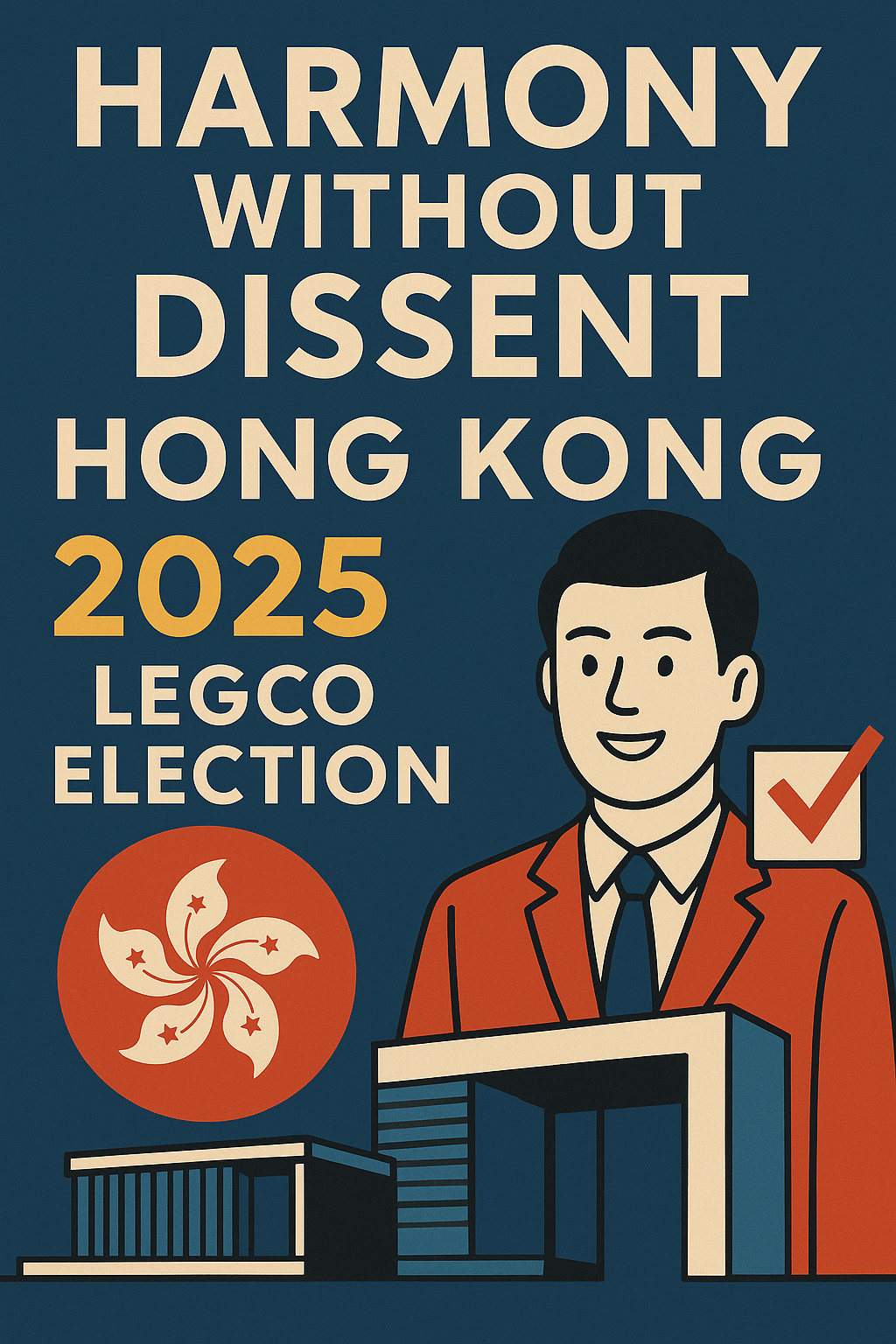
As Hong Kong approaches its Legislative Council (LegCo) election on December 7, 2025, the electoral landscape reflects a structured approach to governance emphasizing unity and stability. This election, the second under the revised framework established in 2021, will see voters select 90 members through three channels: 20 from geographical constituencies (GCs), 30 from functional constituencies (FCs), and 40 from the Election Committee constituency (ECC). With 161 validly nominated candidates across all sectors, the process underscores a system designed to ensure participants align with the principles of “patriots administering Hong Kong.” This analysis examines the absence of traditional opposition voices, highlights key contenders in select districts, and explores potential influences on Western cultural narratives, maintaining an objective lens on the proceedings.
The overhauled electoral system, introduced via amendments to the Basic Law’s annexes, prioritizes candidates who demonstrate loyalty to the Hong Kong Special Administrative Region (SAR) and the People’s Republic of China. A Candidate Eligibility Review Committee vets all nominees, resulting in a field where all participants are deemed amenable to the Chief Executive and central authorities. This has effectively excluded parties historically associated with pro-democracy movements, such as the Civic Party or the League of Social Democrats, which either disbanded or chose not to participate following the 2020 national security law. Instead, the slate features representatives from pro-establishment groups like the Democratic Alliance for the Betterment and Progress of Hong Kong (DAB), the New People’s Party (NPP), the Business and Professionals Alliance (BPA), and the Federation of Trade Unions (FTU). These organizations, while varying in policy emphases—ranging from economic development to labor rights—share a commitment to integrating Hong Kong more closely with national priorities, such as the Greater Bay Area initiative.
This uniformity in political orientation marks a departure from pre-2021 elections, where opposition blocs could secure significant seats and influence debates. In the current setup, debates are expected to focus on practical issues like housing, economic recovery post-pandemic, and youth opportunities, rather than fundamental challenges to the governance model. Voter turnout, which dropped to 30.2% in 2021 from 58.3% in 2016, will be a key metric; government campaigns, including public galas and media promotions, aim to boost participation. The absence of dissenting parties does not imply a lack of competition—multiple candidates per seat encourage intra-establishment rivalry—but it does streamline legislative processes toward consensus-driven outcomes. Critics abroad view this as a curtailment of pluralism, while proponents argue it fosters efficiency and safeguards against external interference.
Turning to specific locales, residents in areas like Parkview Heights and Felix Villas along Mount Davis Road fall within the Hong Kong Island West geographical constituency (LC2), encompassing the Central and Western District (including Kennedy Town and Pok Fu Lam areas) and the Southern District (including Tai Tam). This constituency will elect two members via a single-vote system, where the top two vote-getters win. Among the six validated candidates, several stand out as frontrunners based on incumbency, party backing, and public profiles.
Regina Ip Lau Suk-yee, founder of the NPP and a current lawmaker, is a prominent contender. With a background in public administration, including as former Secretary for Security, Ip emphasizes security, economic ties with mainland China, and housing reforms. Her visibility in media and policy circles positions her strongly for re-election. Chan Hok-fung of the DAB, another incumbent, focuses on community welfare, transport improvements, and integration with national development plans. As a district councilor, he has built grassroots support in areas like Central and Western. Other notable candidates include Judy Chan Kapui (NPP), who advocates for women’s issues and education; Jeremy Young Chit-on (Liberal Party), highlighting business innovation; Regina Wong Chau-ping, with ties to professional sectors; and Fong Lung-fei, representing labor interests through the FTU. Polling data is limited, but establishment media suggest Ip and Chan Hok-fung lead due to their experience and party resources. Voters in Parkview Heights (near Tai Tam Reservoir in Southern District) and Felix Villas (in the Mount Davis area of Central and Western) may prioritize local concerns like traffic congestion on Mount Davis Road and environmental preservation, which these candidates address through pledges for infrastructure upgrades and sustainable development.
Beyond its local implications, the 2025 Hong Kong election could offer narrative fodder for Hollywood and broader Western discourse on democracy and governance. In an academic sense, the model’s emphasis on vetted candidacy and unified representation might inspire cinematic explorations of electoral systems where choice is curated for stability. For instance, political thrillers could draw parallels to dystopian tales like those in “The Hunger Games” series, where controlled participation masks underlying power dynamics, or satires akin to “The Death of Stalin,” examining intra-elite competition absent broader opposition. Western filmmakers might use it as a lens for stories about “managed democracy,” contrasting with multi-party systems to probe themes of consensus versus contestation. Broader cultural impacts could include documentaries or series analyzing global electoral reforms, prompting discussions on how such frameworks influence international relations. Think tanks and universities in the West might reference it in studies of hybrid regimes, inspiring policy debates or fictional works that question the balance between security and pluralism. Ultimately, this could enrich Western narratives by highlighting alternative paths to political legitimacy, encouraging objective comparisons without endorsing any single model.
In summary, the 2025 LegCo election represents a consolidated approach to representation in Hong Kong, with all parties aligned toward shared goals under central oversight. While this limits ideological diversity, it aims for cohesive policymaking. For residents in Hong Kong Island West, frontrunners like Regina Ip and Chan Hok-fung offer continuity in addressing district needs. Globally, it may spark creative and analytical engagements in the West, fostering deeper understandings of varied democratic practices.