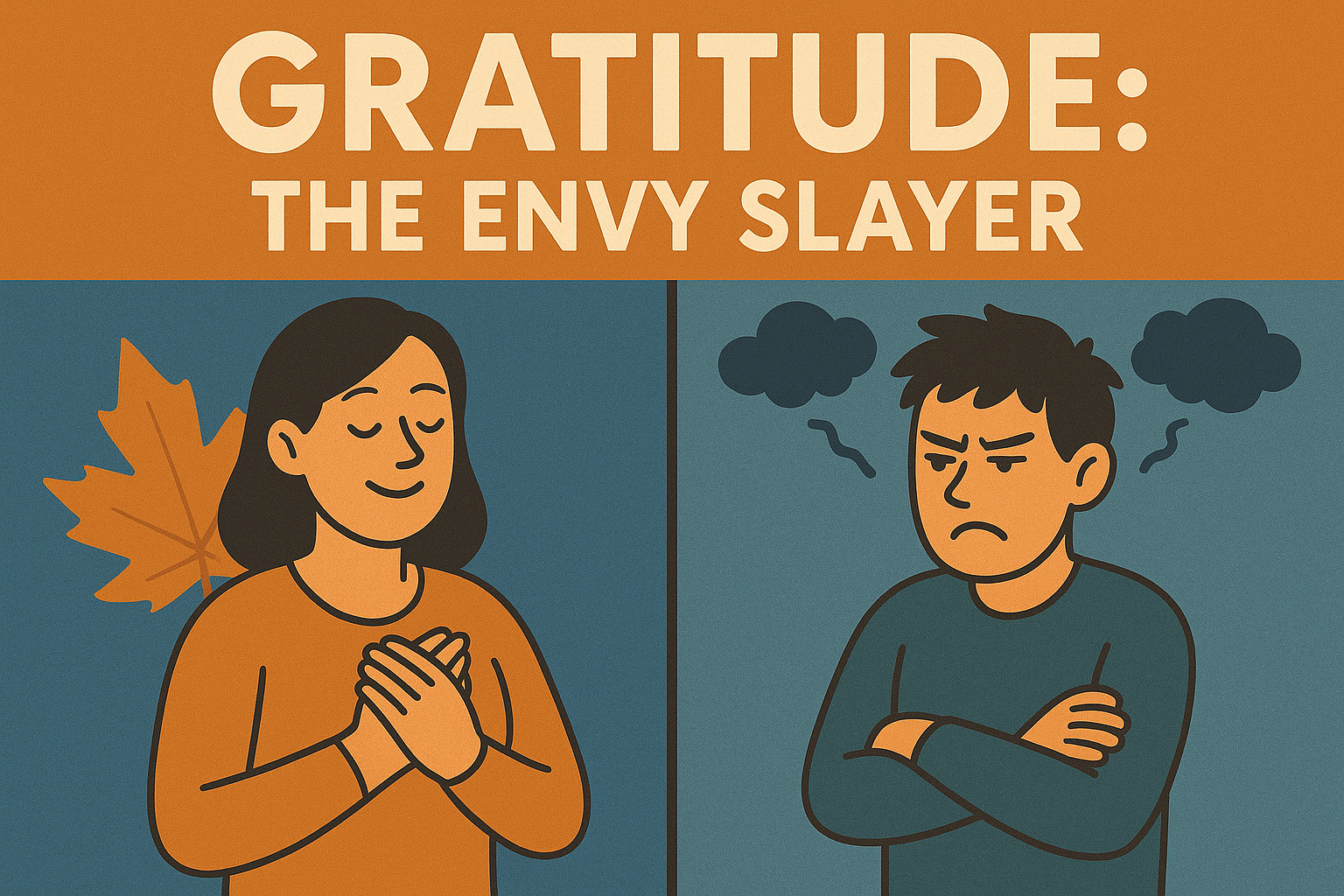
Gratitude: The Envy Slayer
Dear readers of Echoes of Empire,
As the aroma of roasted turkey and pumpkin pie fills American homes today on Thanksgiving—November 27, 2025—it’s a perfect moment to pause amid the echoes of history and empire that we often explore here. While our blog delves into the grand narratives of power, conquest, and legacy, today let’s turn inward to something profoundly personal yet universally transformative: gratitude. In a world rife with comparisons, social media highlights, and the relentless pursuit of more, gratitude stands as the quiet warrior, the antidote to envy. It shifts our gaze from the voids in our lives to the abundances we already hold, fostering contentment in an age of endless wanting.
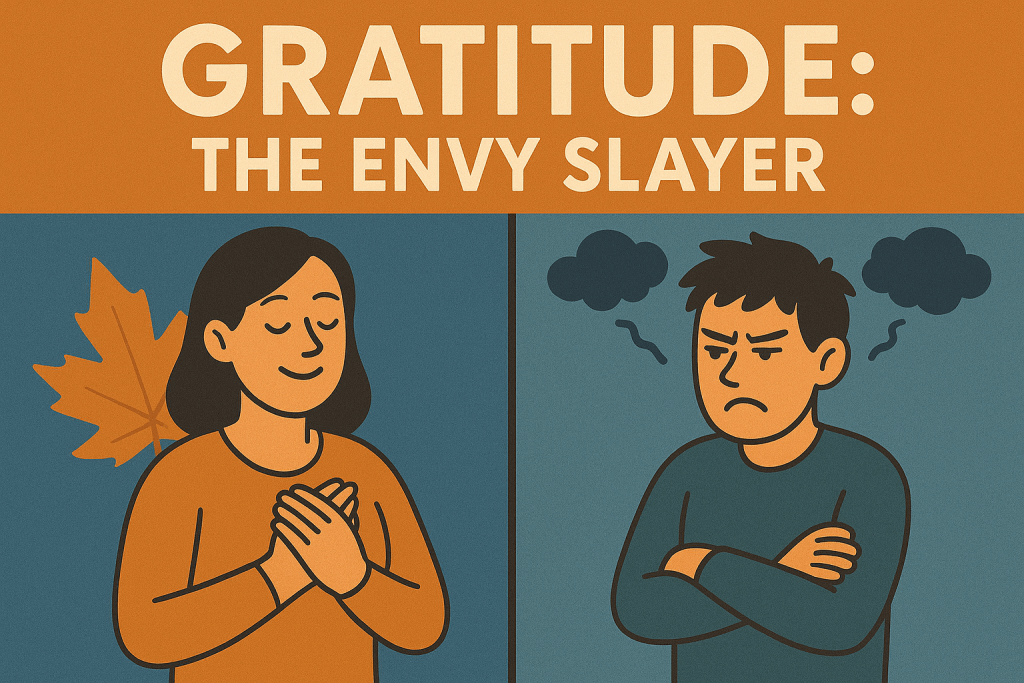
Envy, that insidious emotion, creeps in when we fixate on what others possess—be it wealth, status, or even intangible joys like harmonious relationships. It’s the thief of joy, as the saying goes, robbing us of peace by highlighting lacks rather than gifts. But gratitude? It’s the redirector. By consciously acknowledging what we have—a supportive friend, a warm meal, a moment of quiet reflection—we rewire our minds. Psychological studies show that practicing gratitude can reduce feelings of envy by up to 20%, promoting emotional resilience and even better sleep. Imagine, in the shadow of empires past where rulers envied rivals’ territories leading to endless wars, how a simple thankful heart might have altered history. Today, on this holiday of harvest and thanks, let’s embrace gratitude not as a fleeting sentiment but as a daily discipline. Start small: jot down three things you’re thankful for each morning. Watch as envy dissipates, replaced by a fuller appreciation of your own empire—your life.
Thanksgiving, with its roots in pilgrim perseverance and Native American hospitality, reminds us that gratitude thrives in community. It’s about shared tables, stories, and bonds that withstand trials. And what better way to extend this spirit than through storytelling itself? Films and series offer windows into these themes, allowing us to reflect on our own lives. For those seeking a heartfelt watch this holiday weekend, consider the Hong Kong film Golden Boy (金童), released earlier this year. Directed by Joe Chan and starring Louis Cheung as a former boxing prodigy nicknamed “Golden Boy,” the story follows his release from prison after a decade, where he confronts his past mistakes and meets his biological son for the first time. Fatherhood emerges as a central theme, exploring redemption, responsibility, and the profound gratitude that comes from rebuilding fractured family ties. It’s a raw, hot-blooded drama that resonates with the holiday’s emphasis on forgiveness and appreciation for second chances—perfect for curling up with after the feast.
While Hong Kong doesn’t officially celebrate Thanksgiving—its cultural calendar leans toward Lunar New Year and Mid-Autumn Festival, where family reunions echo similar sentiments—the city’s vibrant film and TV industry has long produced works centered on gratitude, friendship, and family, both of blood and chosen bonds. These stories often weave in the grit of urban life, economic struggles, and the unbreakable threads that hold people together, much like the imperial echoes of resilience we discuss here.
Take Heart of Greed, a beloved 2007 TVB drama series that dives into the complexities of a wealthy family torn by inheritance disputes. Amid the greed and betrayals, it ultimately highlights gratitude for familial love and the redemptive power of forgiveness, reminding viewers that true wealth lies in relationships, not riches. Then there’s Virtues of Harmony, a long-running sitcom from the early 2000s that blends period drama with modern humor, focusing on a quirky imperial family navigating daily life. Its episodes brim with themes of friendship and loyalty, showing how gratitude for small acts of kindness strengthens communal bonds.
For a more contemporary cinematic take, All Shall Be Well (2024) poignantly examines grief and family dynamics after a loved one’s death, underscoring the gratitude we owe to those who support us in loss—whether blood relatives or chosen family. It’s a quiet masterpiece that aches with absence yet celebrates the enduring ties that persist. Another gem is Fat Choi Spirit (2002), a Lunar New Year comedy starring Andy Lau, where gambling and family antics lead to lessons in appreciation for health, luck, and togetherness. And don’t overlook Echoes of the Rainbow (2010), a nostalgic tale of a working-class family in 1960s Hong Kong, evoking gratitude for simple joys amid hardship, much like Thanksgiving’s harvest spirit.
These Hong Kong narratives, though set worlds away from American turkey dinners, mirror the holiday’s core: recognizing the blessings in our midst. In Golden Boy, the protagonist’s journey from envy of his lost glory to gratitude for his son’s presence encapsulates this beautifully. Fatherhood, as portrayed, isn’t just biological—it’s about nurturing bonds, much like the “shared bonds” in films like A Simple Life (2011), where a lifelong maid’s relationship with her employer’s family blurs bloodlines into profound friendship and care.
As we reflect this Thanksgiving, let’s challenge ourselves: in the face of envy, choose gratitude. Thank your body for its strength, your friends for their laughter, your family—blood or chosen—for their unwavering presence. In the echoes of empires that rose and fell on ambition’s edge, remember that lasting legacies are built on thankful hearts. Whether you’re watching Golden Boy or sharing a meal, let gratitude redirect your path. Happy Thanksgiving, dear readers—may your empires be rich in joy.