Solstice Showdown: Dongzhi vs. Thanksgiving – Hollywood’s Untapped Feast
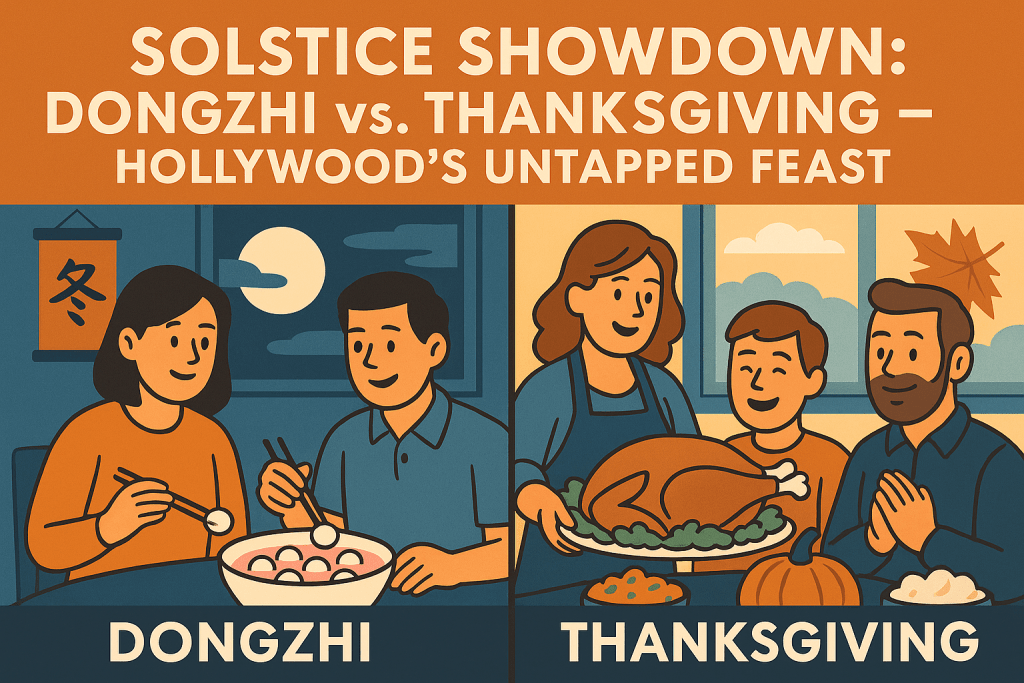
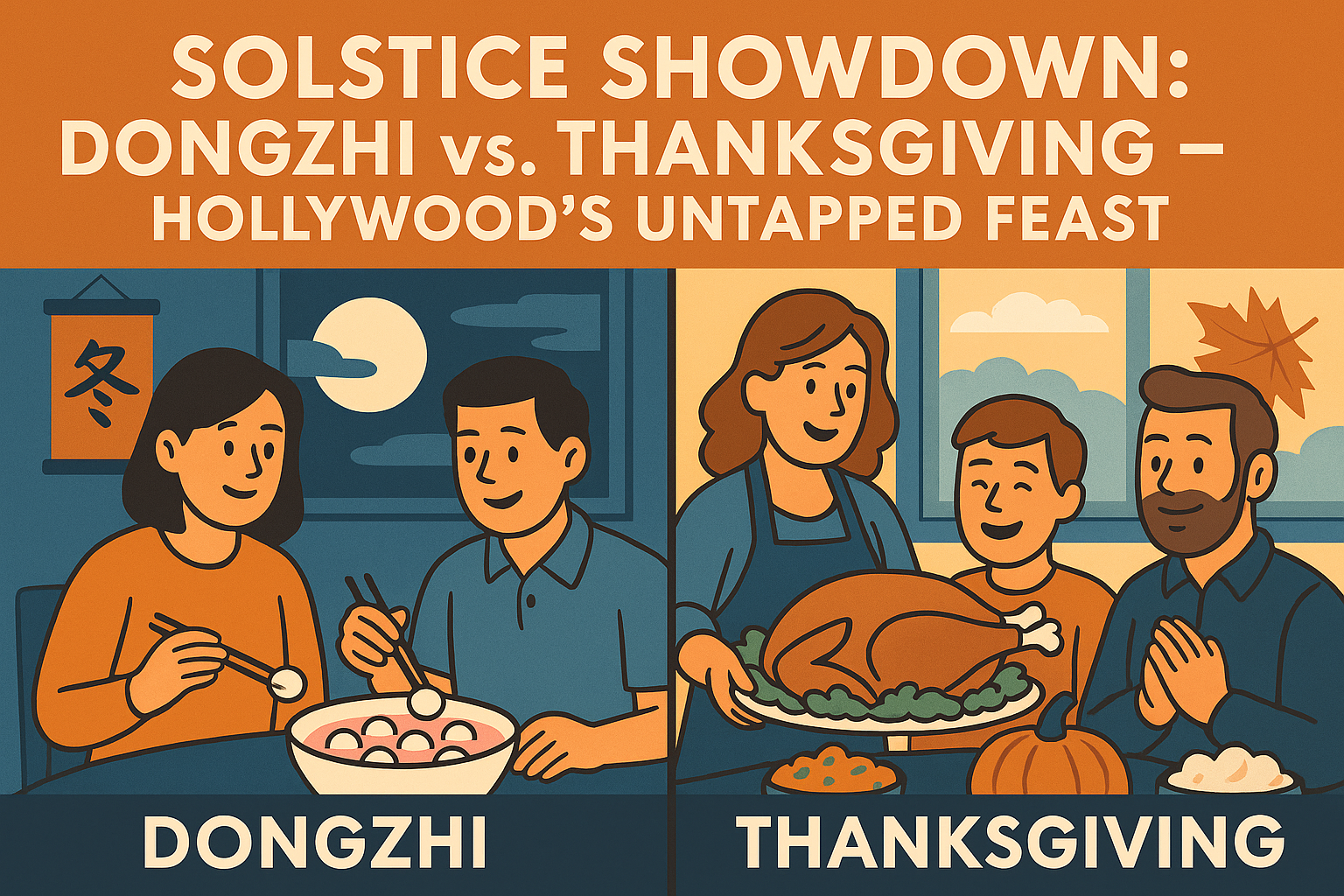
In the frosty grip of winter, two feasts beckon families to the table, each a cultural bulwark against the chill. American Thanksgiving, with its turkey-stuffed excess, reigns as the quintessential harvest blowout, while Hong Kong’s Dongzhi – the Chinese Winter Solstice Festival – offers a subtler, stickier communion with glutinous rice balls. But here’s the provocation: in an era where Hollywood churns out endless pilgrim pablum, why hasn’t Dongzhi, with its ancient cosmic drama, stormed the silver screen? This post dissects their rituals, roots, and reel potential, arguing that Dongzhi isn’t just a meal – it’s a narrative goldmine waiting to disrupt Tinseltown’s holiday hegemony.
Let’s start with the plates. In Hong Kong, Dongzhi unfolds on the shortest day of the year, typically December 21 or 22, when night devours daylight and families huddle for renewal. The centerpiece? Tangyuan – those chewy, sesame-filled orbs symbolizing wholeness and reunion, boiled in sweet soup to ward off winter’s yin dominance. Restaurants brim with bookings for elaborate dinners featuring dumplings, rice cakes, or hearty stews, often preceded by ancestor offerings – a nod to filial piety that blends solemnity with indulgence. It’s intimate, reflective: no parades, just the quiet clink of bowls evoking cosmic balance. Contrast this with American Thanksgiving, a November extravaganza of roasted turkey, cranberry sauce, and pumpkin pie, bloated with football games and Macy’s balloons. Families give thanks for bounties past, but the vibe is boisterous, consumerist – Black Friday lurks like a gluttonous shadow. Both emphasize reunion and gratitude, yet Dongzhi whispers of astronomical rebirth, while Thanksgiving shouts harvest triumph. Provocatively, one might ask: does Thanksgiving’s over-the-top Americana mask a shallower soul, compared to Dongzhi’s philosophical depth?
Delving into origins unveils this divide. Dongzhi’s genesis traces to China’s Zhou Dynasty (1045-256 BCE), evolving into a formalized festival during the Han Dynasty (206 BCE-220 CE). Legend credits sage Zhou Gong (or variants like Zhou Feng) for pinpointing the solstice via a primitive sundial, marking the nadir of yin and the yang’s ascendant return – a Taoist triumph over darkness. By the Tang and Song eras (618-1279 CE), it thrived as a communal rite, blending agrarian cycles with imperial edicts for rest and feasting. This isn’t mere folklore; it’s embedded in the lunisolar calendar, a scientific-cultural fusion that predates Western astronomy’s refinements. Thanksgiving, meanwhile, sprouts from 1621’s Plymouth Colony feast, where Pilgrims and Wampanoag Native Americans shared a harvest meal – a brief alliance amid colonial encroachment. Yet its national stature emerged in 1863, when Abraham Lincoln proclaimed it amid Civil War strife, morphing regional Puritan “days of thanksgiving” into a unifying holiday. Earlier iterations, like George Washington’s 1789 decree or Madison’s 1815 post-war thanks, were sporadic and solemn, far from today’s commercial circus. Academically, Thanksgiving’s mythos glosses over indigenous erasure, while Dongzhi’s endures unvarnished, a testament to enduring Eastern resilience. Provocation: Hollywood peddles Thanksgiving’s sanitized pilgrim tale yearly – think Planes, Trains and Automobiles or Free Birds – but ignores Dongzhi’s primal cosmic stakes. Why the cultural blind spot?
Pertinent to careers in entertainment, Dongzhi screams Hollywood potential: a festival ripe for subversion, blending mysticism, family tension, and seasonal metaphor. Imagine a rom-com where a Hong Kong expat in L.A. reunites estranged siblings over tangyuan-making, sparks flying amid sticky dough – echoing Crazy Rich Asians but with solstice sorcery. Or a thriller: the solstice’s yin-yang flip unleashes supernatural forces, as in a Chinese-American Hereditary, where ancestral ghosts crash the feast. Family dramas could probe generational clashes, like a millennial rejecting tangyuan for vegan alternatives, mirroring Hong Kong’s modern-traditional tug-of-war. Provocatively, Dongzhi could critique Thanksgiving’s dominance: a crossover film pitting the two, exposing America’s feast as derivative of global harvest rites, while Dongzhi’s antiquity lends gravitas.
Has it been used before? Scantily in Hollywood proper, but echoes exist. Reddit discussions lament the void, noting non-Christmas midwinter fests like Dongzhi are underrepresented. Chinese cinema offers precedents: 2021’s The Winter Solstice weaves frustration and renewal around the date, while 2017’s A Loner (Da Xue Dong Zhi) hinges on a missed solstice dinner amplifying isolation. Recent X buzz highlights Chinese TV like DongZhi (Love Song in Winter), a romance unfolding against the festival, or Coroner’s Diary specials tying plots to solstice vibes. Hollywood’s closest? Fleeting nods in Asian-led fare, like The Farewell‘s family gatherings evoking Dongzhi’s reverence, or animated hints in Kung Fu Panda Holiday, but no direct spotlight. This scarcity is Hollywood’s loss – and a call to arms. By importing Dongzhi, studios could diversify holiday tropes, tapping diaspora audiences hungry for representation. Imagine Marvel’s Eternals celebrating solstice rebirth, or a Pixar short on tangyuan’s symbolic glue.
In sum, Dongzhi and Thanksgiving both nourish bonds, but the former’s celestial poetry outshines the latter’s historical hype. For Hollywood hopefuls, it’s a provocative pivot: ditch the turkey, embrace the tangyuan. This festival isn’t just tradition – it’s tomorrow’s blockbuster blueprint.