Arbitrary Beginnings: Hong Kong’s Chosen Origin
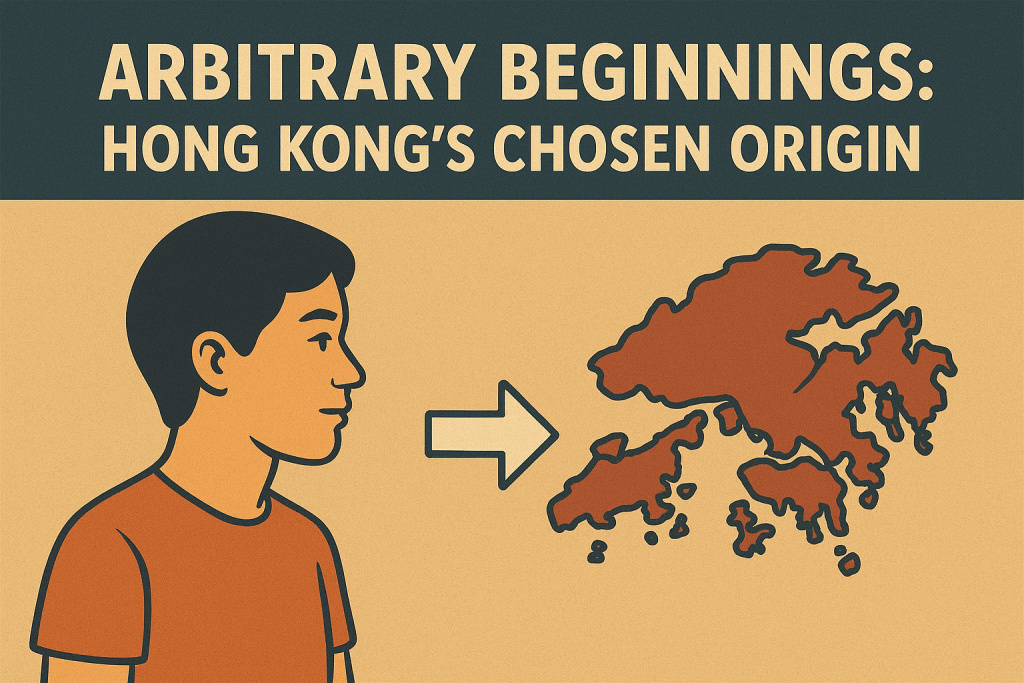
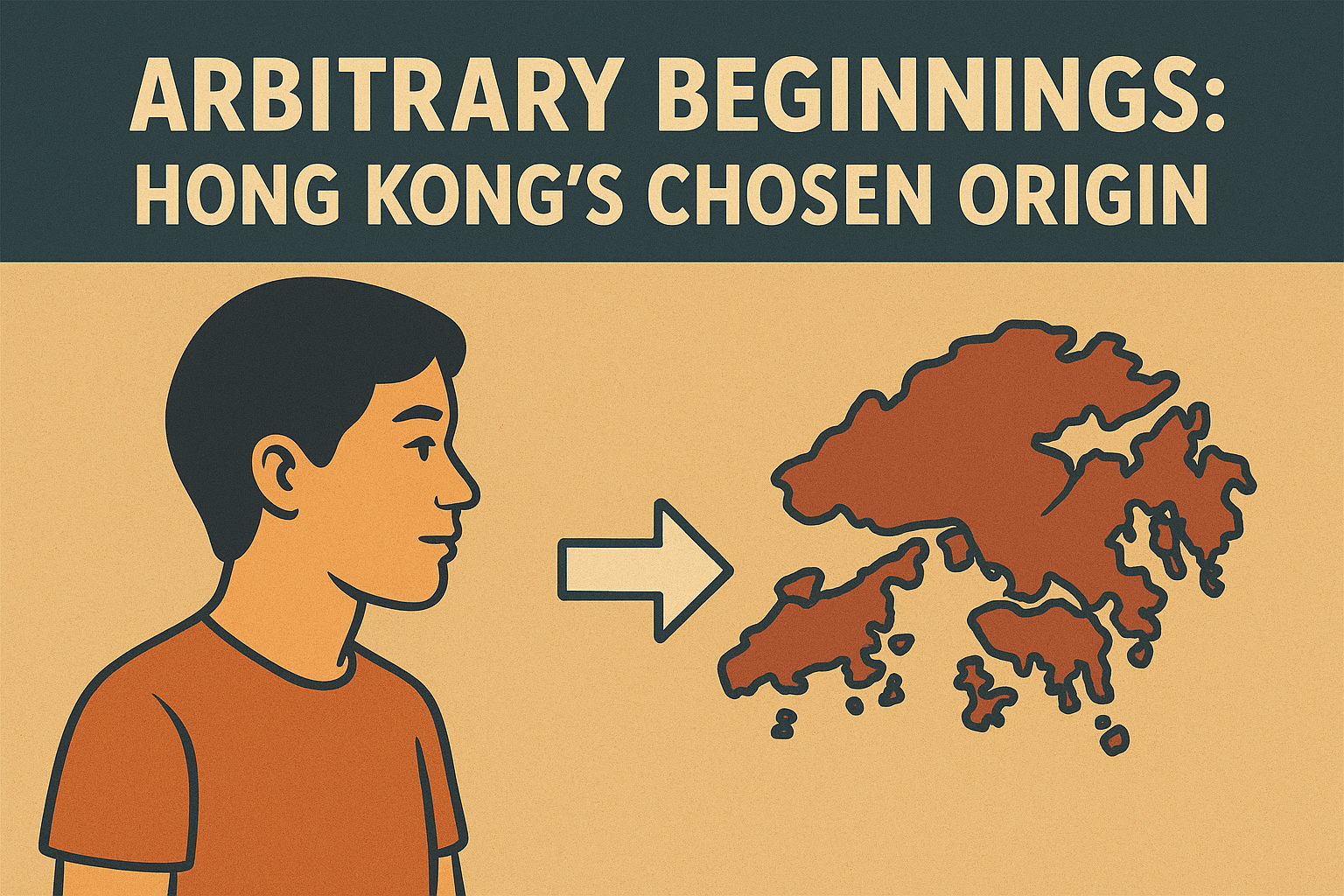
As an aspiring cultural consultant and Hollywood producer with roots in both Western and Chinese Buddhist philosophies, I often reflect on the nature of beginnings. In Buddhist thought, particularly through the lens of pratītyasamutpāda—or dependent origination—nothing arises in isolation; events are interconnected, impermanent, and without a fixed essence. Beginnings, then, are arbitrary constructs, mere points where we choose to commence our narratives. They depend on perspective, much like the stories I plan to craft for the screen, where the “start” shapes the entire tale. For Hong Kong, the conventional beginning is pinned to the aftermath of the First and Second Opium Wars (1839–1842 and 1856–1860), when Britain acquired the territory through unequal treaties. This is where I’ll anchor my journey, not as an absolute origin, but as a deliberate entry point into the city’s layered history.
My exploration begins at Hollywood Road Park in Sheung Wan, a modest green space that belies its historical weight. Known historically as Possession Point, this site marks where British forces formally took possession of Hong Kong Island on January 26, 1841, during the First Opium War. Commodore James Bremer, commander of British forces in China, landed here—though accounts note the initial surveying occurred a day earlier on January 25—and raised the Union Jack, declaring the island under British control. The name “Possession Point” stems from this act, symbolizing the transfer of sovereignty from Qing China to the British Empire via the Convention of Chuenpi, later formalized in the Treaty of Nanking in 1842.
Today, the park is unassuming: manicured lawns, pavilions, and playgrounds replace what was once a rocky shoreline with a nearby freshwater stream that drew the British ashore. As I wander its paths, I’m struck by the impermanence echoed in Buddhist teachings—anicca in Pali, wú cháng in Chinese. What was a pivotal “beginning” for colonial Hong Kong was merely a continuation of broader geopolitical tensions, including trade imbalances and opium smuggling that precipitated the wars. Yet, choosing this spot as a starting line allows us to trace Hong Kong’s evolution from a fishing village to a global hub. It’s a reminder that narratives, like dharmas in Buddhism, arise dependently; Possession Point isn’t the absolute origin—indigenous communities and earlier Chinese settlements predated it—but it’s where the colonial chapter opens.
Time permitting, my itinerary extends to Tai Kwun, a short walk uphill on Hollywood Road. This revitalized complex, formerly the Central Police Station Compound, embodies the administrative backbone of early British rule. Construction began in 1841, the same year as Possession Point’s events, with the Magistracy building as one of the oldest structures. Encompassing the police station, magistracy, and Victoria Prison (added in 1864), it operated until 2006 before its transformation into a heritage and arts center in 2018. Spanning 170 years, the site’s 16 historic buildings reflect colonial architecture blended with modern additions, offering guided tours that delve into law enforcement, incarceration, and social history.
Visiting Tai Kwun provides crucial context to Hong Kong’s “beginnings.” It was here that figures like Captain William Caine, the first magistrate, enforced British law from 1841 onward. The prison held notable inmates, including Vietnamese revolutionary Ho Chi Minh in the 1930s, highlighting interconnected regional histories. From a Buddhist perspective, this site underscores dukkha—the suffering inherent in colonial imposition—while its repurposing illustrates transformation and renewal. As a producer, I see storytelling potential in its preserved cells and courtyards, now hosting exhibitions that neutrally recount the past without glorification.
Finally, if the day allows, I’ll head to the Hong Kong Maritime Museum at Central Pier No. 8 for broader historical immersion through the lens of trade and seafaring. Established in 2005 at Murray House in Stanley and relocated to its current waterfront site in 2013, this independent, non-profit institution is dedicated to preserving and displaying artifacts that narrate Hong Kong’s maritime story. Spanning 15 galleries across three levels, it focuses on the development of boats, ships, maritime exploration, trade, and naval warfare, with an emphasis on the South China coast and global connections.
The museum provides essential context to Hong Kong’s colonial beginnings by highlighting its role as a trade hub, directly tied to the Opium Wars. Permanent exhibitions, such as those on the China Trade and early shipping routes, feature models of 19th-century vessels, porcelain artifacts, and displays on the opium trade that fueled British expansion. Galleries explore how Hong Kong evolved into a global port post-1841, blending Chinese junk traditions with Western clippers and steamships, and cover events like the post-World War II maritime boom that solidified its economic miracle. Interactive elements and historical objects illustrate the interdependent causes—economic, cultural, and geopolitical—that shaped the city’s origins. Here, one can trace how colonial “beginnings” were rooted in maritime dynamics, fostering hybrid identities through trade exchanges.
In weaving these sites together, my journey reinforces that beginnings are narrative choices, not absolutes. Hong Kong’s story could start with ancient rock carvings or Neolithic settlements, but the Opium Wars mark a pivotal shift. Drawing from Zen and Theravada insights, I approach this objectively: no judgment, just observation of causes and conditions. As I plan my trip, I’m mindful that every “start” invites deeper inquiry, much like peeling layers in a script. Whether consulting on cultural authenticity or producing films, this perspective ensures stories honor complexity. Hong Kong, with its arbitrary yet impactful origin at Possession Point, exemplifies this beautifully— a city forever in flux, inviting us to choose our own beginnings.