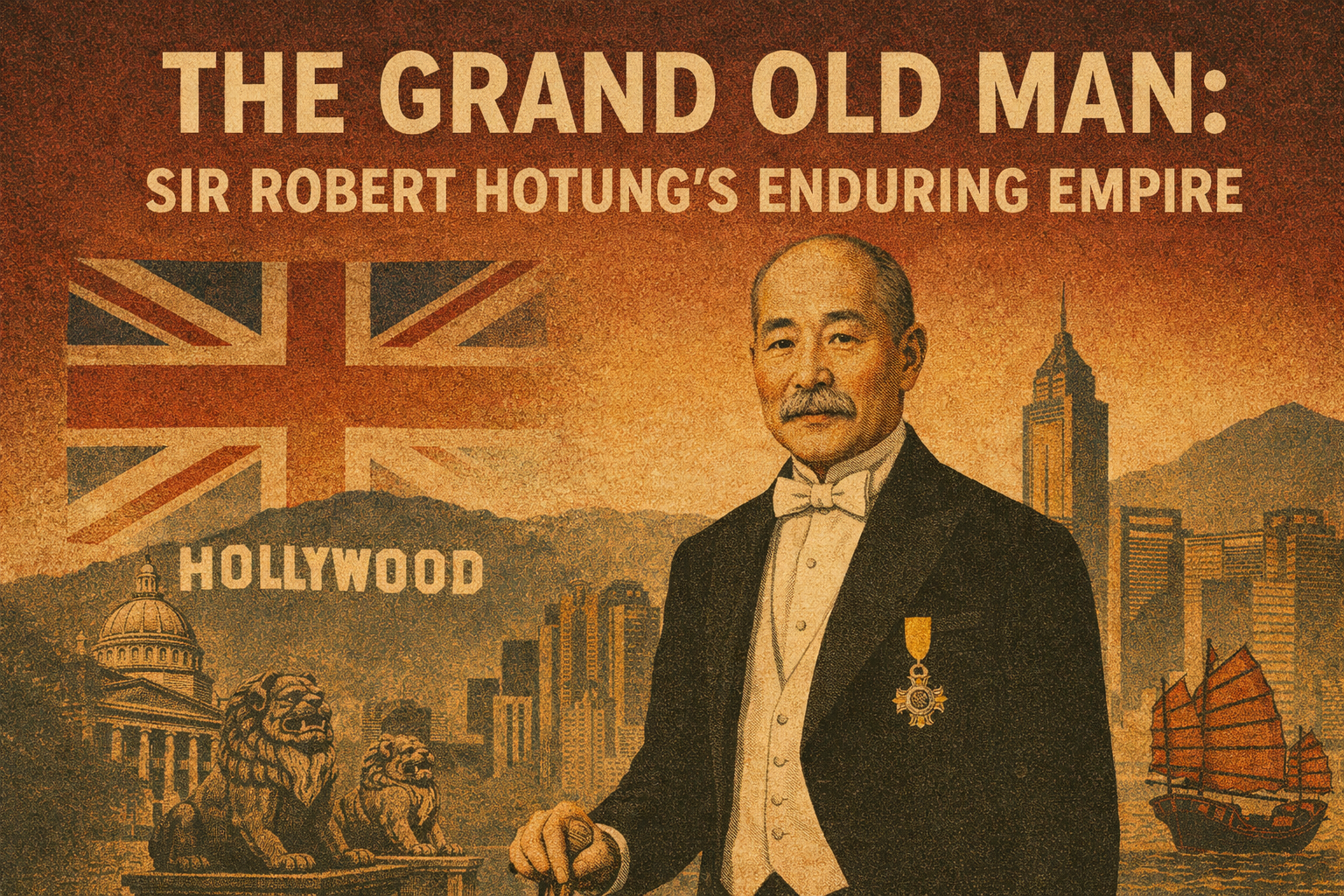
The Grand Old Man: Sir Robert Hotung’s Enduring Empire
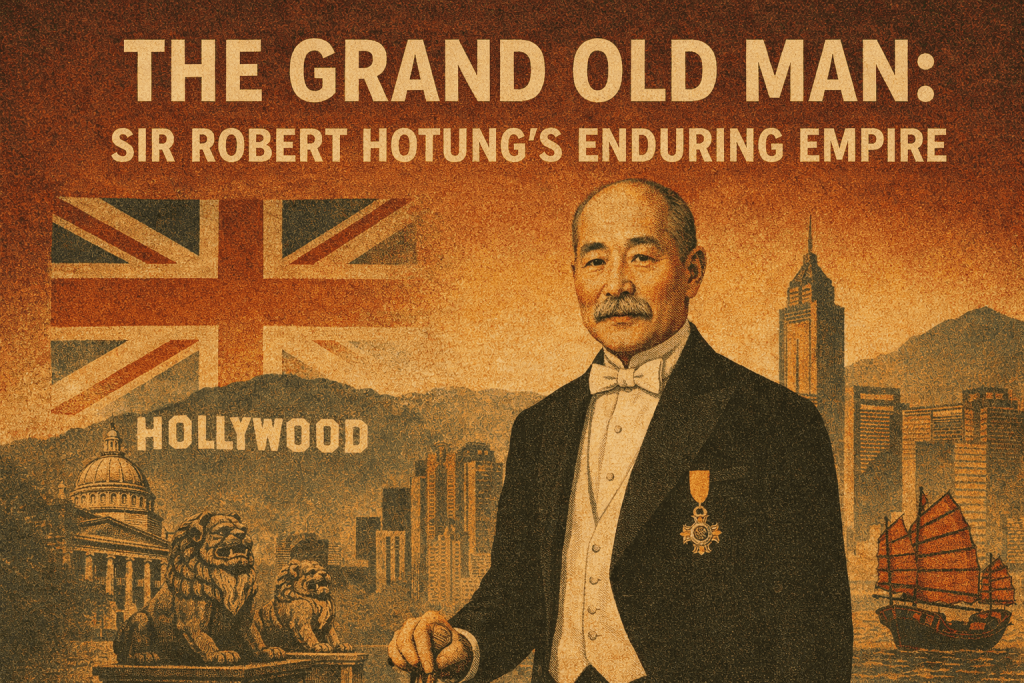
In the swirling mists of colonial Hong Kong, where fortunes rose like the jagged peaks of Victoria Harbour and empires clashed in the opium-scented air, one man bridged worlds like no other. Sir Robert Hotung, the “Grand Old Man of Hong Kong,” wasn’t just a businessman—he was a force of nature, a Eurasian titan who shattered racial barriers and left an indelible mark on the city’s soul. If my last post on Lord William Jardine painted the rogue trader as the architect of Hong Kong’s gritty origins through his opium-fueled ventures with Jardine Matheson & Company, then Hotung represents the evolution: the local powerhouse who turned that very firm’s machinery into his launchpad for legend. But as we’ll tease later, Jardine’s rivals like the Swire Group were always lurking, ready to carve their own slice of the pie.
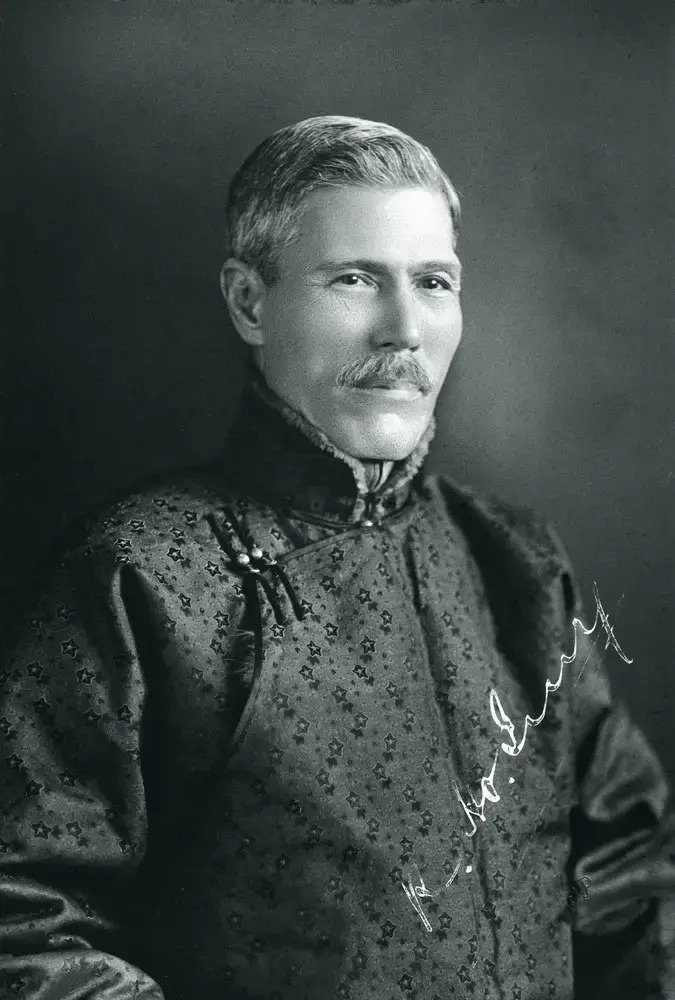
Born in 1862 to a Dutch-Jewish father, Charles Bosman, and a Chinese mother, Sze Tai, Robert Ho Tung Bosman (he later dropped the “Bosman”) embodied the cultural fusion that defined Hong Kong. With his striking blue eyes and reddish hair, he navigated a society rigidly divided by race and class. Although of biracial heritage, Hotung strongly self-identified as Chinese, fully embracing his mother’s culture and heritage while advocating fiercely for Chinese rights and representation—a nuance that resonates deeply today, especially in Hollywood where authentic portrayals of complex identities remain crucial. Educated at Queen’s College, he honed his bilingual skills—English and Cantonese—into weapons of commerce. At just 18, he joined Jardine Matheson, the behemoth trading house founded by Jardine and his partner James Matheson. Starting as an assistant in the comprador department, Hotung’s role was pivotal: as a comprador, he acted as the crucial intermediary between Western traders and Chinese merchants, greasing the wheels of deals in tea, silk, and yes, the lingering shadows of opium.
Hotung’s ascent was meteoric. By 1894, he had become Jardine Matheson’s chief comprador and manager of its vast China operations, a position he held until 1900. In this era, Jardine Matheson was the undisputed king of the hongs—the great British trading firms that dominated Hong Kong’s economy. Hotung’s insider knowledge and networks helped expand Jardine’s reach deep into the mainland, turning potential rivals into allies and navigating the treacherous politics of the Qing Dynasty’s twilight. He wasn’t just an employee; he was the cultural bridge that made Jardine’s empire thrive in Asia. When he left to strike out on his own, he carried that Jardine-forged savvy into independent ventures: shipping, real estate, insurance, and commodities trading. His Ho Tung & Co. became a powerhouse, amassing a fortune that made him Hong Kong’s wealthiest man by the early 20th century.
But Hotung’s legacy transcends ledgers and profits. Knighted in 1915 (and again as KBE in 1955), he was a philanthropist par excellence, pouring millions into education, healthcare, and social welfare. He founded schools like Hotung Secondary School and funded universities, hospitals, and temples, including the stunning Tung Lin Kok Yuen Buddhist nunnery. In a bold defiance of colonial segregation, he became the first Chinese resident on The Peak in 1906, challenging the Europeans-only rule and paving the way for integration. During World War II, he fled to Macau but continued his largesse, supporting refugees and anti-Japanese efforts. His influence extended to politics: as a member of the Legislative Council, he advocated for Chinese rights, and his family ties wove him into the fabric of Hong Kong’s elite. Hotung died in 1956 at 93, but his spirit endures in the city’s skyline—think Ho Tung Lau, a Peak mansion turned museum—and in its ethos of resilience and hybrid identity.
Now, as an aspiring Hollywood cultural consultant and producer, I can’t resist drawing the cinematic threads. Hotung’s life screams for the silver screen: a rags-to-riches saga blending East and West, intrigue and philanthropy, against the backdrop of imperial decay and modern birth. Hollywood has already dipped into this well indirectly through Hotung’s family ties. Enter Bruce Lee, the martial arts icon and global superstar—Hotung’s grandnephew. Lee’s mother, Grace Ho, was the daughter (or adopted kin) of Ho Kom-tong, Hotung’s half-brother and successor as Jardine Matheson’s head comprador. Bruce’s films like Enter the Dragon (1973) and Fist of Fury (1972) channeled the fiery spirit of Hong Kong’s underdogs, echoing Hotung’s own battles against prejudice. Lee’s explosive energy on screen? It’s a distant ripple of the Grand Old Man’s barrier-breaking legacy, inspiring Hollywood’s fascination with Hong Kong’s hybrid heroes.
For a future biopic—let’s call it The Grand Old Man—I’d cast Lewis Tan in the titular role. Tan, with his mixed heritage (Chinese-Singaporean father, British mother) and action chops from Mortal Kombat and Deadpool & Wolverine, captures Hotung’s Eurasian charisma and commanding presence. Like Sir Robert, Lewis identifies as Chinese despite being biracial, underscoring the importance of representation in Hollywood where such stories can empower nuanced cultural narratives. Pair him with Gemma Chan as Lady Clara Hotung, his devoted second wife and partner in philanthropy. Chan, radiant in Eternals and Crazy Rich Asians, would bring grace and steel to Clara’s role as the matriarch who helped build their empire. Imagine scenes of Hotung negotiating with Jardine execs in smoke-filled offices, or defying Peak snobs with a steely gaze—pure Oscar bait. Add a score blending erhu and orchestral swells, and you’ve got a story of identity, ambition, and legacy that resonates today, especially as Hong Kong navigates its own modern identities.
Hotung’s tale reminds us how Jardine Matheson wasn’t just a company; it was a catalyst for figures like him to redefine power. But Jardine had fierce competitors, none more tenacious than the Swire Group, born from John Swire & Sons Limited in 1816. Starting in Liverpool textiles, Swire dove into Asia’s trade wars, building Taikoo Sugar Refinery to rival Jardine’s dominance and expanding into shipping with the China Navigation Company. Their rivalry fueled Hong Kong’s boom—think dockyard battles and market skirmishes that shaped the harbor’s frenzy. Stay tuned for my next YouTube video after this one about Sir Robert Hotung, where we’ll unpack Swire’s saga: from butterfield beginnings to aviation giants like Cathay Pacific. If Jardine was the opium kingpin, Swire was the cunning challenger, proving that in Hong Kong’s game of thrones, no empire reigns forever.
Sir Robert Hotung didn’t just influence Hong Kong; he embodied its unbreakable blend of cultures and dreams. In a city built on trade and tenacity, his legacy whispers: rise above, give back, and never forget your roots.