Boxing Day Elites: Hong Kong’s Affluent Unwrap
As I sip my morning 咖啡 (gaa3 fe1; coffee) while staying with my parents in our 2-bedroom suite at Parkview Heights, it’s 10:00 AM HKT on Friday, December 26, 2025—節禮日 (jit3 lai5 jat6; Boxing Day) in Hong Kong. This public holiday, a remnant of British colonial influence, transforms the city into a hub of consumption and leisure. Through Echoes of Empire, my platform to build recognition as a Hollywood cultural consultant specializing in Hong Kong culture alongside Western and Chinese Buddhist philosophies, I observe how traditions here blend global legacies with local affluence. Today, I dissect how the upper middle and upper classes—those with annual incomes often exceeding HK$2 million or net worths in the tens of millions—engage with this day. My analysis draws from direct observations and industry insights, revealing patterns that are neither glorified nor condemned, but simply documented.
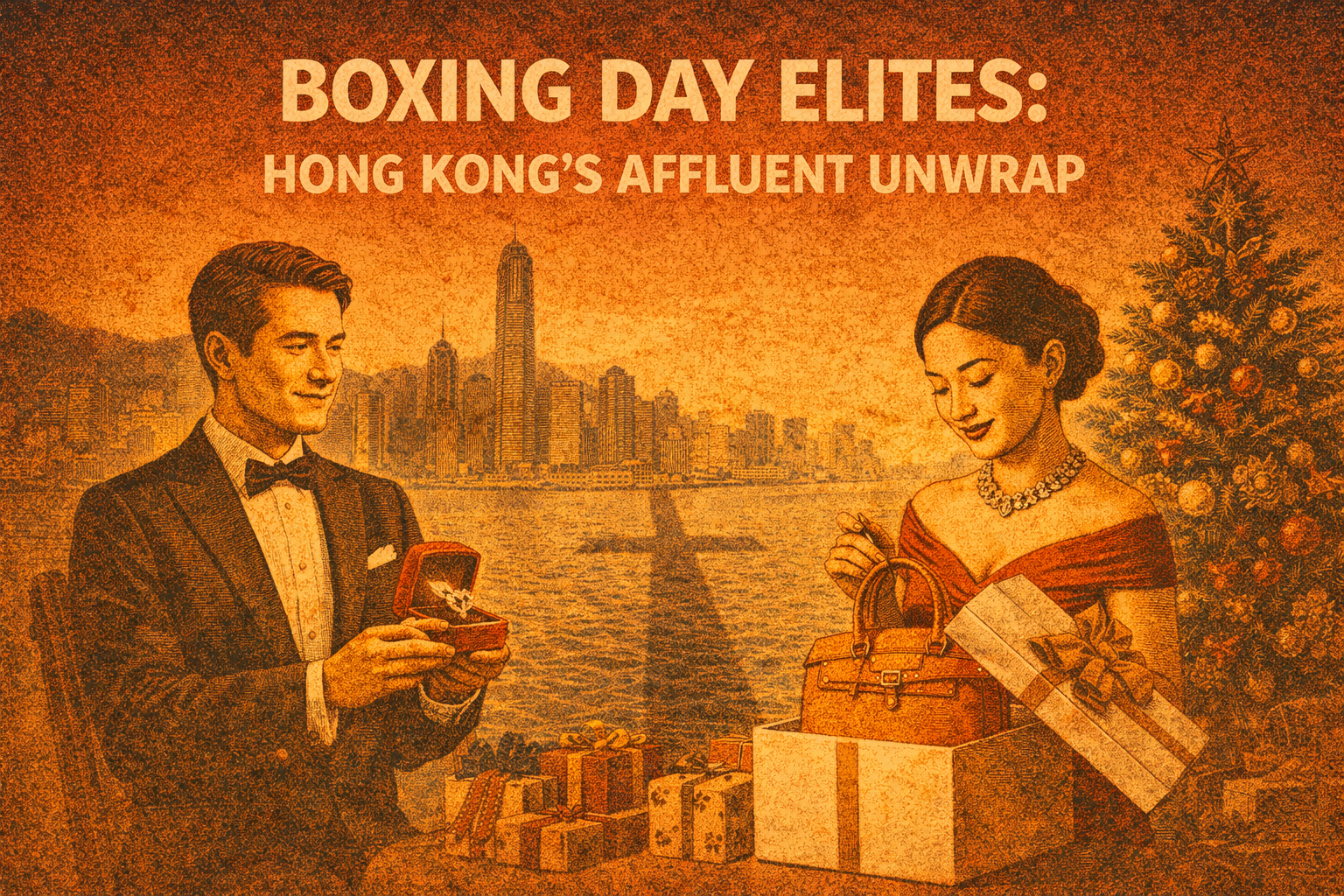
Among Hong Kong’s affluent, 節禮日 begins not with the historical “boxing” of gifts for the less fortunate, but with strategic indulgence. Many start with brunch at exclusive venues, where family units or social circles convene. For instance, reservations at Michelin-starred establishments like Amber at The Landmark Mandarin Oriental feature elaborate multi-course meals, blending Western festive elements with Cantonese finesse—think abalone alongside turkey carvings. These gatherings emphasize 家庭團聚 (gaa1 ting4 tyun4 zeoi6; family reunions), but in opulent settings that underscore status. Upper-class families might host private chefs in their Peak residences, where sprawling views of the city skyline frame discussions on investments or overseas education for heirs. This isn’t mere eating; it’s a performance of wealth, with menus costing upwards of HK$2,000 per person, often booked months in advance.
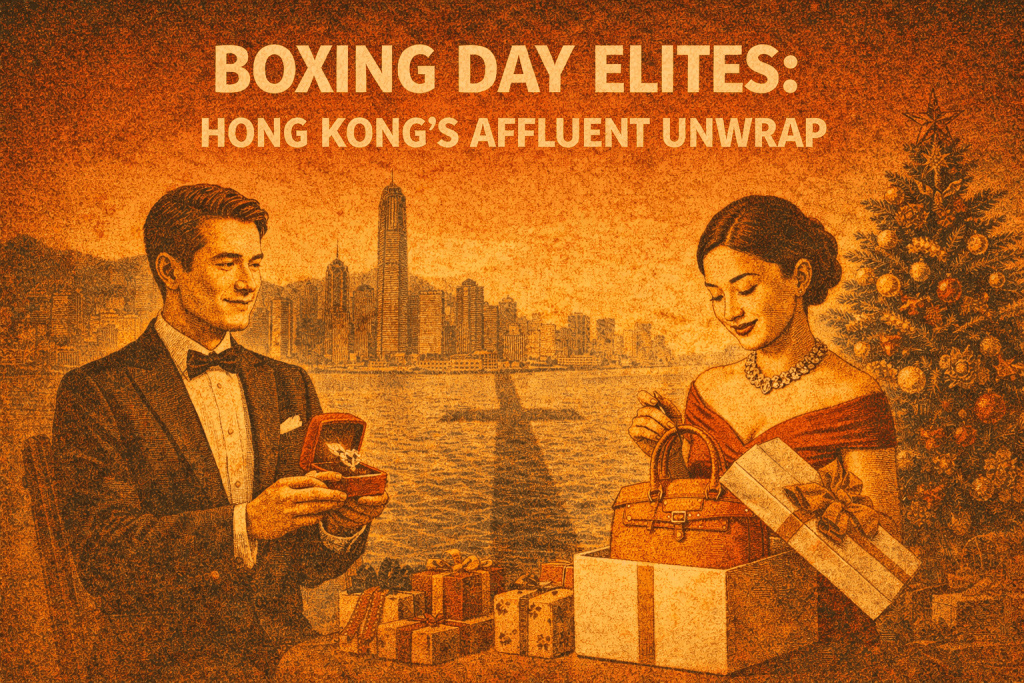
Shopping emerges as a cornerstone activity, amplified by citywide sales. While the masses flock to Causeway Bay’s Times Square for bargains, the elite gravitate toward high-end districts like Admiralty’s Pacific Place or Tsim Sha Tsui’s Harbour City. Here, 奢侈品 (ce1 ci2 ban2; luxury goods) from brands such as Louis Vuitton or Patek Philippe draw discreet crowds. Affluent shoppers aren’t hunting discounts; they’re curating wardrobes or collections, perhaps acquiring limited-edition watches or handbags amid festive decorations. This ritual reflects a broader consumer culture in Hong Kong, where retail therapy on holidays like this sustains economic vitality. Data from retail associations indicate spikes in luxury sales on 節禮日, with upper classes contributing disproportionately through high-value purchases that signal social positioning without overt ostentation.
Horse racing at the Hong Kong Jockey Club provides another focal point, blending thrill with networking. On this Friday, races at Happy Valley or Sha Tin attract the well-heeled, who secure private boxes for panoramic views. Betting isn’t about desperation but entertainment—stakes can run into six figures, with owners mingling in members-only lounges. The atmosphere mixes adrenaline from the 跑馬 (paau2 maa5; horse racing) with champagne toasts, often extending into evening parties. This tradition, rooted in colonial-era leisure, persists as a class marker; attendance requires connections or memberships that filter out the average citizen. Recent fixtures highlight expanded cards on holidays like this, drawing international flair and underscoring Hong Kong’s status as a global racing hub.
Charity infuses a layer of social responsibility, though executed with elegance. Events at luxury hotels like The Upper House feature art installations or auctions, where proceeds support causes such as children’s welfare. Upper-class participants “adopt” items for donations in the thousands, combining philanthropy with visibility—photos in society pages follow. This practice echoes the day’s original ethos but adapts it to modern elitism, where giving is as much about legacy-building as altruism. Some affluent families opt for quieter gestures, like sponsoring community meals, yet these remain secondary to personal festivities.
Evenings often shift to private domains: yacht charters in the harbour for 煙花 (jin1 faa1; fireworks) viewing or exclusive club soirees at venues like the Hong Kong Club. For those seeking escape, short-haul flights to Macau or Southeast Asian resorts allow extended celebrations, leveraging private jets for seamless travel. This mobility highlights class divides—while public transport swells with shoppers, the elite navigate via chauffeured vehicles or helicopters.
In my career advising Hollywood on authentic Hong Kong narratives, enriched by insights from Western and Chinese Buddhist philosophies, this 節禮日 dynamic inspires compelling stories. Imagine a thriller where a tycoon’s horse-racing bet uncovers corporate espionage amid the Jockey Club’s elite circles, exploring themes of inherited wealth and colonial shadows through a lens of impermanence and interconnectedness. Or a romantic drama centered on a cross-cultural couple clashing over luxury brunch traditions, revealing intergenerational tensions in a Peak mansion while weaving in philosophical reflections on desire and detachment. A satirical comedy could follow an aspiring socialite navigating charity auctions, poking at the facade of philanthropy in affluent society, contrasted with Buddhist notions of equanimity and non-attachment. These tales, drawn from real observations, could humanize Hong Kong’s upper echelons for global audiences, blending provocation with nuance—questioning if such celebrations preserve empire’s echoes or forge new identities.
Yet, this analysis remains neutral: 節禮日 among the affluent is neither excess nor virtue, but a factual intersection of history, economy, and social structure. As the day unfolds in HKT, Hong Kong’s skyline glimmers, indifferent to the classes below. Through Echoes of Empire, I aim to translate these scenes into scripts that captivate without caricature, bridging East and West one story at a time.