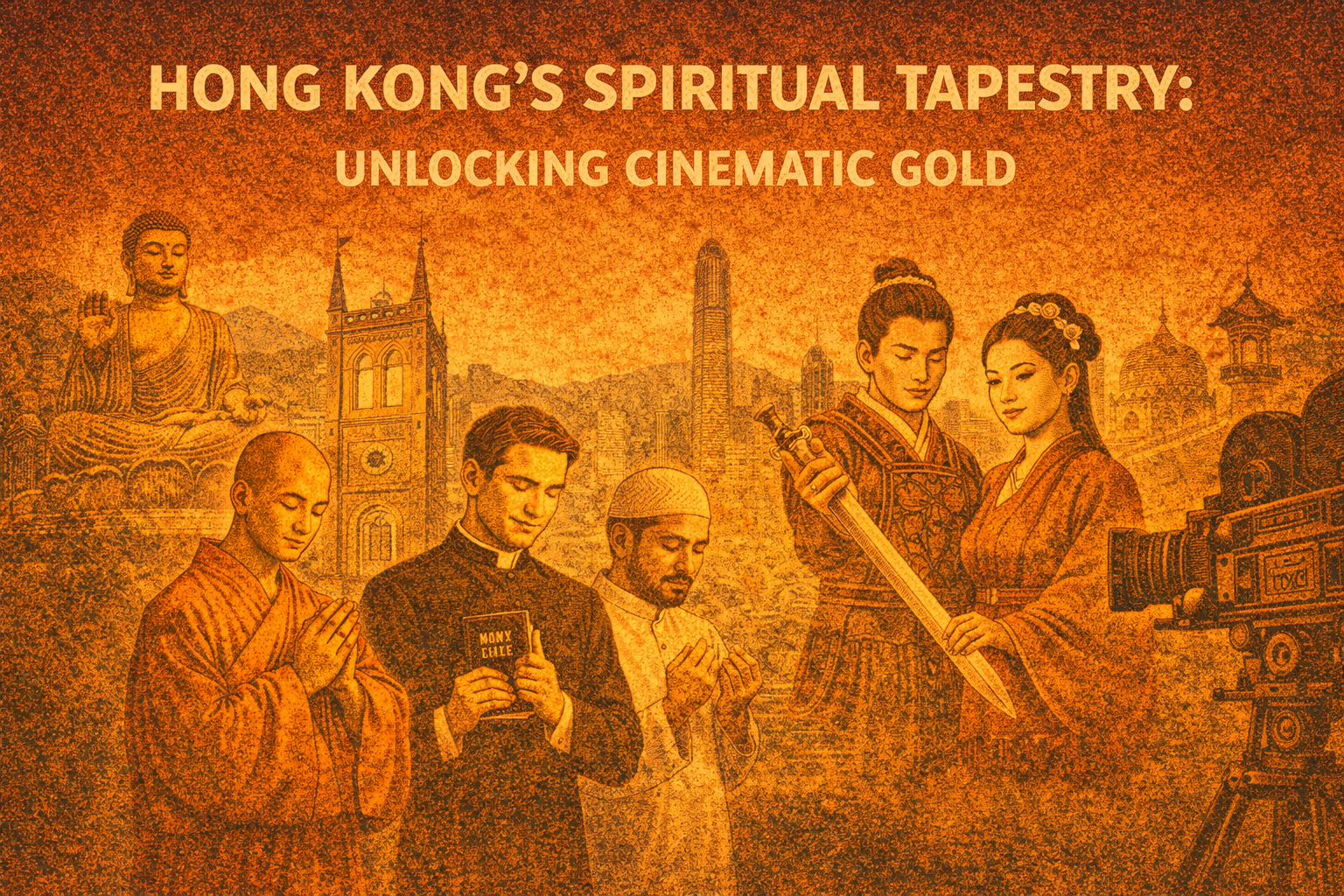
Hong Kong’s Spiritual Tapestry: Unlocking Cinematic Gold
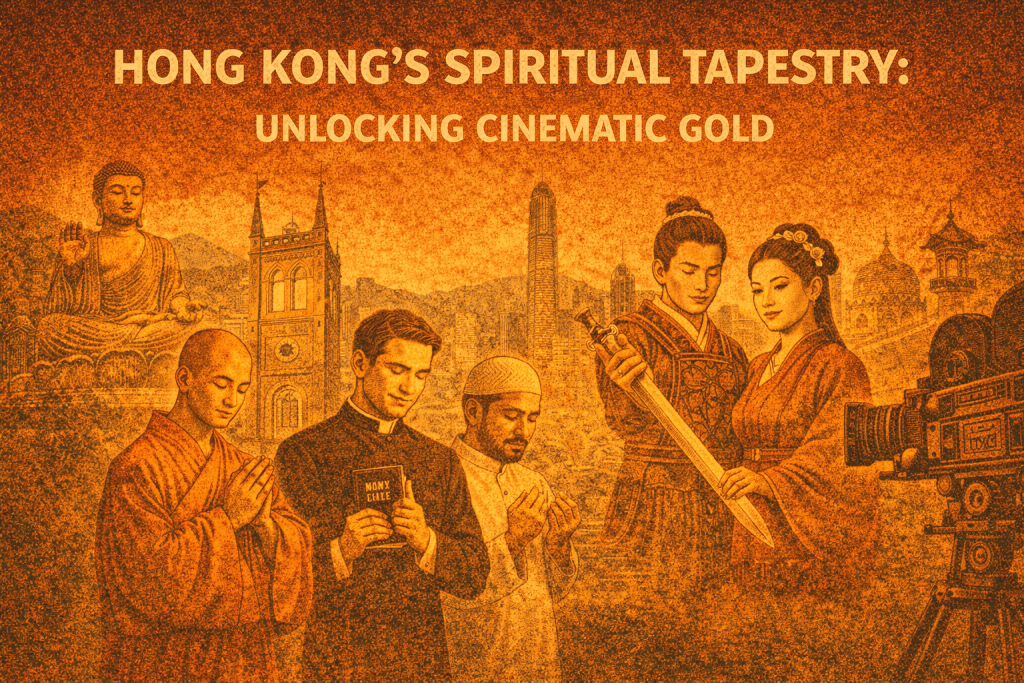
As I stepped out of the 梁皇寶懺法會 (Leung Wong Bou Chim Faat Wui, Emperor Liang’s Precious Repentance Dharma Assembly) at around 6 PM HKT today—December 28, 2025—my mind buzzed with the rhythmic chants and incense haze that had enveloped me since the afternoon. This all-day Buddhist repentance ritual, rooted in the legend of Emperor Wu of Liang seeking atonement for his late wife, isn’t just a relic of ancient China; it’s a living pulse in Hong Kong’s urban frenzy. As a budding Hollywood cultural consultant specializing in Hong Kong culture, experiences like this fuel my mission to bridge East and West on screen. In this post, I’ll dissect Hong Kong’s Chinese Buddhist, Daoist, and folk religious communities—objectively, without bias—and explore how they inspire untapped stories for film, potentially catapulting my nascent career.
Hong Kong’s religious landscape defies the city’s skyscraper stereotype, blending seamlessly with its capitalist ethos. Chinese Buddhism, predominant among the three, thrives in temples like 志蓮淨苑 (Chi Lin Nunnery, Chi Lin Pure Land) and 寶蓮禪寺 (Po Lin Monastery, Precious Lotus Zen Temple) on Lantau Island. These aren’t mere tourist spots; they’re hubs for 懺悔 (chim fui, repentance) practices like today’s event, where participants kneel for hours, reciting sutras to purge karma. Statistically neutral data from the Hong Kong government’s 2021 census shows about 15% of residents identify as Buddhist, but participation swells during festivals like 佛誕 (Fat Daan, Buddha’s Birthday). This community emphasizes 慈悲 (ci bei, compassion) and 無常 (mou seung, impermanence), philosophies that challenge Western individualism yet coexist with Hong Kong’s high-stakes finance world.
Daoism, or 道教 (Dou Gaau, the Way Teaching), operates more subtly, often intertwined with folk practices. Temples like 黃大仙祠 (Wong Tai Sin Temple, Yellow Great Immortal Shrine) draw millions annually for 求籤 (kau chim, fortune-telling via bamboo slips), blending Daoist cosmology with practical divination. Core tenets include 陰陽 (jam joeng, yin-yang balance) and 無為 (mou wai, non-action), promoting harmony with nature amid urban density. Unlike Buddhism’s monastic focus, Daoism’s alchemical roots—think elixirs and immortality—fuel rituals for health and prosperity, appealing to a pragmatic populace. Folk estimates suggest Daoist adherents hover around 10-15%, but the lines blur with Chinese folk religion, which encompasses ancestor worship and deity veneration without strict dogma.
Chinese folk religion, the most amorphous, integrates elements from both, plus Confucianism. It’s evident in 村屋 (cyun uk, village houses) altars honoring 土地公 (Tou Dei Gung, Earth God) or during 清明節 (Cing Ming Zit, Tomb-Sweeping Festival), where families burn offerings at gravesites. This syncretic faith stresses 孝道 (haau dou, filial piety) and communal harmony, often manifesting in 廟會 (miu wui, temple fairs) with lion dances and opera. Neutral observers note its resilience post-1997 handover, adapting to mainland influences while retaining Cantonese flavors—like prayers in local dialect. These communities aren’t monolithic; they overlap, with many Hongkongers practicing “three teachings in one” (三教合一, saam gaau hap jat), reflecting cultural pragmatism over doctrinal purity.
Provocatively, this spiritual ecosystem challenges Hollywood’s portrayal of Hong Kong as merely a neon-lit action backdrop. Films like “Rush Hour” skim the surface, ignoring how these faiths underpin social resilience—think post-SARS temple surges or Umbrella Movement prayer vigils. As a consultant, I see gold here for my career: authentic narratives that humanize Hong Kong beyond kung fu tropes.
Imagine a thriller inspired by Daoist 風水 (fung seoi, geomancy): A young architect, torn between corporate greed and ancestral mandates, uncovers a cursed high-rise where imbalanced yin-yang energies manifest as hauntings. Drawing from real Wong Tai Sin consultations, the story could explore ethical dilemmas in urban development, with rituals like 打小人 (daa siu jan, villain-hitting) as plot devices—provoking questions on fate versus free will without romanticizing superstition.
Buddhist themes scream for a coming-of-age drama: A disillusioned tech mogul attends a 梁皇寶懺 (Leung Wong Bou Chim, Emperor Liang’s Repentance) like today’s, confronting impermanence amid Hong Kong’s wealth gap. Inspired by Po Lin’s vegetarian ethos, subplots could weave in 素食 (sou sik, vegetarianism) as metaphor for ethical living, challenging viewers on consumerism. This mirrors my afternoon immersion, where chants dissolved ego, hinting at stories of redemption in a hyper-competitive society.
Folk religion offers horror-fantasy potential: A family saga during 盂蘭節 (Jyu Laan Zit, Hungry Ghost Festival), where burning paper offerings awakens forgotten spirits in a Kowloon tenement. Blending ancestor veneration with modern migration woes, it could provoke on identity—neutral lens on how folk rites preserve heritage amid globalization, sans judgment.
These ideas aren’t just pitches; they’re career launchpads. As Hollywood diversifies, consultants like me—fresh but immersed—can ensure cultural fidelity, avoiding whitewashing. My partial attendance today reminded me: Hong Kong’s faiths aren’t exotic props but dynamic forces. By mining them objectively, we craft provocative cinema that resonates globally, boosting my trajectory from fledgling to fixture.