
Silent Struggles: Hong Kong’s Elite and the Mental Health Mirage
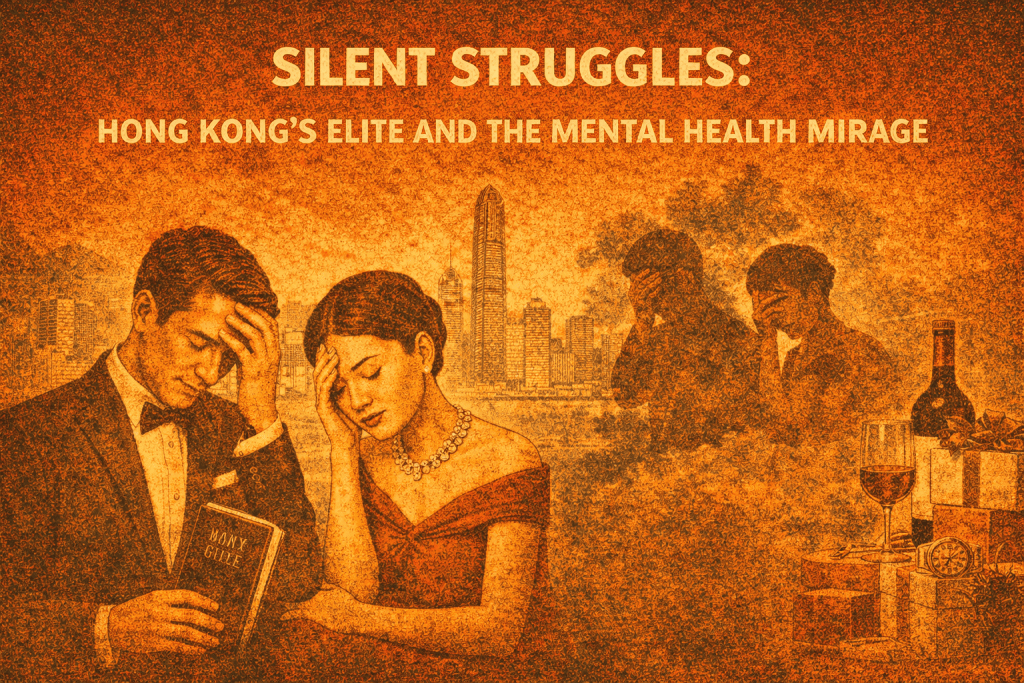
Hong Kong (香港, hoeng1 gong2), December 29, 2025 (HKT) – As a scholar steeped in Tiantai (天台, tin1 toi4) Buddhist philosophy, I’ve long pondered how ancient contemplative practices intersect with modern societal pressures. My academic journey into Tiantai (天台, tin1 toi4), a school of Chinese Buddhism founded by Zhiyi (智顗, zi3 ji5) in the sixth century, has equipped me to examine mental health through a lens of integrated meditation and insight. Today, I turn that gaze to Hong Kong’s (香港, hoeng1 gong2) upper middle and upper classes, where mental health attitudes reveal a stark paradox: outward prosperity masking inward turmoil. This analysis draws on empirical observations of stigma, prevalence, and cultural dynamics, while exploring Tiantai’s (天台, tin1 toi4) potential role in fostering mindfulness (正念, zing3 nim6). I’ll then connect this to my emerging role as a Hollywood cultural consultant specializing in Hong Kong (香港, hoeng1 gong2) culture, proposing narratives that could illuminate these themes alongside Chinese Buddhist communities.
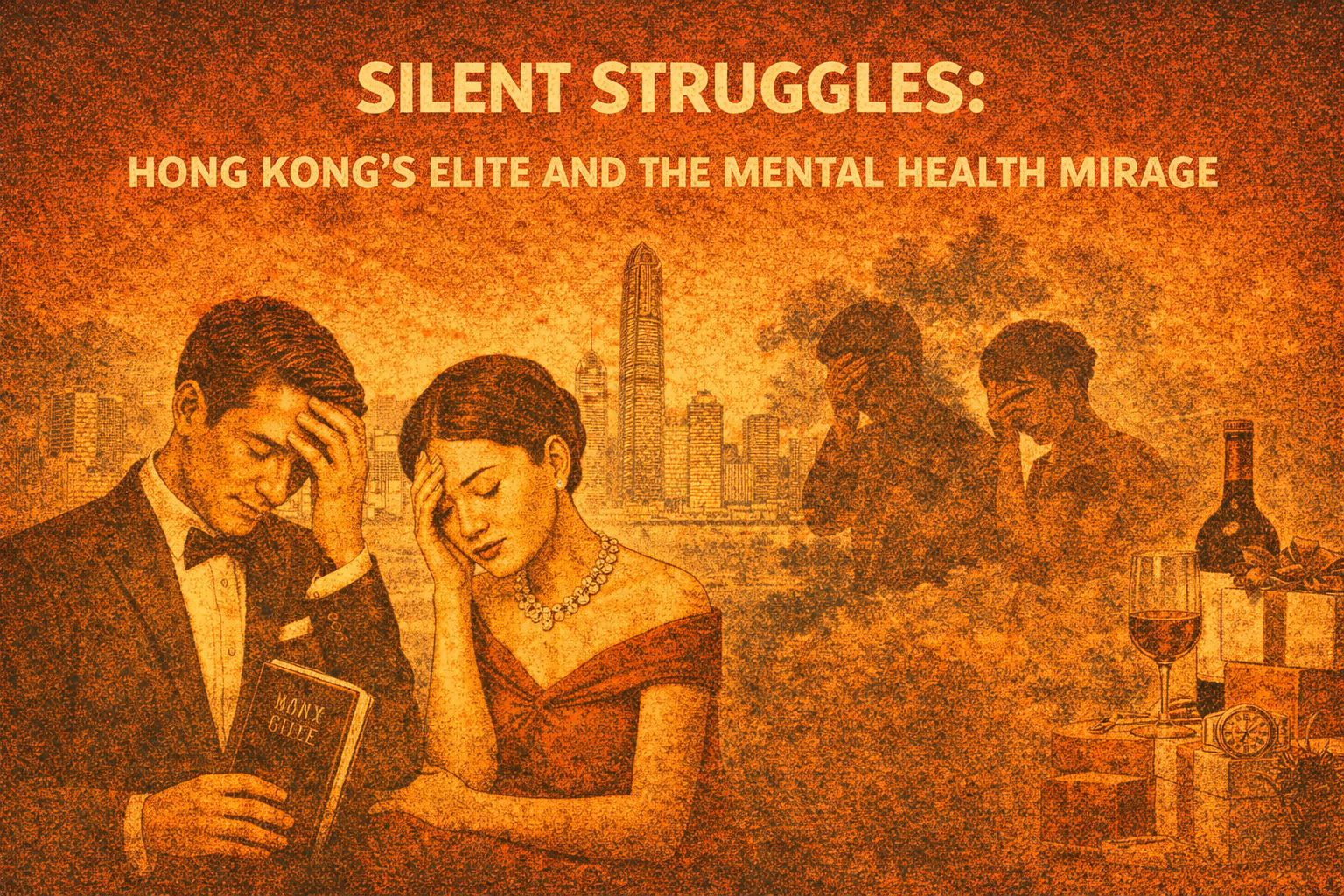
In Hong Kong (香港, hoeng1 gong2), mental health discourse remains fraught with reticence, particularly among the affluent. Surveys indicate that approximately one in seven residents experiences a common mental disorder at any time, yet 74% avoid seeking treatment. This hesitation stems from entrenched stigma, which has intensified in recent years. Between 2021 and 2023, measures of public stigma toward mental illness worsened, reflecting broader societal shifts amid economic and political stresses. Among working adults, 24.3% report anxiety or depressive symptoms, with rates peaking in younger cohorts aged 18-29. The upper middle and upper classes, often ensconced in high-stakes professions like finance and law, face amplified risks. Work stress correlates strongly with mental health declines, as evidenced in studies of socioeconomic patterns. These groups prioritize “face” – mianzi (面子, min6 zi2) – valuing stoicism over vulnerability. A 2016 assessment found that only a third of middle-class respondents viewed their mental state as healthy, with many enduring headaches, insomnia, and trembling under pressure. Emerging Asian middle classes, including Hong Kong’s (香港, hoeng1 gong2), report 43% experiencing mental health symptoms in recent years, underscoring a regional trend. Stigma manifests in professional biases too; medical and nursing personnel exhibit higher discriminatory attitudes toward psychiatric patients, perpetuating a cycle where even helpers reinforce exclusion. This social construction of mental illness as moral failing deviates from norms of success, making disclosure risky in elite circles.
Yet, this landscape invites integration with Tiantai (天台, tin1 toi4) Buddhist meditation, which offers a framework for addressing mental distress through mindfulness (正念, zing3 nim6). Tiantai (天台, tin1 toi4) emphasizes the “threefold truth” (三諦, saam1 dai3) – emptiness (空, hung1), provisional existence (假, gaa2), and the middle way (中, zung1) – applied via practices like zhiguan (止觀, zi2 gun1) (samatha-vipassana), combining calming meditation with analytical insight. Zhiyi (智顗, zi3 ji5) himself advocated using these to analyze the “non-existent nature” of physical and mental ailments, treating them as impermanent phenomena rather than fixed identities. This aligns with contemporary mindfulness (正念, zing3 nim6), rooted in Buddhist traditions, which reduces stress, anxiety, and depression by fostering present-moment awareness. Studies on Buddhist meditators, including monks, show enhanced emotional regulation, neural adaptations, and even gut microbiome improvements linked to better mental health. In Hong Kong’s (香港, hoeng1 gong2) context, where resilience mediates stigma’s impact on help-seeking, Tiantai’s (天台, tin1 toi4) approach could demystify mental health by encouraging self-analysis of suffering’s origins, as I’ve explored in my philosophical studies. For the elite, accustomed to control, this practice provides a non-stigmatizing tool: meditation as executive strategy, not weakness admission.
Drawing from my Tiantai (天台, tin1 toi4) background, I see parallels in how these methods could bridge Hong Kong’s (香港, hoeng1 gong2) mental health gaps. Affluent individuals, burdened by generational expectations and urban isolation, might find solace in zhiguan’s (止觀, zi2 gun1) balanced view, viewing anxiety as transient rather than defining. This ties mental health to mindfulness (正念, zing3 nim6) not as Western therapy import, but as indigenous Chinese heritage, potentially reducing cultural resistance.
Transitioning to my fledgling career as a Hollywood cultural consultant on Hong Kong (香港, hoeng1 gong2) culture, these insights fuel storytelling opportunities. Hollywood often exoticizes Asia, but authentic narratives could humanize Hong Kong’s (香港, hoeng1 gong2) mental health scene, intertwined with mindfulness (正念, zing3 nim6) and Chinese Buddhist communities. Imagine a thriller where a high-powered banker, descendant of tycoons, grapples with burnout amid skyscrapers, retreating to a Tiantai (天台, tin1 toi4)-inspired temple in Lantau Island (大嶼山, daai6 jyu4 saan1). Her journey uncovers family secrets of suppressed trauma, blending corporate intrigue with meditative epiphanies – highlighting how elite stigma perpetuates cycles, broken by insight practices.
Another story: A romantic drama following a young heiress in Mid-Levels (半山區, bun3 saan1 keoi1), whose social media facade crumbles under depression. She joins a urban mindfulness (正念, zing3 nim6) group rooted in Chinese Buddhist sanghas (僧伽, sang1 gaa1), drawing from real communities like those in Kowloon (九龍, gau2 lung4) temples. Conflicts arise as she navigates class divides, with Tiantai’s (天台, tin1 toi4) middle way (中, zung1) resolving tensions between tradition and modernity. This could explore intergenerational stigma, where elders view mental health as “losing face” (面子, min6 zi2), contrasted with youth embracing meditation apps infused with Buddhist principles.
For broader appeal, a sci-fi narrative set in futuristic Hong Kong (香港, hoeng1 gong2): An AI consultant (mirroring my role) designs virtual reality mindfulness (正念, zing3 nim6) programs based on Tiantai (天台, tin1 toi4) texts, targeting overworked elites. Plot twists reveal corporate sabotage, symbolizing societal resistance to vulnerability. Inspired by Chinese Buddhist enclaves in the diaspora – like those in California or Vancouver – subplots could feature cross-cultural exchanges, where Hong Kong (香港, hoeng1 gong2) expats form support networks blending therapy with monastic rituals.
These tales provoke by exposing uncomfortable truths: Hong Kong’s (香港, hoeng1 gong2) prosperity exacts a psychic toll, yet ancient wisdom offers redress. As consultant, I’d ensure cultural fidelity, avoiding stereotypes while substantiating claims with philosophical depth. In sum, Hong Kong’s (香港, hoeng1 gong2) mental health attitudes among the upper strata demand scrutiny – provocative in their silence, academic in their patterns. Tiantai (天台, tin1 toi4) mindfulness (正念, zing3 nim6) provides a neutral pathway forward, ripe for cinematic exploration.