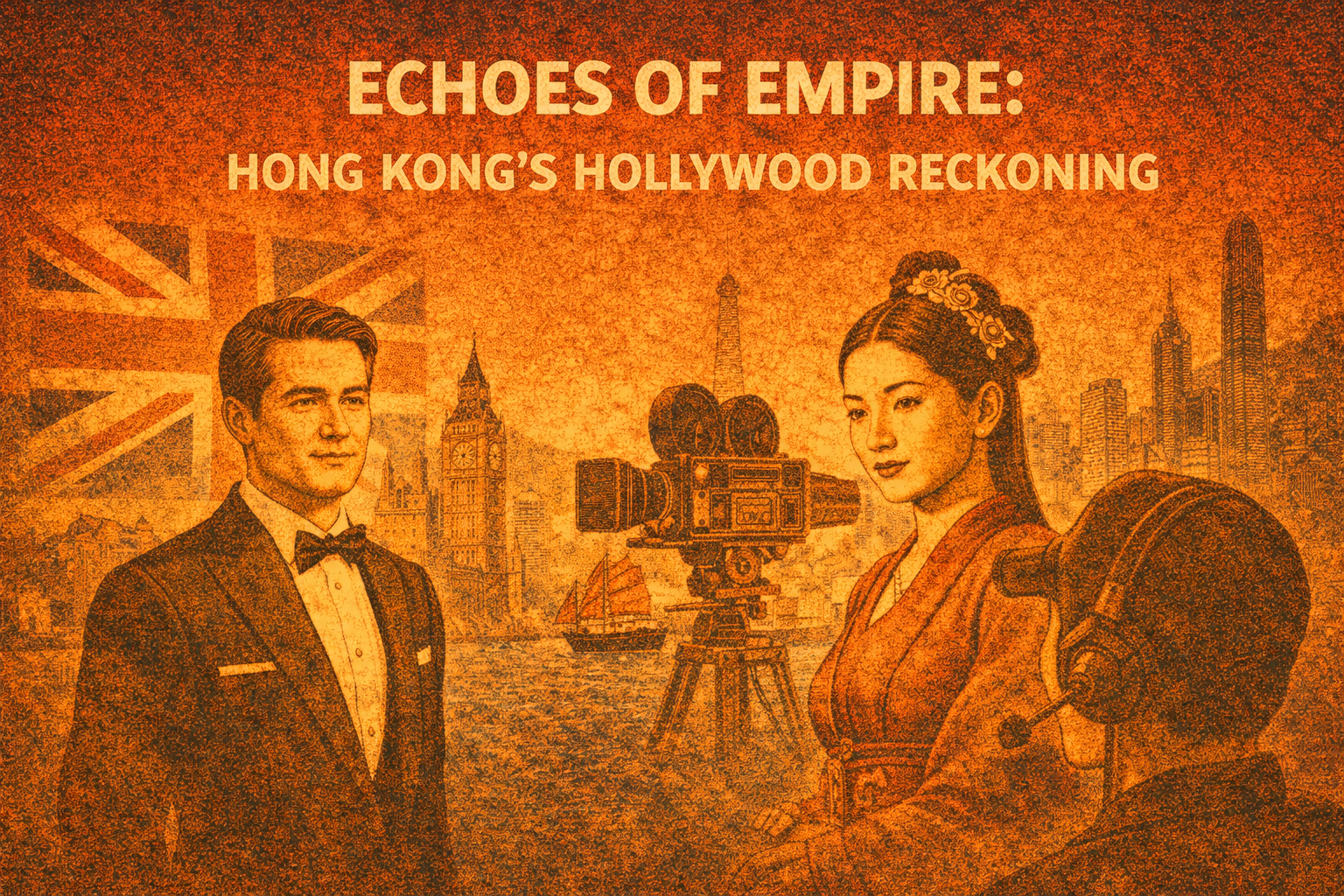
Echoes of Empire: Hong Kong’s Hollywood Reckoning
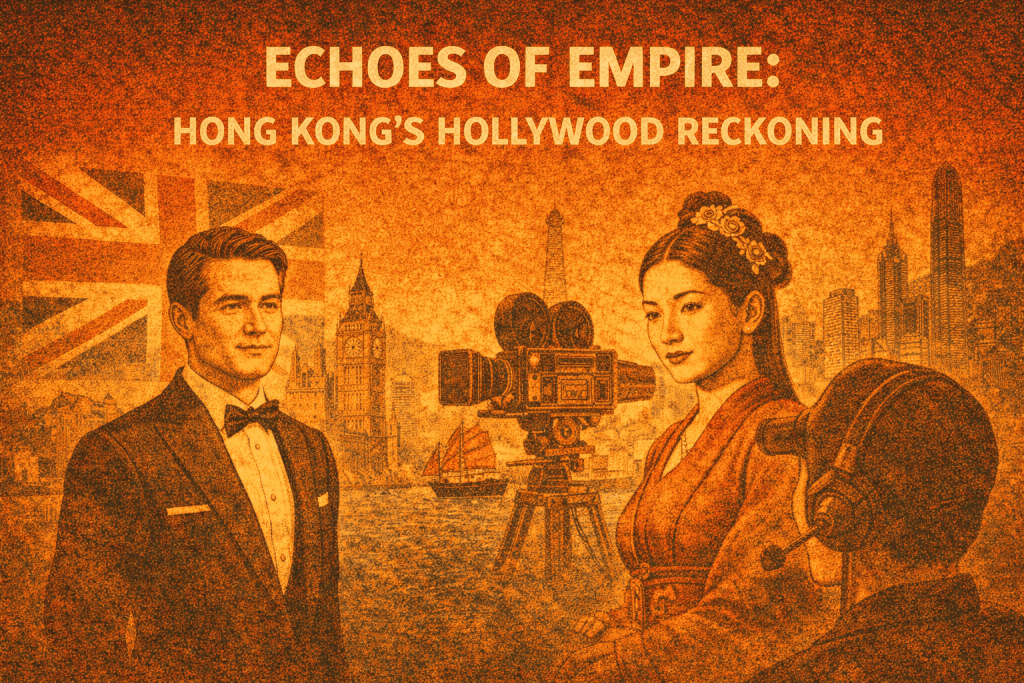
As I sit here in Hong Kong on December 30, 2025, HKT—UTC+8—the clock ticks toward midnight, ushering in New Year’s Eve and the close of another tumultuous year. Tomorrow marks not just the end of 2025 but a symbolic threshold, a moment to reflect on unfinished business and set audacious intentions for what lies ahead. For me, this pivot point centers on Echoes of Empire, my ongoing project that seeks to reshape perceptions of Hong Kong in global narratives, particularly within Hollywood’s influential sphere. Born into Hong Kong’s upper class and raised in a traditional Cantonese family, my perspective is steeped in an educational background that bridges Western philosophies and Chinese Buddhist thought—informing a worldview that values critical inquiry alongside contemplative restraint. In the spirit of provocation tempered by academic rigor, I outline my goals here: to compel Hollywood to portray Hong Kong as a locale irreducibly distinct from mainland China, rooted in its colonial legacy as a British Crown Colony that long insulated its people from the upheavals beyond its borders. Equally, through this endeavor, I aim to cement my own standing as a recognized academic voice in cultural and historical studies.
Let me be straightforward: Hollywood has a habit of flattening Asian geographies into monolithic backdrops, often blurring Hong Kong’s unique identity into a generic “Chinese” tableau. This isn’t mere oversight; it’s a narrative shortcut that erases the city’s singular history. From 1842 to 1997, Hong Kong existed as a British Crown Colony, a status that fostered a hybrid society blending Eastern and Western influences under the umbrella of British common law, free markets, and relative political stability. This colonial framework wasn’t without its flaws—exploitation and inequality were rife—but it undeniably created a buffer against the revolutionary storms that swept mainland China during the 20th century. Think of the Cultural Revolution’s chaos from 1966 to 1976, or the earlier Great Leap Forward’s famines; Hong Kong’s residents, many of whom were refugees fleeing such turmoil, built lives shielded by this imperial enclave. My goal for Echoes of Empire is to provoke Hollywood into acknowledging this distinction, not through polemics, but via compelling, fact-based storytelling that highlights Hong Kong’s role as a crossroads of empires, a place where colonial legacies linger in its architecture, legal system, and cultural ethos.
Provocatively, I ask: Why does Hollywood persist in conflating Hong Kong with the People’s Republic? Films like Rush Hour or Pacific Rim treat the city as an interchangeable urban sprawl, ignoring how its colonial past enabled a vibrant film industry of its own—think Bruce Lee or Wong Kar-wai—that exported a distinctly cosmopolitan vibe. This isn’t about nostalgia for empire; it’s about accuracy. Hong Kong’s handover in 1997 didn’t erase its British-infused DNA; it layered new complexities atop it. By 2025, amid ongoing debates over autonomy and identity, Hollywood’s portrayals matter more than ever. They shape global opinions, influencing everything from tourism to diplomacy. My project aims to disrupt this lazy equivalence by providing scripts, analyses, and consultations that insist on Hong Kong’s “HK-ness”—its neon-lit streets as symbols of resilient hybridity, not just exotic flair. Imagine a blockbuster where protagonists navigate not generic “China,” but a Hong Kong grappling with its post-colonial ghosts, where the Victoria Harbour skyline evokes a history of refuge rather than uniformity.
Objectively, the evidence supports this push. Historical records from the colonial era detail how Hong Kong’s governance diverged sharply from the mainland’s. Under British rule, it became a haven for entrepreneurs and dissidents, its economy booming while the mainland endured isolationist policies. Post-handover, the “one country, two systems” principle was meant to preserve this separateness, though realities have tested it. Echoes of Empire draws on archival materials—treaties, memoirs, and economic reports—to build a neutral case for why Hollywood should evolve. No bias here: I’m not advocating for any political stance, merely for representational fidelity. If filmmakers recognized this, we might see narratives that explore Hong Kong’s role in global trade wars or tech innovations without subsuming it into broader Chinese tropes. Provocation lies in the implication: Ignoring this distinction perpetuates a form of cultural erasure, diminishing the stories of millions who thrived in this anomalous space. My own upbringing in a Cantonese household, enriched by Western liberal arts and Buddhist principles of impermanence and interconnectedness, equips me to navigate these narratives with detachment, viewing Hong Kong’s history as a tapestry of influences rather than a binary of oppressor and oppressed.
As 2025 draws to a close tomorrow, HKT time, I envision 2026 as the year Echoes of Empire gains traction. Perhaps a Hollywood producer reads this and rethinks their next script; maybe an academic journal accepts my submission. Straightforwardly, success hinges on persistence amid uncertainty. Hong Kong’s story deserves precision, not amalgamation. In this New Year’s Eve reflection, I commit to pushing boundaries—provoking thought while upholding academic integrity. The echoes of empire fade only if we let them; my goal is to amplify them, distinctly and unapologetically.