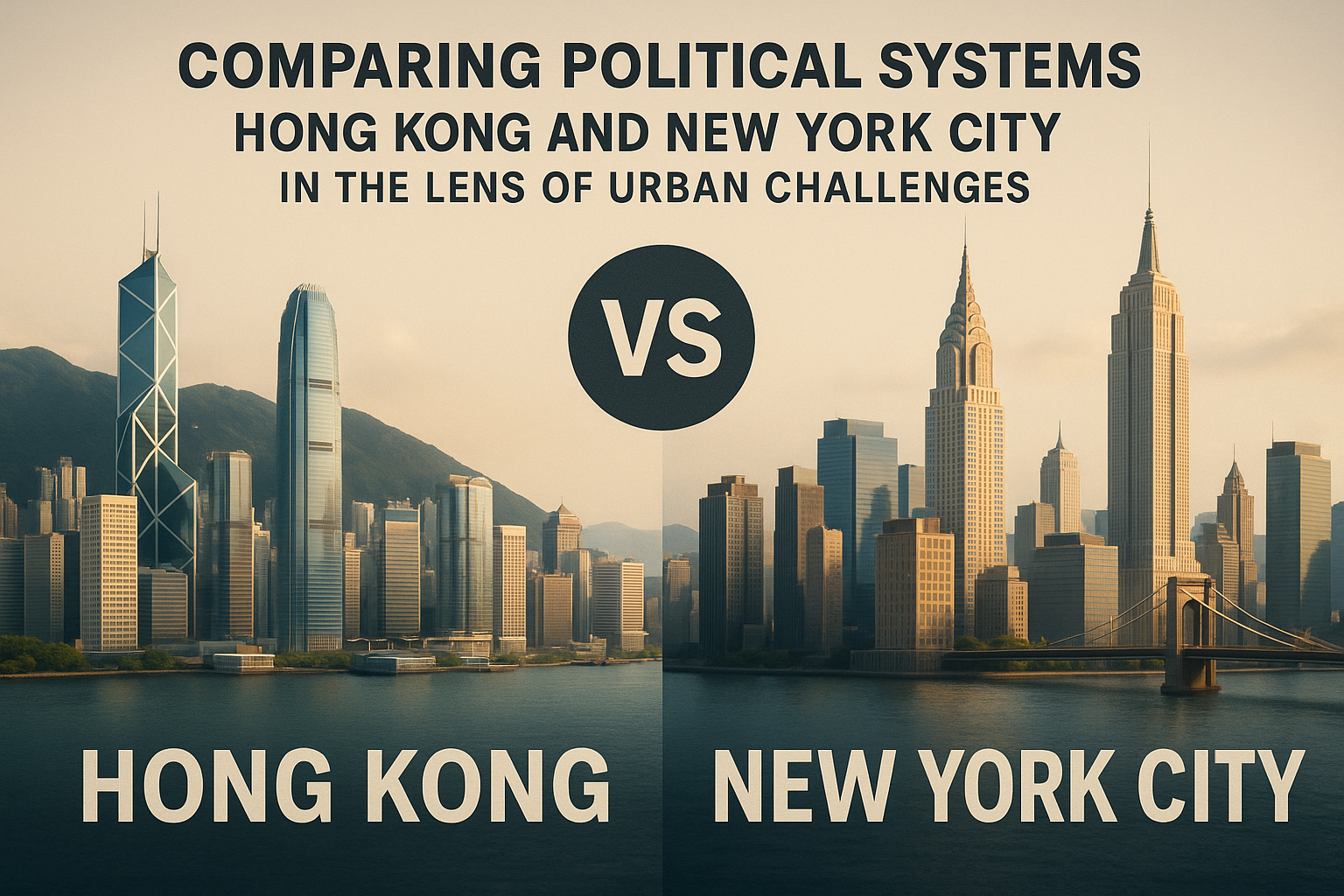

Comparing Political Systems: Hong Kong and New York City in the Lens of Urban Challenges
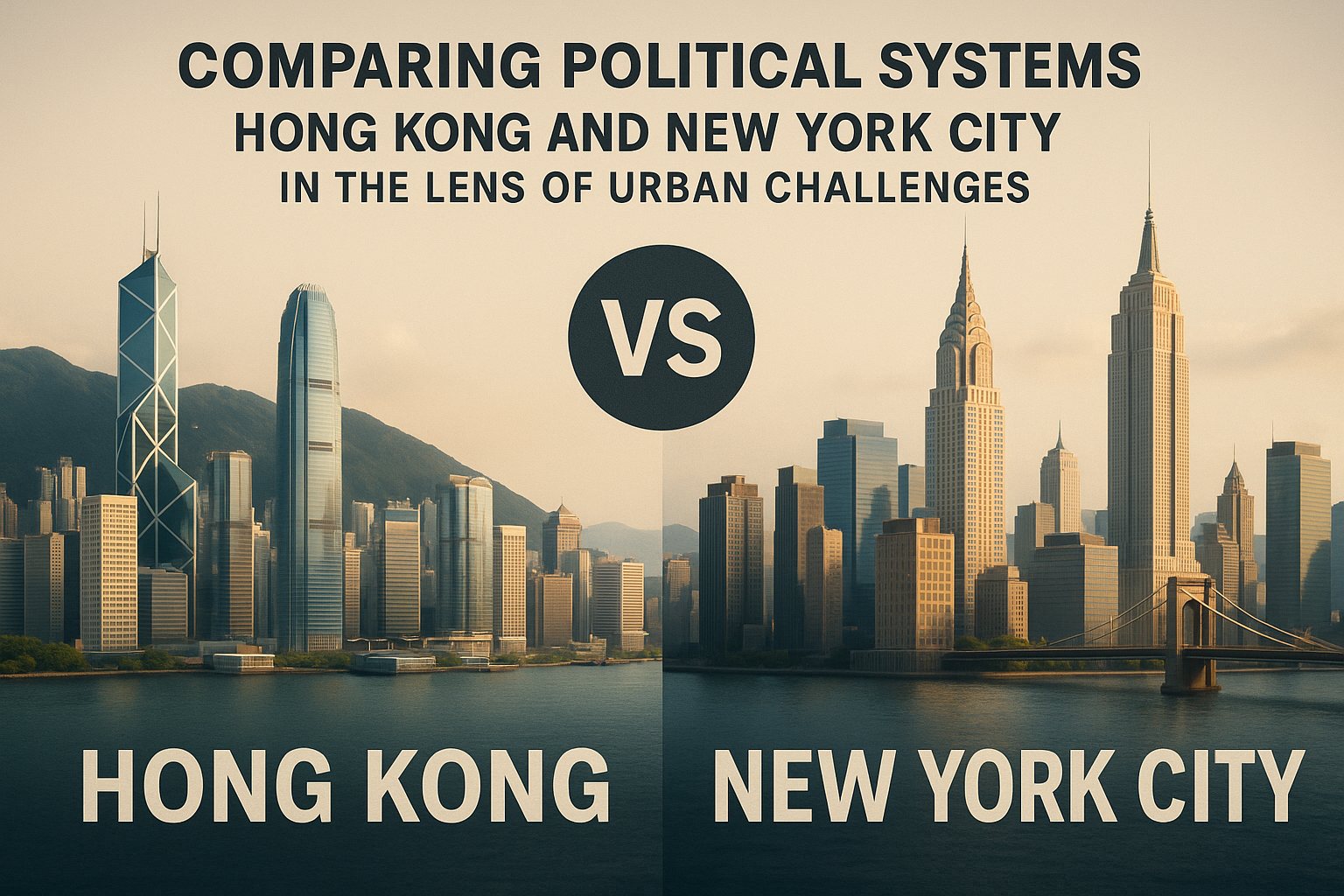
As New York City voters head to the polls for the 2025 mayoral election, amid debates over urban livability, a comparative look at Hong Kong’s political framework offers intriguing insights. Hong Kong operates under China’s “one country, two systems” principle, granting it a high degree of autonomy in domestic affairs while aligning with Beijing’s oversight. The Chief Executive is selected by a 1,500-member Election Committee dominated by pro-Beijing interests, limiting direct democratic input and emphasizing stability over electoral competition. In contrast, New York City’s government features a strong mayor-council system, with the mayor elected by popular vote every four years (up to two terms) and wielding significant executive power over budgeting and policy. The 51-member City Council, also elected, provides legislative checks, though Democratic Party dominance shapes outcomes. This electoral accountability fosters responsiveness but can lead to gridlock from partisan or interest-group pressures. These structures influence how each city tackles pressing issues like housing, transit, education, and healthcare, viewed here from economic, social, and equity perspectives.
Housing: Affordability Crises with Divergent Approaches
Both cities grapple with housing shortages, but their political systems drive distinct responses. Hong Kong’s centralized governance enables extensive public housing programs, covering about 45% of residents through subsidized rentals and sales schemes like the Home Ownership Scheme. From an economic viewpoint, this mitigates inequality in one of the world’s priciest markets, where median home prices exceed 20 times annual incomes, but critics argue government land monopolies exacerbate speculation and subdivided units for the poor. Socially, it promotes stability, yet limited democratic input has fueled protests over inadequate supply and long waitlists—averaging six years—highlighting tensions between efficiency and public voice.
New York City’s democratic model allows for iterative reforms, such as the “Where We Live NYC” plan, which aims to combat segregation and boost affordable units through zoning changes and tax incentives like 485-x. Economically, this addresses a crisis where renters spend over 30% of income on housing, with 86,000 in shelters nightly, but implementation lags due to community opposition and ballot measures like Proposal 1 for fast-tracking projects. From an equity perspective, policies like rent stabilization protect low-income tenants, yet gentrification displaces communities, reflecting how electoral politics can amplify diverse voices but slow systemic change compared to Hong Kong’s top-down approach.
Public Transit and Infrastructure: Efficiency vs. Maintenance Struggles
Hong Kong’s transit system exemplifies the benefits of authoritarian efficiency, with over 90% of daily trips on public modes like the MTR, a profitable rail network integrated with buses and ferries. Economically, this supports dense urban growth and reduces congestion, with plans for electrification and cycling enhancements praised for sustainability. However, from a social angle, complex fares and overcrowding during peaks raise accessibility concerns for low-wage workers, and limited public consultation may overlook user needs.
New York City’s MTA oversees a vast subway serving 3.6 million daily riders, but aging infrastructure— including crumbling tunnels and frequent delays—poses risks, as seen in summer 2025’s worst service in years. Politically, the mayor’s influence over appointments enables pushes for upgrades, like congestion pricing, but fare evasion (one in three bus riders) and funding shortfalls highlight equity issues, disproportionately affecting low-income neighborhoods. Environmentally, both systems aim for resilience, but NYC’s democratic debates often delay projects, contrasting Hong Kong’s swift executions.
Childcare and Education: Access and Competition
Hong Kong’s education is highly competitive, with near-universal kindergarten attendance (ages 3-6) in private or subsidized centers, overseen by the Education Bureau. From a meritocratic perspective, this drives academic excellence, but high-stakes testing fosters stress and inequality, with wealthier families accessing better options. Childcare for under-3s relies on private providers, subsidized for low-income groups, reflecting centralized policy that ensures broad coverage but limited innovation.
New York City’s universal pre-K for 3- and 4-year-olds, expanded under recent mayors, promotes equity, with public schools serving diverse populations. Socially, this addresses disparities, but class sizes and funding gaps in poorer districts persist, as candidates like Andrew Cuomo propose reductions. Electoral politics allow community input, potentially fostering inclusive reforms, unlike Hong Kong’s uniform approach.
Healthcare: Universal Coverage Meets Fragmentation
Hong Kong’s dual system provides subsidized public care through 43 hospitals, ensuring universal access with low costs (e.g., HK$100 outpatient fees), praised for efficiency and high life expectancy. Economically, it controls costs, but wait times for non-urgent care spark debates over private sector reliance for the affluent.
New York City’s mix includes public options like NYC Health + Hospitals, but disparities abound, with 17% facing mental health access issues and borough inequalities (e.g., fewer providers in the Bronx). From an equity standpoint, state policies combat unaffordability, yet federal cuts threaten coverage, illustrating how democratic systems enable advocacy but expose vulnerabilities to broader politics.
In summary, Hong Kong’s system prioritizes stability and scale, yielding efficient public services but at the cost of democratic participation, while NYC’s electoral model amplifies diverse perspectives, potentially innovating amid the mayoral race but risking delays. As New Yorkers vote, these contrasts underscore the trade-offs in urban governance. (Word count: 812)