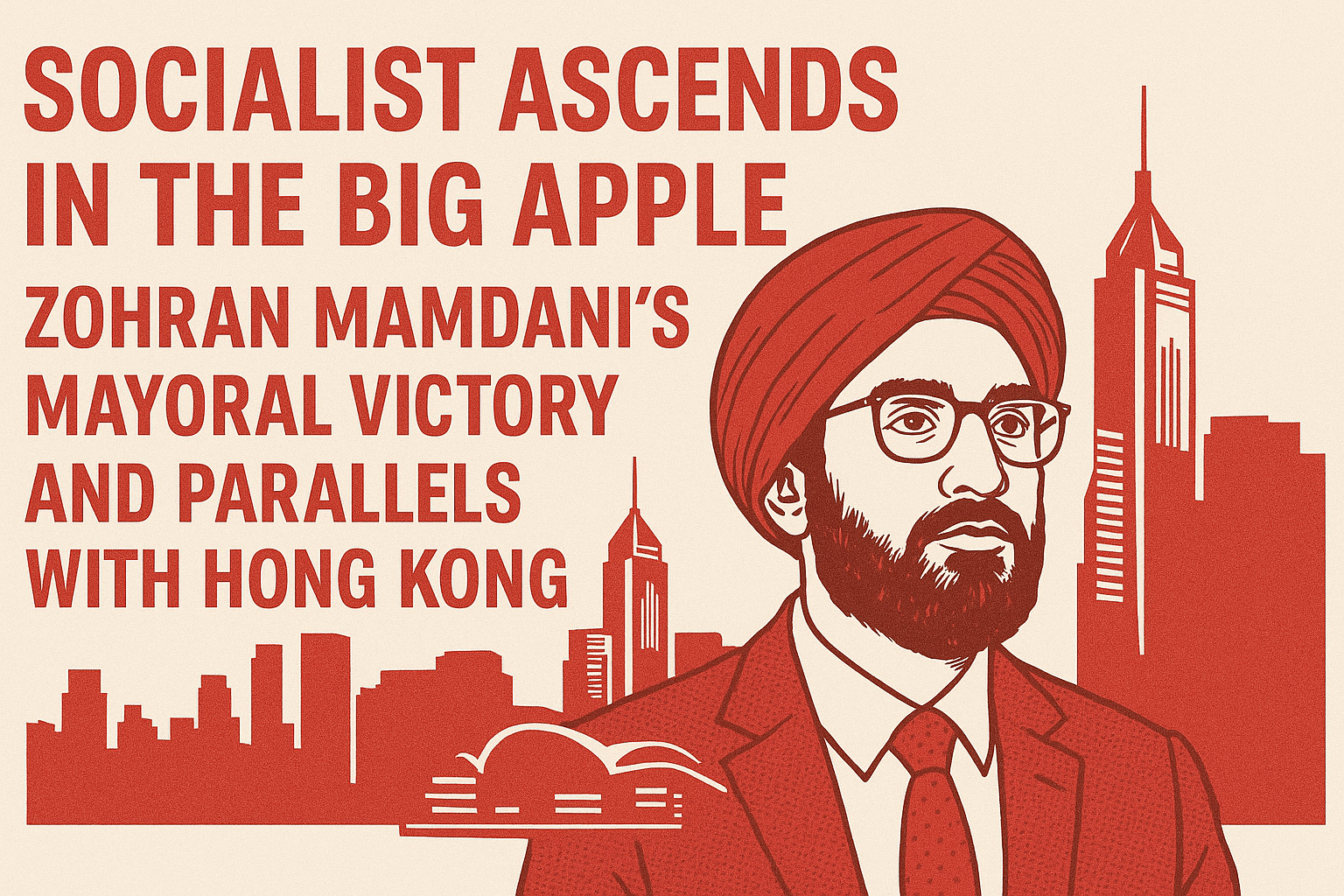
Socialist Ascends in the Big Apple: Zohran Mamdani’s Mayoral Victory and Parallels with Hong Kong
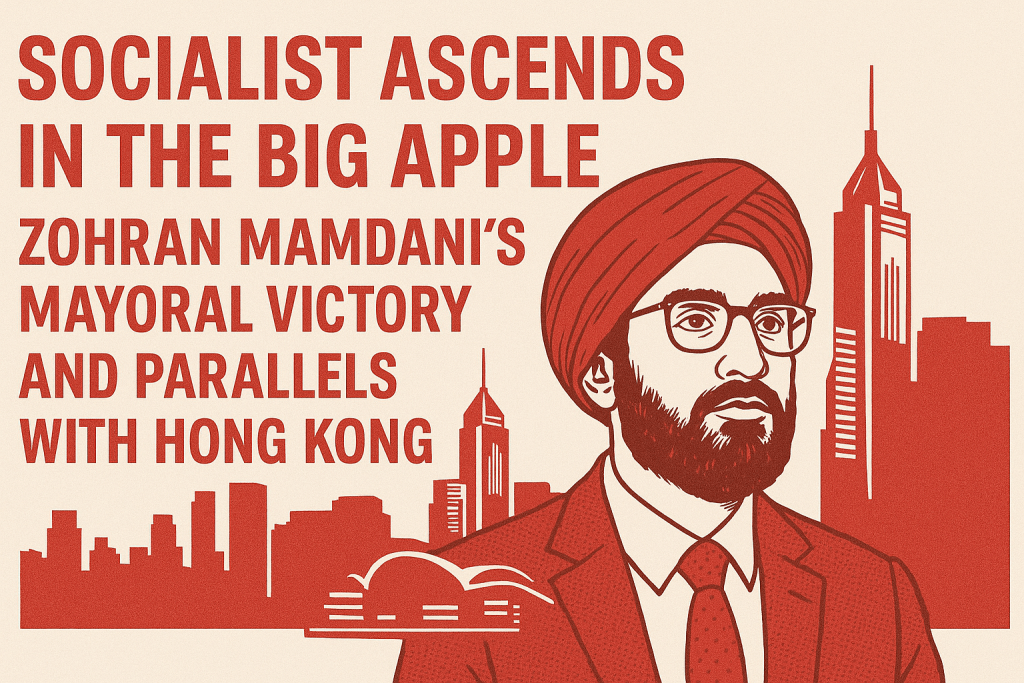
As dawn breaks over New York City on November 5, 2025, the financial capital of the world awakens to a new era under Mayor Zohran Mamdani. The 34-year-old Democratic Socialist, projected winner by NBC News and other outlets, defeated independent Andrew Cuomo and Republican Curtis Sliwa in a high-turnout election. Mamdani’s triumph marks him as the city’s first Muslim mayor, its youngest in over a century, and a bold symbol of progressive resurgence. Yet, as a self-proclaimed socialist steering America’s premiere financial hub, his leadership invites scrutiny. How will his agenda reshape Wall Street’s ecosystem? And what insights can be drawn from Hong Kong, a hypercapitalist powerhouse under the ultimate authority of China’s Communist Party, led by Chief Executive John Lee?
Mamdani’s path to City Hall is a story of rapid ascent. Born in Uganda and raised in NYC, the state assemblymember since 2021 has championed tenant rights, police reform, and anti-war stances. His campaign, fueled by promises of rent freezes, massive affordable housing, and wealth taxes, resonated amid soaring living costs. Democratic reactions have been jubilant, viewing his win as a progressive milestone. ABC News highlighted it as a sweep for Democrats, with Mamdani energizing the party’s left wing. CNN noted his “meteoric rise,” part of broader Democratic gains in early Trump-era elections. Supporters argue his policies could stabilize the workforce, curbing the exodus of over 100,000 residents in recent years by boosting inclusivity and consumer spending.
However, Republicans decry the outcome as perilous for the city’s economic engine. GOP strategist Matt Gorman called Mamdani “a gift” for Republicans, implying his socialism could be weaponized nationally. Representative Mike Lawler labeled it a “catastrophe,” warning of business flight. The New York Post emphasized his socialist label, predicting challenges for the financial sector, which accounts for 20% of tax revenue. Critics fear his $10 billion tax hikes on corporations and millionaires could spur relocations to low-tax states like Florida. Early signs include heightened interest in suburban properties, echoing 1970s fiscal crises. Yet, Mamdani’s backers draw on Scandinavian models, insisting high taxes can fund social nets without derailing finance.
The Telegraph, a conservative UK outlet, offered a skeptical lens, dubbing Mamdani the “communist” with private school roots who overcame establishment millions. It portrayed his victory as a shift leftward, defeating Cuomo’s moderate bid. Broader media, like Politico, framed it as a national bellwether, watched by the White House. On X, celebrations erupted, with posts hailing him as NYC’s first Muslim mayor and a history-maker.
Across the globe, Hong Kong mirrors this ideological tension in reverse: a free-market dynamo governed by John Lee under Beijing’s Communist Party. Since his 2022 appointment as the sole candidate, Lee has prioritized economic revival amid post-pandemic slumps. In his recent policy address, he forecasted 2-3% growth for 2025, pledging boosts in livelihoods, fintech, and international student enrollment. At the Global Financial Leaders’ Summit, Lee touted 80 IPOs in 2025’s first 10 months, making HK the world’s top fundraising market with $32 billion daily turnover. He envisions it as the largest cross-boundary wealth center.
Yet, this hypercapitalism is shadowed by CCP oversight. The “one country, two systems” principle, meant to preserve autonomy post-1997, has eroded under Lee’s hard-line enforcement of the 2020 National Security Law. Critics, including U.S. lawmakers, warn HK is morphing into a financial crime hub, aiding Beijing’s agendas. The Council on Foreign Relations notes curtailed freedoms, with “patriots” only allowed in elections, stifling dissent. Emigration surges—140,000 in 2022—drain talent, while stock volatility and foreign firm retreats reflect geopolitical strains. Recent X posts echo Lee’s summit speeches, praising HK’s fintech growth but underscoring CCP loyalty.
The parallels are ironic. Mamdani’s socialism operates in a democratic framework, checked by councils and markets, potentially yielding hybrid reforms. In HK, capitalism thrives superficially but bends to communist directives, risking innovation loss. Both hubs face ideological overlays: NYC’s finance elites fear profit squeezes, akin to HK tycoons navigating Beijing’s mandates.
Globally, Mamdani’s win may inspire U.S. urban progressivism, while HK’s path cautions against authoritarian overreach diverting capital to Singapore. As Mamdani assumes office and Lee aligns with Beijing, these cities underscore finance’s fragility to politics. Can socialism sustain NYC’s vibrancy, or will it echo HK’s constrained prosperity?