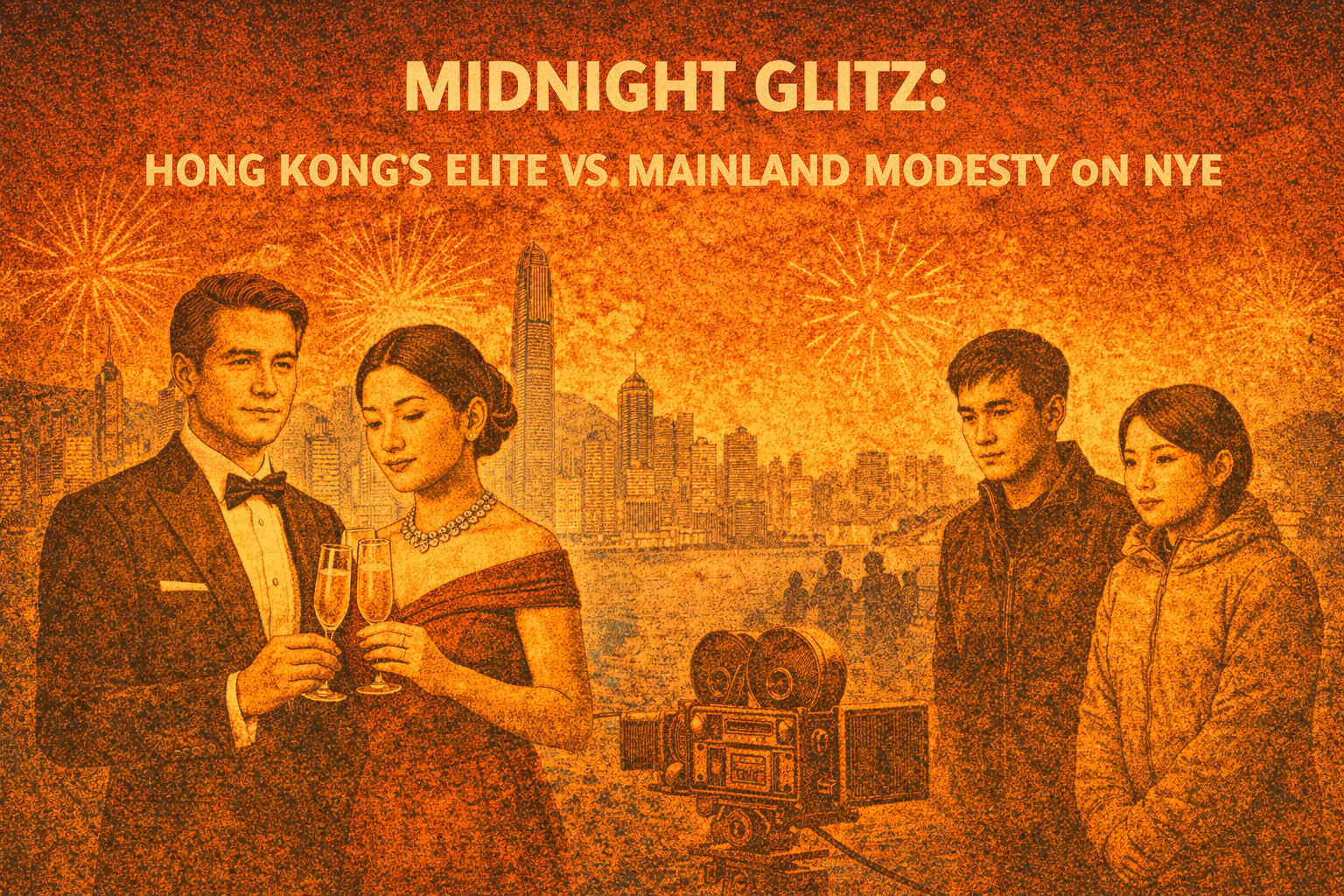

Midnight Glitz: Hong Kong’s Elite vs. Mainland Modesty on NYE
As I glance at my watch here in Hong Kong—it’s 8:00 PM HKT on December 31, 2025, with the city already buzzing in anticipation—I can’t help but reflect on the stark contrasts in how New Year’s Eve unfolds across the border. Upper-class Hong Kongers, ensconced in their world of affluence, transform this night into a spectacle of extravagance, while citizens in mainland China often opt for quieter, more introspective observances. This divergence isn’t just cultural; it’s a mirror to evolving social dynamics, economic pressures, and historical influences. Drawing from recent event listings and reports, I’ll dissect these celebrations objectively, then explore how they could fuel fresh narratives in Hollywood storytelling—tales that capture the tension between opulence and restraint without romanticizing either.
In Hong Kong, the elite’s New Year’s Eve is a high-stakes affair, blending colonial legacies with modern luxury. Affluent residents flock to rooftop venues and harbor cruises, where the night kicks off with multi-course dinners priced in the thousands of Hong Kong dollars. For instance, establishments like Aqua in Tsim Sha Tsui offer free-flow champagne and DJ-led countdowns overlooking Victoria Harbour, even as the government has scrapped traditional fireworks this year in favor of alternative displays. Yacht parties remain a staple: 70-foot cruisers host sumptuous buffets, open bars, and prime views of any residual light shows or drone spectacles, catering to those who can afford tickets upward of HKD 4,000 per person. These events aren’t mere gatherings; they’re networking hubs where business tycoons, expats, and socialites mingle amid caviar and vintage wines, often spilling into after-parties at exclusive clubs like Duddell’s, themed around “midnight opium” aesthetics for a provocative edge. The emphasis is on visibility—Instagram-worthy moments from high-rises or boats, symbolizing a cosmopolitan identity that echoes Hong Kong’s status as a global financial hub. This year, with the clock ticking toward 2026, such celebrations underscore resilience amid economic uncertainties, turning NYE into a defiant display of wealth.
Across the border in mainland China, the approach is markedly subdued, prioritizing family and tradition over spectacle—especially for the Gregorian calendar’s eve, which pales against the Lunar New Year. While some urban centers like Shanghai or Beijing host countdown events or light shows, many regions have outright canceled public festivities in 2025, citing unspecified reasons that could range from cost-cutting to public safety. For average citizens, the night often involves intimate family dinners, watching state-run galas on CCTV, or simple toasts at home with dumplings and fireworks in smaller scales where permitted. This restraint stems from a cultural framework where the solar New Year is secondary; the real emphasis falls on Spring Festival weeks later, with its red envelopes and lion dances. Upper-middle-class mainlanders might dine out or attend modest parties, but extravagance is tempered—think reserved hotel banquets rather than yacht extravaganzas. Historical factors play a role: the Cultural Revolution eroded some flamboyant customs, fostering a more collective, less individualistic vibe compared to Hong Kong’s Western-infused flair. In 2025’s context, economic slowdowns may amplify this modesty, making NYE a moment for reflection rather than revelry.
These contrasts—Hong Kong’s brazen luxury versus the mainland’s measured reserve—highlight broader societal rifts: one side embraces globalized hedonism, the other clings to rooted pragmatism. Provocatively, this divide exposes how wealth amplifies cultural autonomy in semi-autonomous regions like Hong Kong, where elite celebrations flirt with excess in ways that might seem tone-deaf amid regional tensions.
Turning to Hollywood, these dynamics offer fertile ground for storytelling that subverts clichés of Asian opulence. Imagine a thriller inspired by a Hong Kong yacht party: a tech billionaire hosts an elite countdown on Victoria Harbour, but as champagne flows and deals are struck under drone lights, a cyber-intrigue unfolds—hackers from the mainland infiltrate the event, exposing corporate secrets at midnight. This narrative could explore themes of cross-border espionage, blending high-stakes glamour with geopolitical undertones, much like a fusion of “Crazy Rich Asians” and “Black Mirror.” Alternatively, a romantic drama: A jaded Hong Kong socialite, weary of rooftop toasts and superficial alliances, crosses paths with a mainland visitor at a harbor cruise; their midnight kiss sparks a forbidden affair, contrasting her lavish world with his grounded family values, probing identity and assimilation in a post-handover era.
Or consider a dark comedy: An upper-class Hong Kong family charters a boat for NYE, only for the night to devolve into chaos when mainland relatives arrive uninvited, clashing over traditions—fireworks bans lead to improvised displays, highlighting generational and cultural frictions in a confined space. This could satirize class pretensions without bias, akin to “Parasite” but set against a glittering skyline. Finally, a sci-fi twist: In a near-future Hong Kong, elite celebrants use VR enhancements during their countdown parties to “escape” into virtual realms, but a glitch merges their feeds with mainland users’ humble home gatherings, forcing confrontations with inequality. Such stories, drawn from real divides, could challenge Hollywood’s monolithic portrayals of Asia, delivering provocative plots that are straightforward in their critique yet neutral in execution—focusing on human folly amid the fireworks.
As midnight approaches here in HKT, these observations remind me that NYE isn’t just a turnover; it’s a lens on disparity. Whether in glitzy harbors or quiet homes, the stories we tell from them could redefine cross-cultural cinema.