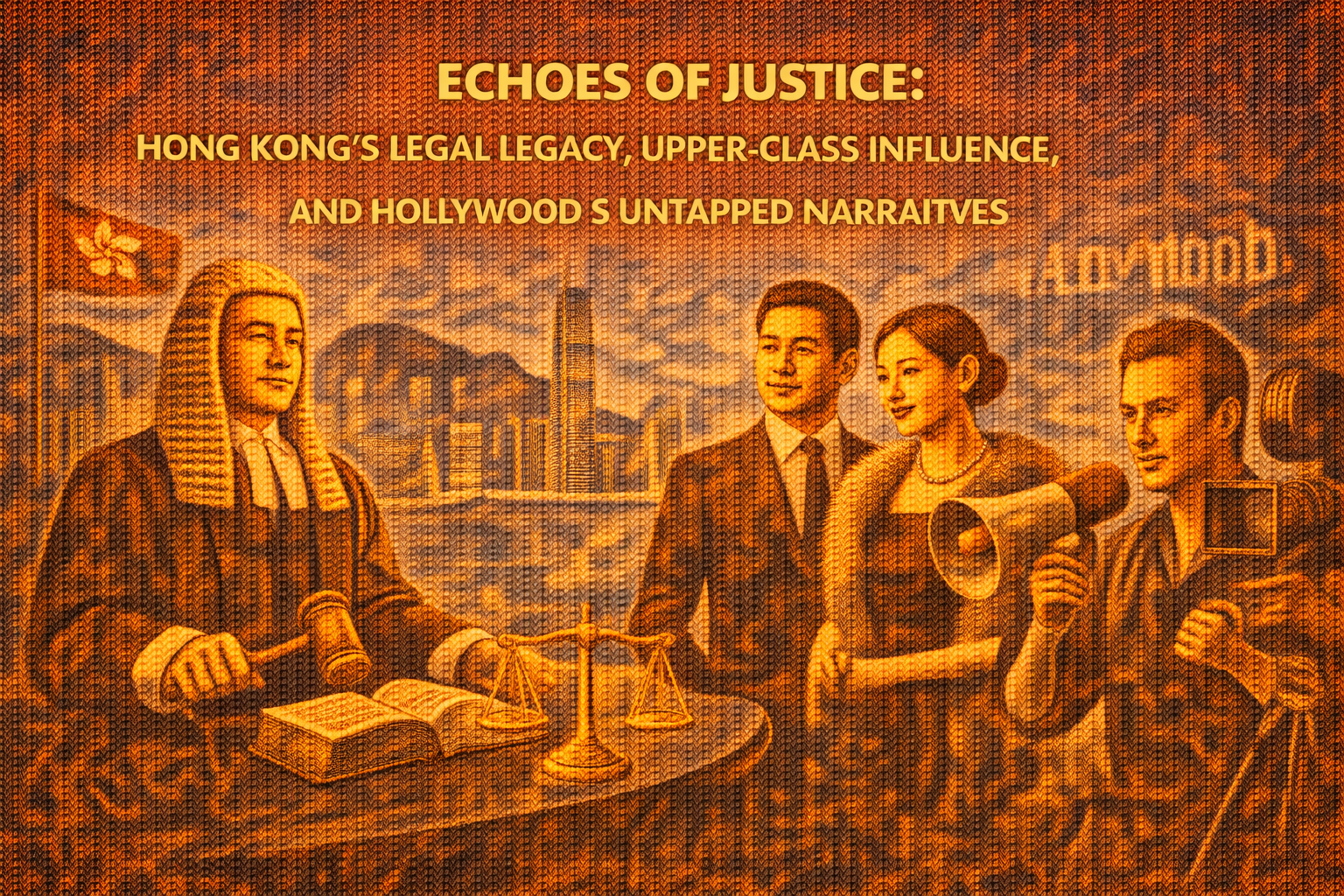

Echoes of Justice: Hong Kong’s Legal Legacy, Upper-Class Influence, and Hollywood’s Untapped Narratives
I remember a school field trip to Hong Kong’s High Court when I was about 12 years old. We sat in the gallery, wide-eyed, watching barristers in wigs and gowns argue cases with precise, almost ritualistic formality. The air was thick with the weight of decisions that could alter lives, and I couldn’t help but feel a quiet awe. As someone raised in an upper-class family steeped in philosophy and Chinese Buddhist Studies, that moment stuck with me—not just as a glimpse into the machinery of justice, but as a personal echo of Hong Kong’s layered identity. It was my first real encounter with how the city’s legal system weaves together British common law traditions with deeper Chinese roots, all balanced by concepts like karma and harmony that I’ve studied in the Tiantai School of Buddhism. This school emphasizes the interconnectedness of all things, where actions ripple outward like waves in Victoria Harbour, reminding us that justice isn’t static but a dynamic balance of cause and effect. In this post, I’ll explore Hong Kong’s legal framework, the cultural role of the upper class within it, and how Hollywood could draw from these stories to create resonant narratives—much like the personal evolutions and quiet strengths that define figures I’ve admired.
Hong Kong’s legal system stands as a resilient bridge between worlds, much like the impermanence I’ve contemplated in Buddhist teachings. Rooted in English common law from the colonial era, it was preserved after the 1997 handover to China through the Basic Law, which acts as a mini-constitution guaranteeing a high degree of autonomy. This “one country, two systems” model allows for independent courts, jury trials, and protections like freedom of speech, setting Hong Kong apart from the civil law traditions of mainland China. Yet, this blend isn’t without tension; recent years have seen debates over national security laws that test the system’s adaptability, echoing the Tiantai idea of balance amid change. From my scholarly lens, it’s a living example of resilience—laws evolving not through force, but through a humble navigation of influences, much like how one might practice mindfulness to weather life’s uncertainties. This quiet strength ensures the system remains a cornerstone of Hong Kong’s global appeal, fostering stability in a city that’s always in flux.
Within this framework, the upper class plays a cultural role that’s both privileged and intertwined with tradition, shaped by Confucian hierarchies and Buddhist ethics that emphasize responsibility over entitlement. Growing up in such circles, I saw how elite families often engage with the legal system not just as users, but as quiet stewards. Networks built through business ties or philanthropy—think charitable foundations supporting legal aid—allow them to influence reforms subtly, viewing the law as a harmonious web rather than a battleground. For instance, in my family’s discussions over dim sum, we’d talk about how Confucian values of filial piety and social order align with Buddhist notions of karma, encouraging the wealthy to use their position for communal good, like funding scholarships or advocating for equitable policies. This isn’t about dominance; it’s a resilient humility, where privilege carries the weight of ethical duty. As a scholar, I’ve reflected on how this cultural fit creates “echoes” of empire—remnants of colonial elitism blended with Eastern wisdom—that make Hong Kong’s society uniquely layered, empowering those within it to contribute meaningfully without ostentation.
Hollywood could tap into these elements to craft stories that blend introspection with emotional growth, turning Hong Kong’s legal narratives into universal tales.
Imagine a thriller inspired by *The Matrix*-style philosophical depth, where a protagonist from the upper class uncovers hidden tensions in the legal system, questioning reality much like Neo does—perhaps exploring the duality of common law and Chinese influences through a lens of karma and balance. Or, drawing from character arcs of personal evolution, a drama could follow an elite lawyer’s journey of resilience, confronting cultural hierarchies and finding empowerment in Buddhist-inspired reflection, akin to a quiet redemption story. These could empower global audiences by highlighting Hong Kong’s “echoes” in relatable ways: a film where Hollywood stars navigate courtrooms amid skyscrapers, weaving in themes of impermanence to show how legal legacies shape identities. Such projects wouldn’t just entertain; they’d foster understanding, much like how authentic storytelling builds communities.
In reflecting on these echoes of justice, I see Hong Kong’s legal story as a reminder of our shared human narrative—one of adaptation, ethical balance, and quiet strength. As someone bridging my scholarly roots with the world, I invite you to share your thoughts: How do these ideas resonate with your own cultural experiences? Let’s continue this conversation in the comments.
*Echoes of Empire* is about rediscovering legacies through personal and philosophical lenses—join me in exploring more.