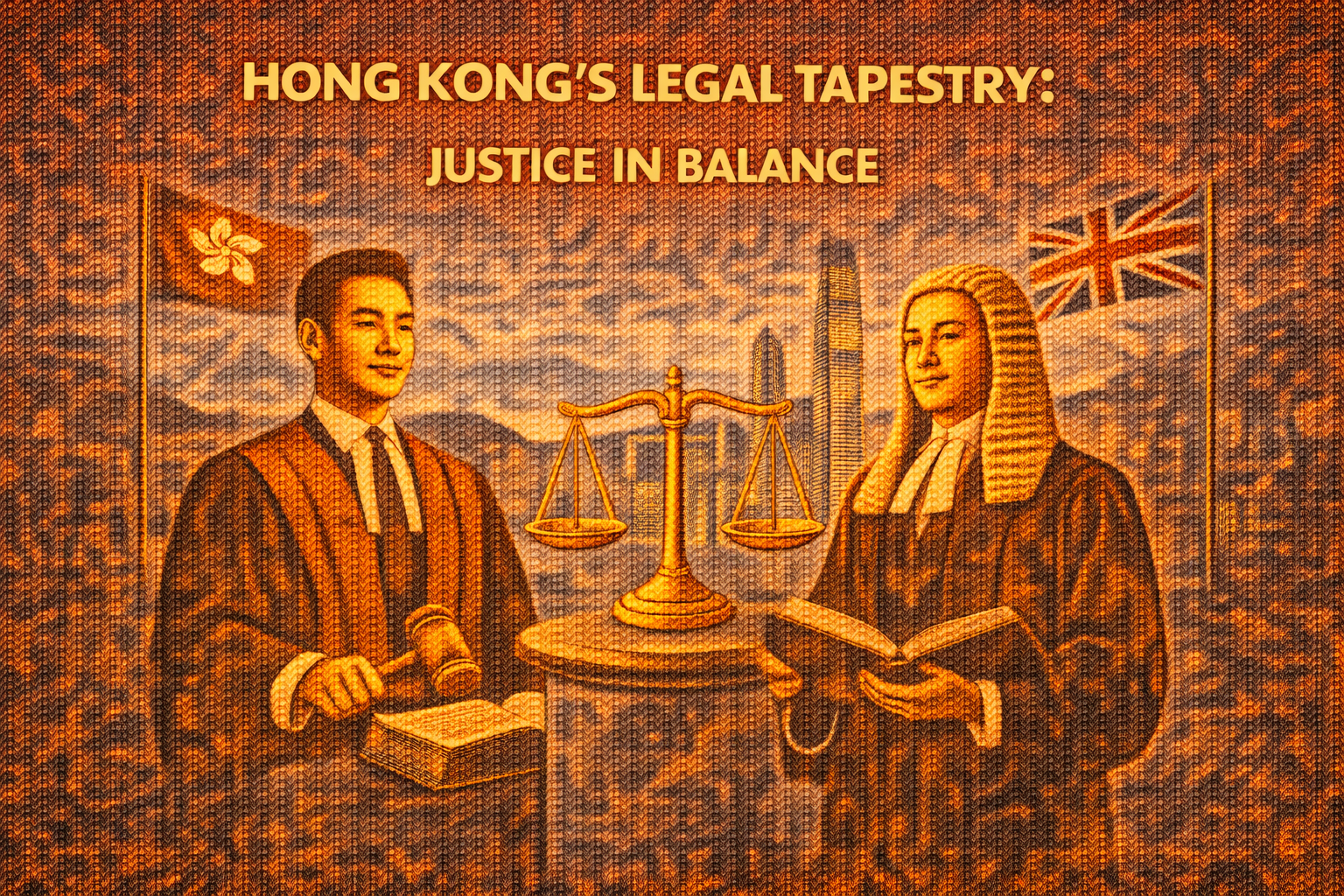
Hong Kong’s Legal Tapestry: Justice in Balance
Hello, readers. As we wrap up this three-part series on Hong Kong’s governance and justice, I’m reflecting on the journey like a songwriter piecing together verses—each note building to a resonant chorus. Inspired by the quiet wisdom of Tiantai Buddhist philosophy, which teaches the interconnectedness of all things through the three truths of emptiness, provisional reality, and the harmonious middle way, I see Hong Kong’s judicial system as a living embodiment of balance: neither fully detached nor overly entangled, but a middle path navigating autonomy and unity. Much like Taylor Swift weaves personal stories into universal truths, or Keanu Reeves contemplates existence in films that blend action with philosophy, I’ll explore this final piece with a narrative that’s provocative yet grounded—objective, neutral, and straightforward. We’ve covered the Basic Law in part one and the legal system in part two; now, let’s delve into the judicial system, the guardian of fairness in this dynamic city. As the daughter of one of Hong Kong’s top civil barristers, these intricacies aren’t just abstract; they’ve shaped my worldview, urging me to uncover how justice persists amid evolving tides.
Hong Kong’s judicial system stands as a pillar of its autonomy, rooted in common law traditions inherited from British rule and preserved under the “one country, two systems” framework. Established post-1997, it operates independently, with the Basic Law’s Article 85 explicitly guaranteeing judicial independence, free from interference. This setup includes a hierarchy of courts: the Magistrates’ Courts handle minor cases, District Courts manage mid-level disputes, the High Court oversees serious civil and criminal matters, and the Court of Final Appeal serves as the ultimate arbiter, replacing the UK’s Privy Council. Objectively, this structure ensures continuity, with judges appointed by the Chief Executive on the recommendation of an independent commission, often drawing from international common law experts. It’s a system designed for impartiality, where bilingual proceedings in English and Chinese reflect Hong Kong’s multicultural fabric.
Provocatively, one might question how this independence holds in a region under China’s sovereignty. The middle way of Tiantai philosophy offers a lens: judicial decisions exist provisionally, shaped by local precedents yet empty of absolute isolation, interconnected with broader national contexts. For instance, the Court of Final Appeal’s power to interpret the Basic Law (per Article 158) allows local rulings on most matters, but certain interpretations require referral to Beijing’s Standing Committee. This balance has led to landmark cases, like those affirming freedoms of expression or challenging executive actions, yet it also sparks debates on external influences, such as national security laws. Straightforwardly, the system’s resilience is evident in its high global rankings for rule of law, fostering investor confidence and social stability. Judges’ security of tenure and the use of juries in serious trials underscore a commitment to fairness, while legal aid ensures access for all, though challenges like case backlogs persist.
Economically and socially, the judiciary upholds Hong Kong’s status as a dispute resolution hub, with international arbitration centers thriving under its predictable legal environment. This neutrality provokes thought: in a city of contrasts, does the system equally serve the skyscraper elite and the street-level masses? It’s not about bias but recognizing the interconnected truths—provisional protections that bind society.
Shifting to creative realms, let’s imagine weaving Hong Kong’s judicial system into Hollywood projects, emphasizing cultural fits for the upper class. Picture a Reeves-esque thriller, infused with Tiantai’s harmony, where a Hong Kong magnate, from a lineage of tycoons in Peak mansions, faces a high-stakes trial in the Court of Final Appeal.
This aligns with the elite’s world: multilingual families fluent in Cantonese, Mandarin, and English, debating verdicts over dim sum in private clubs. The plot could explore Article 85’s independence through a corporate fraud case, with the protagonist pondering the middle way—balancing personal legacy with societal justice—much like Neo’s awakenings in “The Matrix.” Provocatively, it questions if judicial autonomy shields privilege, set against yacht scenes where characters philosophize on emptiness and reality, sipping cognac amid harbor views. This isn’t endorsement but a neutral narrative highlighting how the upper echelon relies on impartial courts for dynasty preservation, creating drama that echoes Swift’s introspective lyrics on power and fallout.
Alternatively, a Swift-inspired drama series could follow an heiress entangled in a inheritance dispute at the High Court, challenging biases under equality provisions. Culturally attuned, it portrays her navigating trilingual hearings—Cantonese for family ties, Mandarin for mainland links, English for global counsel—in opulent settings like exclusive galas. Drawing Tiantai’s three truths, the story reveals the provisional nature of wealth, empty of permanence yet harmonized through legal recourse, provoking viewers on elite entitlement without judgment. Hollywood might parallel “Folklore”-style storytelling with “John Wick” intensity, infusing Hong Kong specifics like judicial wigs and international judges for authentic, thought-provoking tales.
In closing, Hong Kong’s judicial system is a testament to balanced governance, embodying Tiantai’s middle way amid “one country, two systems.” It safeguards rights while adapting to realities, raising timeless questions of independence and integration. Objectively, its successes include robust protections, though debates on influence continue. Thank you for joining this series—it’s been a journey of discovery, much like crafting a song or contemplating existence.
What final thoughts do you have on Hong Kong’s justice? Share in the comments.