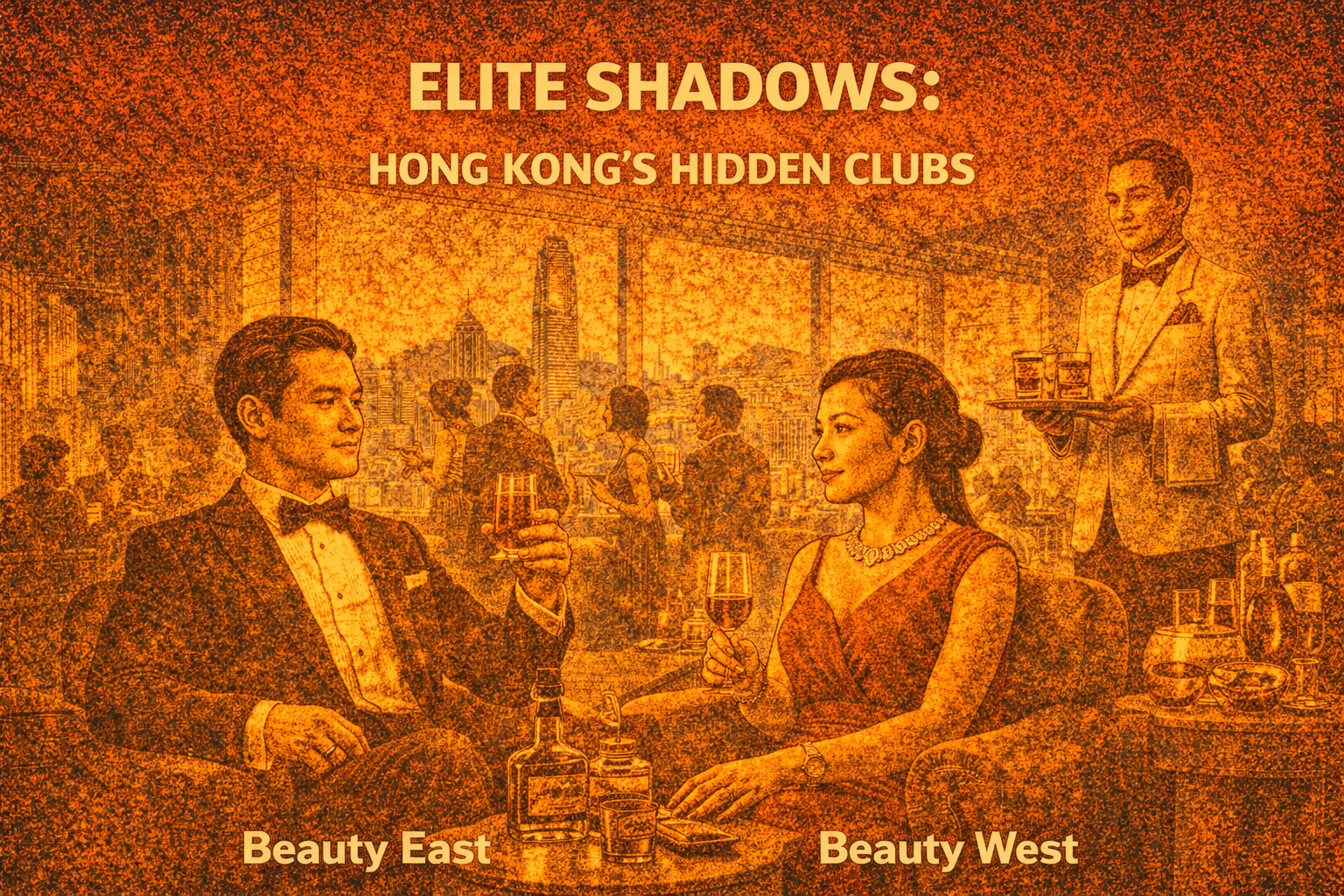
Elite Shadows: Hong Kong’s Hidden Clubs
Part 1: Foundations of Exclusivity – The Hong Kong Club and the Hong Kong Jockey Club
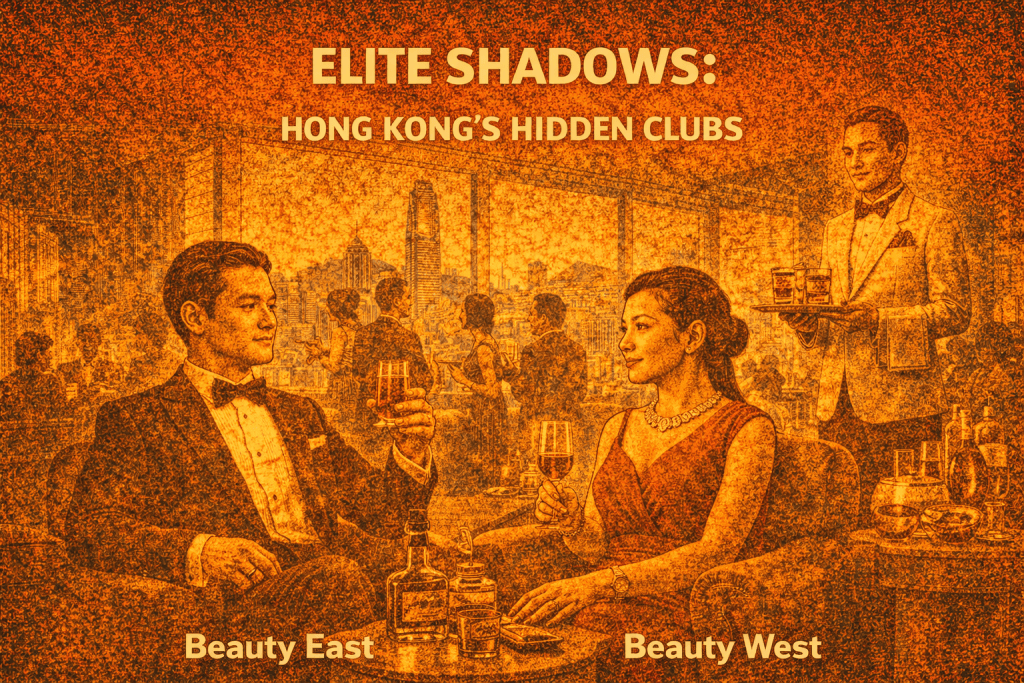
In the bustling heart of Hong Kong, private clubs serve as exclusive enclaves where connections are made over fine dining and discreet conversations. These institutions echo the city’s colonial roots while adapting to its modern dynamism as a financial powerhouse. In this six-part series, I delve into some of Hong Kong’s most notable private clubs, sharing insights from their histories, operations, and cultural significance. I’ll start with two cornerstones: the Hong Kong Club, founded in 1846 as the city’s first gentlemen’s club, and the Hong Kong Jockey Club (HKJC), established in 1884. The HKJC holds a special place for me—I’ve been a member since I was seven, drawn in for swimming and equestrian lessons, and my father has been involved for half a century, now as an honorary voting member.
I begin with the Hong Kong Club because it represents the archetype of exclusivity in Hong Kong. Established on May 26, 1846, by British merchants and officials, it provided a sanctuary in the early colonial era. Hong Kong had only been a British territory for five years, and the club offered expatriates a respite from the tropical humidity and rapid urban growth. Membership was initially limited to white men, a restriction that lasted until after World War II, highlighting the racial and gender divides of the time. This mirrored gentlemen’s clubs in London and other British colonies, where belonging signified elite standing. Such origins could inspire Hollywood narratives, like a historical drama miniseries depicting the club’s founding amid the Opium Wars’ aftermath, with protagonists navigating racial barriers and cultural clashes, akin to “The Crown” in a colonial setting. Multi-timeline stories might uncover family secrets in the club’s archives, blending past and present.
Now located in Central, the club boasts around 1,550 resident members. Entry is by invitation and ballot, maintaining its selective nature. While member lists aren’t public, it’s known to attract leaders from business, politics, and finance. The amenities focus on sophistication: four restaurants and three bars serve a mix of Western and Asian dishes, including elegant settings like the Red Room for formal meals, the Garden Lounge for relaxed gatherings, and the Bowling Alley Bar for lighter fare. The library stocks over 4,600 books, 320 audiobooks, 12,000 DVDs, and 3,800 music CDs, with adjacent spaces like the Reading Room, Ladies Lounge, and Card Room for intellectual or leisurely pursuits. A Sports & Wellness Centre offers fitness facilities, and dress codes—such as jackets and ties in specific areas—uphold a sense of tradition. Reciprocal privileges with international clubs allow visitors up to 30 days of access per year. These elements lend themselves to satirical comedies in film, poking at ballot processes and dress codes, following an outsider’s infiltration, reminiscent of “The Great Gatsby” updated for Asia’s elite.
As someone observing Hong Kong’s social landscape, I note how the club has evolved alongside the city, transitioning from a colonial outpost to a post-1997 entity. This raises intriguing points: who gets invited, and what advantages do these networks confer in a place of profound economic disparities? The emphasis on privacy leaves such questions open, prioritizing member confidentiality over public scrutiny.
Turning to the Hong Kong Jockey Club, its founding in 1884 marked a key development in local recreation. Created to advance horse racing and equestrianism, it tapped into the growing enthusiasm for such activities in the expanding colony. Racing events quickly became social spectacles, embedding betting as a cultural element. Over the decades, the HKJC has become a nonprofit powerhouse, integrating racing, entertainment, membership perks, regulated betting, lotteries, and philanthropy. This duality could fuel high-stakes thrillers, where an insider uncovers betting irregularities or fund mismanagement, set against glamorous races like the Longines Hong Kong International Races, echoing “Ocean’s Eleven” with equine twists.
The club’s membership structure is diverse, linked to venues like the Sha Tin Clubhouse, Beas River Country Club, and even a Beijing facility. At Beas River, the equestrian focus shines through with stables and riding programs—it’s where I first learned to ride as a child. Swimming pools and other recreational options make it family-friendly. My own journey started young, with lessons that built lifelong skills, and my father’s long tenure as a member, culminating in honorary voting status, shows how these ties can span generations. Hollywood might craft family sagas here, spanning from 1884 founders to modern heirs, using reciprocal global ties for international intrigue, similar to “Succession” in Hong Kong’s context.
The HKJC’s operations are vast: it runs premier tracks at Happy Valley and Sha Tin, featuring races like the Longines Hong Kong International Races and the Centenary Sprint Cup. Betting is core but controlled—no minors allowed, with emphases on responsible gambling. Philanthropy is equally prominent, directing profits to community efforts. Recent examples include collaborations with the Yao Foundation for youth sports and backing the 15th National Games. The upcoming 2025 HKJC Equine Welfare Research Foundation conference underscores commitments to research and animal care. For action-adventures, these rural escapes like Beas River could serve as covert grounds, with urban chases through Happy Valley, in “Mission: Impossible”-style plots questioning societal access.
With its status as one of Asia’s biggest clubs, the HKJC exerts broad influence, from entertainment to social funding. Its betting monopoly yields massive revenues, reinvested into society, but this prompts straightforward inquiries: how are resources distributed, and who reaps the primary rewards from this authority? The equestrian legacy, rooted in 1884, endures at places like Beas River, offering members rural escapes amid Hong Kong’s skyscrapers—a personal favorite contrast for me.
The Hong Kong Club and the HKJC form the pillars of Hong Kong’s private club scene. One centered on refined socializing, the other on sporting ambition, they both sustain legacies of selectivity in a fast-changing city. Their stories reveal colonial influences, financial might, and social layers, prompting me to reflect on themes of access and power—ripe for cinematic exploration as outlined. In the next part, I’ll explore the Ladies’ Recreation Club and the Chinese Club, highlighting aspects of gender and ethnicity in this privileged realm.