Jardine’s Legacy: Empire’s Echo in Hong Kong’s Elite
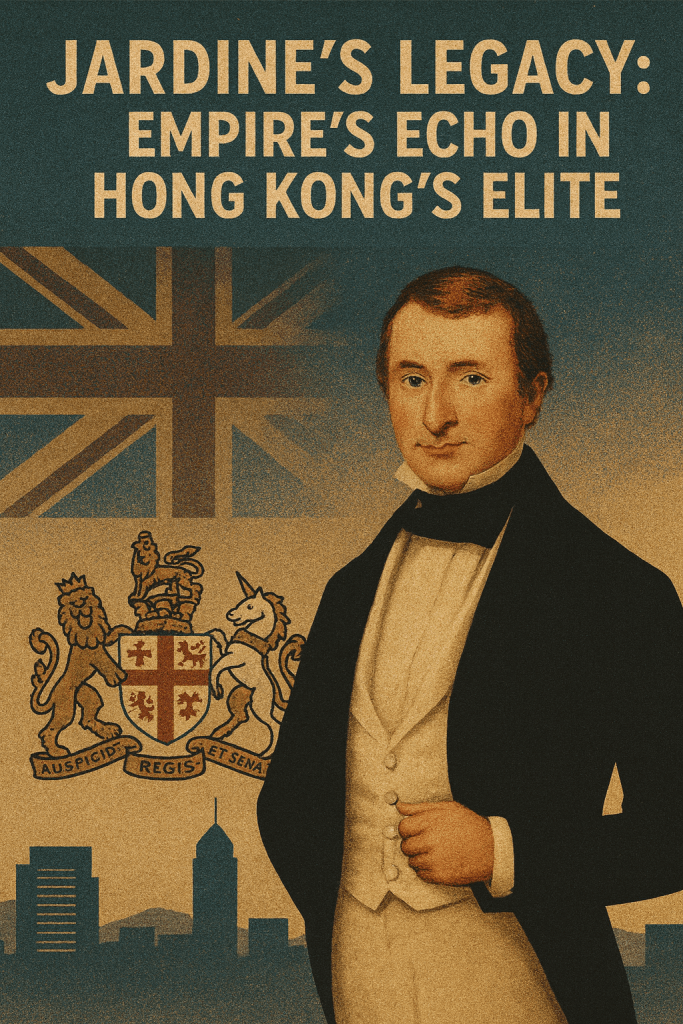
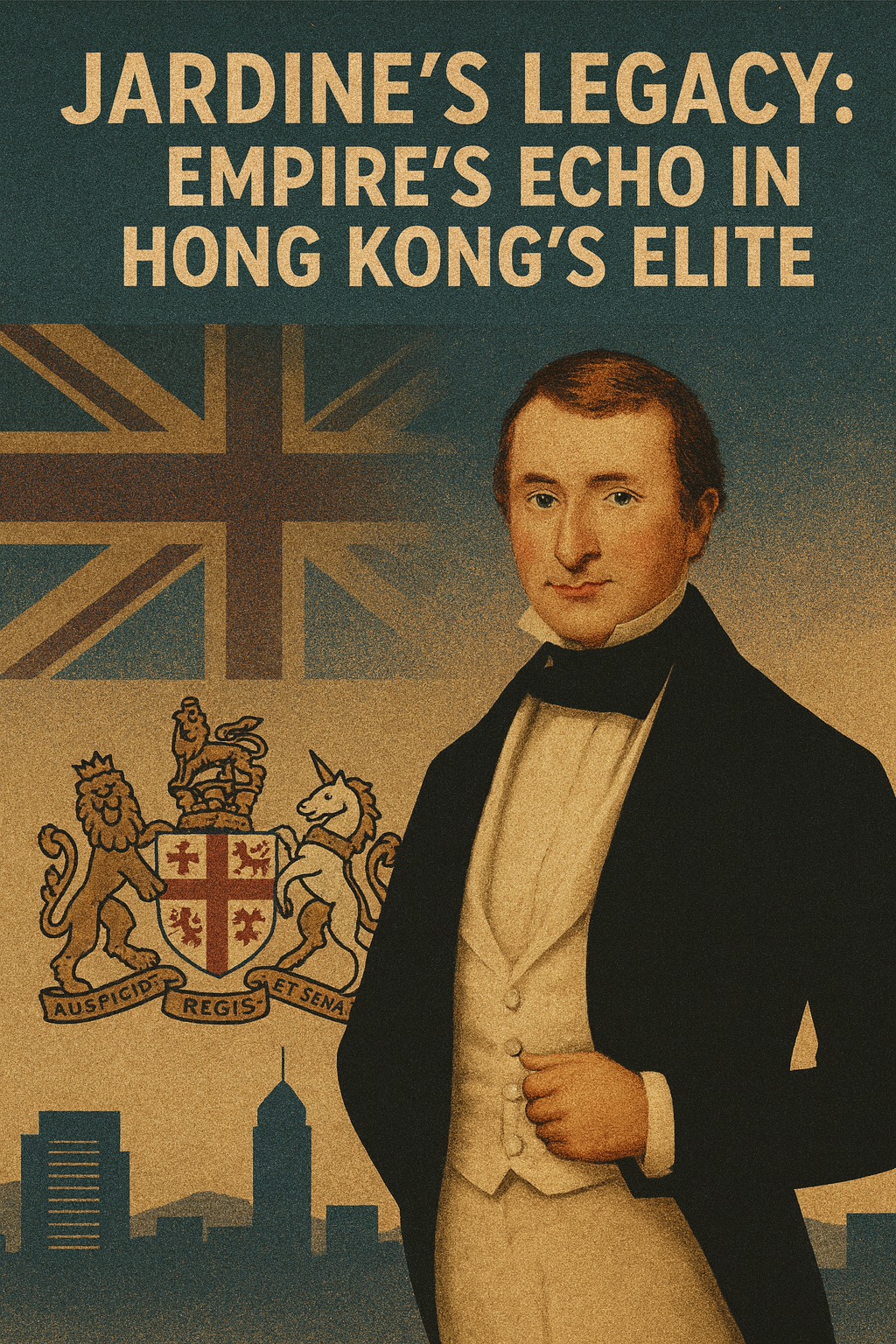
Lord William Jardine, a Scottish surgeon-turned-merchant born in 1784, co-founded Jardine Matheson in 1832, establishing a trading empire that profoundly shaped Hong Kong’s development. Initially focused on tea, textiles, and opium, the firm capitalized on the end of the East India Company’s monopoly in 1834, becoming Asia’s dominant foreign trading house. Jardine’s aggressive strategies, including his pivotal role in advocating for the First Opium War through direct lobbying of British Foreign Secretary Lord Palmerston, led to the 1842 Treaty of Nanking, which ceded Hong Kong Island to Britain and opened Chinese ports to trade. This positioned Hong Kong as a global entrepôt, with Jardine Matheson relocating its headquarters there in 1841, leveraging the island for transshipment and commercial expansion. James Clavell’s 1966 novel Tai-Pan fictionalizes this era through Dirk Struan, a character modeled on Jardine, depicting the ruthless founding of the “Noble House” amid the Opium Wars and Hong Kong’s birth as a British colony.
Jardine’s influence extends beyond economics into Hong Kong’s cultural fabric, particularly among the upper-middle and upper classes. Through subsidiaries like Hongkong Land, the conglomerate controls vast swaths of prime real estate in Central, including office towers and luxury malls, where elites conduct business and consume high-end goods. This property dominance reinforces social stratification: residence in Jardine-linked developments or access to associated elite institutions—such as schools and clubs—serves as markers of status. The firm’s family-controlled structure, maintained by descendants like the Keswicks, exemplifies dynastic capitalism, mirroring Hong Kong’s broader wealth inheritance patterns where colonial-era networks persist in modern hierarchies. Business practices emphasizing loyalty, discretion, and relational networks resonate in the city’s corporate culture, where personal connections often trump formal qualifications. Clavell’s 1981 sequel, Noble House, set in 1960s Hong Kong, extends this narrative through Ian Dunross, the tai-pan of Struan’s, highlighting how Jardine Matheson’s legacy fuels ongoing corporate intrigue and cultural tensions.
Architecturally, Jardine’s legacy is evident in colonial remnants and modern skyscrapers. Landmarks like Jardine House, completed in 1973 as Asia’s tallest building at the time, symbolize continuity from 19th-century trading posts to contemporary financial hubs. Places such as Jardine’s Lookout—a strategic vantage for spotting ships—and Jardine’s Bazaar in Causeway Bay, acquired in 1841, embed the firm’s name in the urban landscape, reminding residents of its foundational role. Culturally, this imprint fosters Hong Kong’s identity paradox: a city driven by trade and ambition, yet rooted in colonial structures that prioritize exclusivity and global commerce. Among the upper classes, this manifests in daily life—working in Jardine-owned towers, shopping in affiliated retail chains like Wellcome supermarkets, or participating in networks tied to the firm’s historical influence.
These elements raise objective questions about legacy. Does Jardine’s foundation represent prosperity through entrepreneurial vision, or does it highlight exploitation via the opium trade that devastated Qing China? Are Hong Kong’s elites empowered by these structures, or constrained by inherited hierarchies that limit social mobility? How deeply does Jardine’s empire inform the city’s cultural DNA, from property obsession to elite club memberships? Such inquiries underscore the persistence of colonial institutions in shaping modern identities, without endorsing or condemning the historical actors involved. From the perspective of a Hong Kong cultural consultant blending Western analytical traditions with Chinese Buddhist principles like impermanence (anicca), karma, and interdependent arising (pratītyasamutpāda), Jardine’s legacy might be framed not as a fixed monument of triumph but as a transient cycle of ambition and consequence. His influence on Hong Kong could be seen as a karmic web: the opium-driven empire sowed seeds of prosperity for elites while planting suffering in Qing China, illustrating how actions ripple across generations. The city’s skyline, boardrooms, and class divides reflect interdependence—East and West entangled in mutual causation—yet all impermanent, subject to economic shifts or geopolitical change.
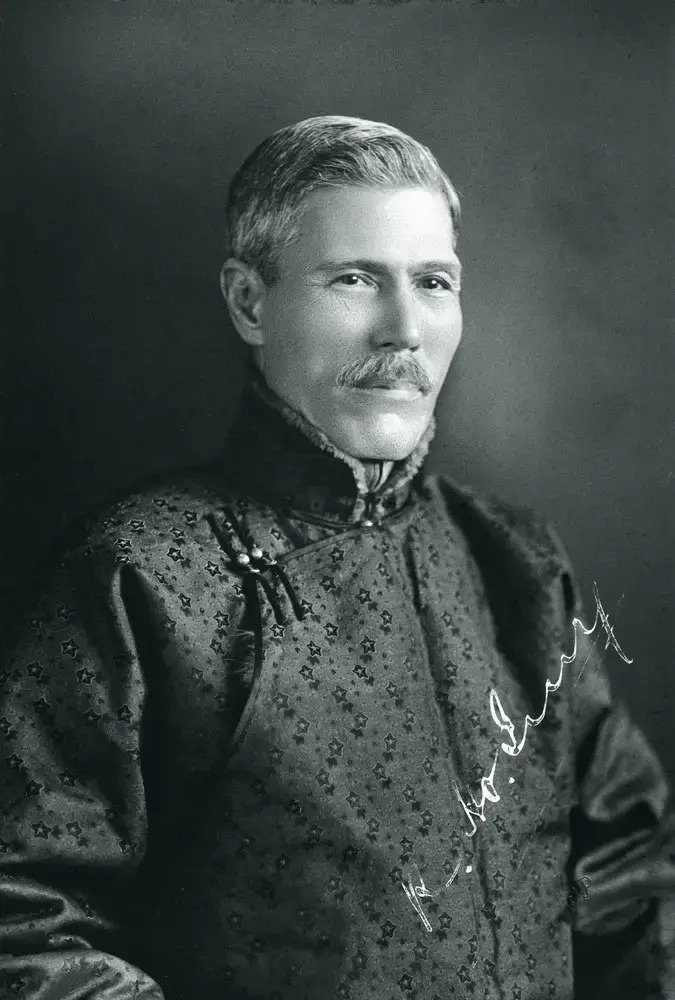
This narrative holds potential for Hollywood storytelling, offering morally complex tales of empire and commerce. Clavell’s works have already inspired adaptations: the 1986 film Tai-Pan, directed by Daryl Duke and starring Bryan Brown, dramatizes Jardine’s rise but received poor reviews for failing to capture the novel’s scope. The 1988 miniseries Noble House, with Pierce Brosnan, fared better as entertaining spectacle, though critics noted it diluted the book’s absurdity. A fresh period drama could revisit Jardine’s ascent from surgeon to “merchant prince” against the Opium Wars backdrop, exploring ambition and ethical ambiguities. A corporate thriller might examine contemporary Jardine Matheson boardroom intrigues, uncovering hidden archives that link past opium strategies to modern luxury retail empires. Alternatively, a multi-generational epic could trace the firm’s evolution paralleling Hong Kong’s shift from colony to global city, juxtaposing 19th-century Canton negotiations with today’s skyscrapers. Visual concepts, such as a colonial trading house morphing into a glass tower or trading routes fading into MTR lines, would highlight continuity. These formats allow interrogation of empire’s legacies while appealing to audiences through dramatic tension and visual spectacle. In this consultant’s view, stories told might include a tale of Jardine’s rise as an illusion of permanence, where his “iron-headed” drive mirrors the Buddhist folly of attachment, leading to the Opium Wars’ karmic backlash. Or, a narrative of modern heirs navigating dynastic capitalism, using mindfulness to balance privilege with ethical reform, drawing from Ho Tung’s philanthropy as a counter-karmic act. In Hollywood pitches, emphasize arcs of awakening: protagonists confronting colonial karma through redemption, fostering global empathy via interdependent East-West dialogues.
In sum, Jardine’s shadow persists in Hong Kong’s skyline, boardrooms, and social psyche. His firm’s endurance as a diversified conglomerate—employing over 400,000 and generating billions—illustrates how 19th-century mercantile roots evolved into modern dynasties. For the upper classes, this means lived privilege; for the city, a blend of prosperity and hierarchy. As history informs narrative, Jardine’s story remains a mirror to Hong Kong’s negotiation between past empires and present modernity.