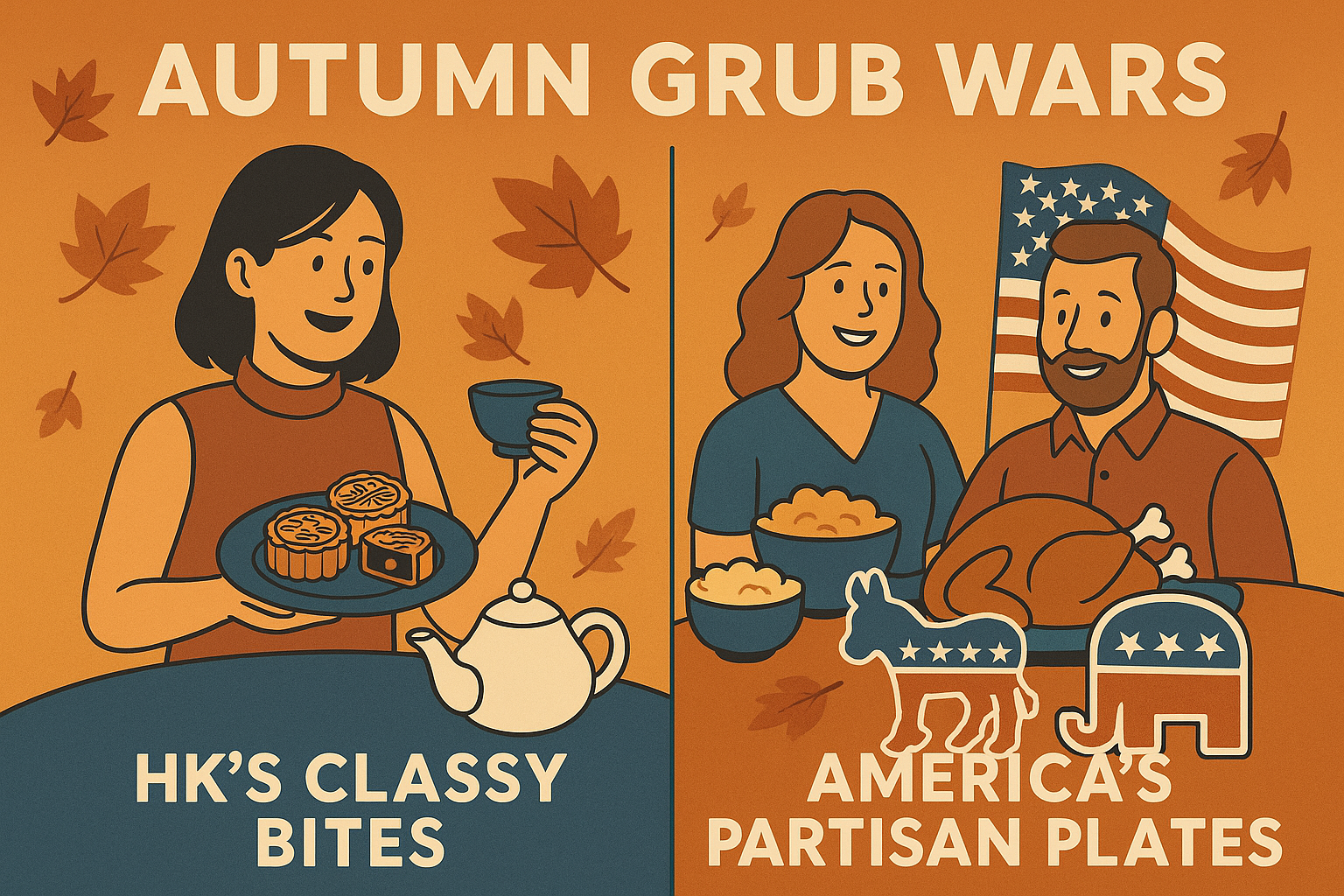

Autumn Grub Wars: HK’s Classy Bites vs America’s Partisan Plates
Ah, autumn – that magical season when leaves turn gold, temperatures dip just enough to justify sweatpants, and our bellies crave something warm, sticky, and unapologetically indulgent. But let’s cut the Hallmark crap: what you shove in your mouth during these cooler months isn’t just about comfort; it’s a screaming billboard for your social status, politics, and maybe even your soul. In Hong Kong, a hyper-dense capitalist fever dream, autumn comfort foods slice neatly along class lines, uniting folks in a shared gluttony that’s refreshingly free of red-blue bullshit. Flip to America, and it’s a partisan food fight where Democrats nibble on virtue-signaling veggies while Republicans devour meat like it’s a Second Amendment right. Buckle up, snowflakes and cowboys – we’re dissecting this culinary divide, then hijacking Hong Kong’s lessons to shake up Hollywood’s bland, politically correct scripts.
Start with Hong Kong, where autumn (roughly September to November) brings drier air and a subtle chill that screams for steamy, soul-soothing eats. No pumpkin spice nonsense here; HK’s vibe is all about seasonal ingredients rooted in Cantonese tradition, with a dash of Traditional Chinese Medicine wisdom to “balance the body” against the cooling weather. For the working-class grinders – think low-income families scraping by in cramped public housing – comfort comes cheap and communal from street-side dai pai dongs (open-air food stalls). Roasted chestnuts and sweet potatoes, hawked by vendors with pushcarts, are the ultimate autumn hug: nutty, caramelized, and dirt-cheap at HK$10-20 a bag. Snake soup, that slithery elixir of warmth, bubbles in no-frills shops in Sheung Wan or Sham Shui Po, packed with snake meat, pork bones, and herbs to ward off colds – a gritty, affordable tonic for the masses who can’t afford spa days. It’s raw, unpretentious, and ties into folklore about snakes “hibernating” in fall, making it a cultural rite for those dodging poverty’s bite.
Climb the socioeconomic ladder to the middle class – office drones and small-business owners in mid-level apartments – and autumn comfort shifts to cozy cha chaan tengs (tea restaurants) or home-cooked staples with a bit more flair. Clay pot rice, simmering with Chinese sausage, mushrooms, and ginger, becomes the go-to: hearty, customizable, and around HK$50-80 per serving. Or lamb brisket hot pot with water chestnuts and sugarcane, a warming stew that’s easy to prep after a long MTR commute. These folks aren’t slumming it on streets; they want reliability, maybe with a Netflix binge, blending nostalgia with modern convenience. It’s comfort without excess, reflecting HK’s pragmatic hustle where food fuels the grind, not defines it.
Now, the elite – tycoons in Peak mansions or expat execs – turn autumn into a gastronomic orgy. Hairy crab, that decadent seasonal star from Yangcheng Lake, headlines lavish dinners at Michelin-starred spots like Forum or Yong Fu, where a single crab can cost HK$500+. Paired with Shaoxing wine, it’s all about the sweet, briny roe and tender meat, often elevated with truffles or foie gras in fusion twists. Pigeon with liquorice and eggplant or double-braised pork ribs round out menus that scream status. Here, food isn’t just sustenance; it’s a weapon in social warfare, signaling wealth in a city obsessed with face. Yet, ironically, HK’s class divides don’t poison the pot – everyone dips into Cantonese roots, just at different price points. Studies show similar access to healthy/unhealthy options across SES areas, but quality and presentation widen the gap. It’s unified diversity: poor or posh, autumn means warming yang energy through shared flavors.
Cross the Pacific to America, and autumn comfort food morphs into a battlefield where politics trumps class. Sure, socioeconomic lines exist – blue-collar folks might grab cheap chili from Wendy’s, while the one-percenters sip artisanal apple cider in the Hamptons – but the real rift is Democrat vs. Republican. Dems, those coastal elites clutching their NPR totes, lean toward plant-based piety: think vegan pumpkin stews, organic kale soups, or Thai-inspired massaman curry with fall squash. They’re twice as likely to shun meat, opting for “ethical” twists on classics like meatless chili or French onion stuffed shells with plant cheese. Why? It’s virtue on a plate – fighting climate change one bite at a time, even if it means stress-eating over polls showing their party underwater. Republicans? They’re all about carnivorous conquest: beef-laden chili (debated endlessly: beans or no beans?), tater tot casseroles drowning in cheese, or grilled venison steaks. Sweet and sour chicken might top their takeout lists, but autumn means hearty, traditional American grub like mac & cheese or sopa de fideo with a meaty kick – foods that scream “Make America Grill Again.” Data shows Reps crave meat more, aligning with fast-food favorites and grilling supplies, while Dems splurge on wine and ethnic flair. Class blurs here; a poor Dem might still pick veggie ramen over a rich Rep’s burger. It’s polarizing: food as tribal marker in a nation where even mac & cheese can’t bridge the aisle.
Comparing the two? HK’s autumn eats foster unity amid inequality – class dictates the wrapper, but the filling’s the same cultural DNA. America’s? A dumpster fire of division, where politics poisons the palate, turning comfort into combat. Dems moralize over meals; Reps weaponize them. HK proves food can transcend status without losing edge.
So, Hollywood, you spineless script factories: apply HK’s blueprint to your projects, and get provocative. Ditch the woke salads and craft films where food exposes America’s hypocrisies – a Dem senator secretly scarfing steak in a red-state diner, or a Rep mogul funding vegan startups for tax breaks. Imagine a blockbuster like “The Menu” but HK-infused: class warfare via hairy crab heists, showing how shared bites heal divides. Provoke audiences – make ’em uncomfortable, like snake soup on a first date. Your diversity quotas are fake; HK’s real grit could birth Oscar bait that actually bites back. Time to serve up truth, Tinseltown, or choke on your own blandness.