Elite Enclaves: Hong Kong’s Private Clubs Uncovered
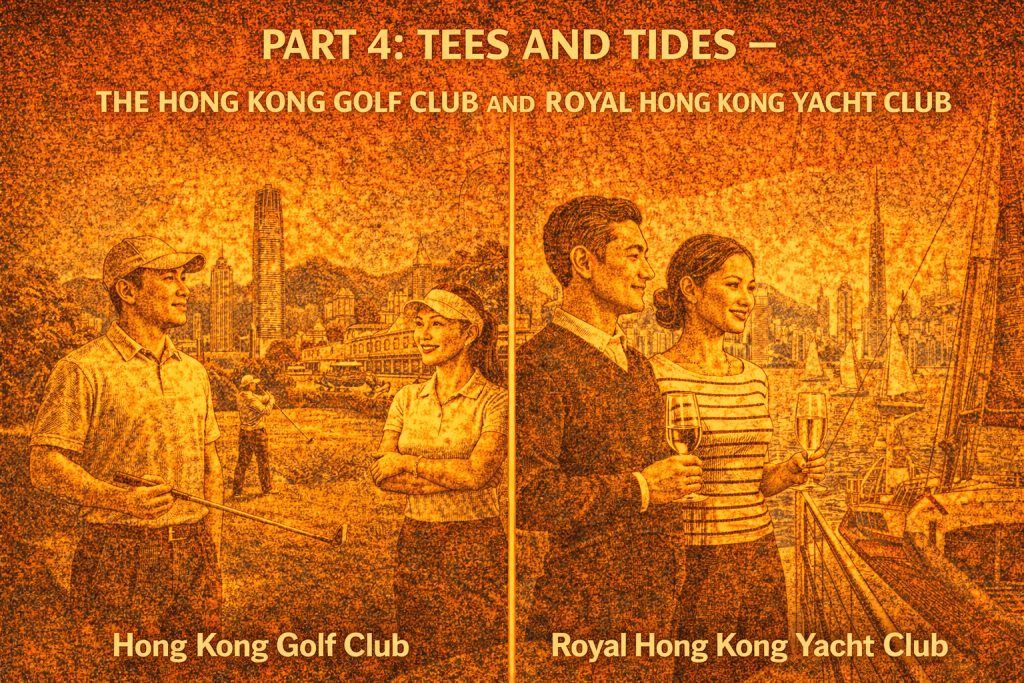
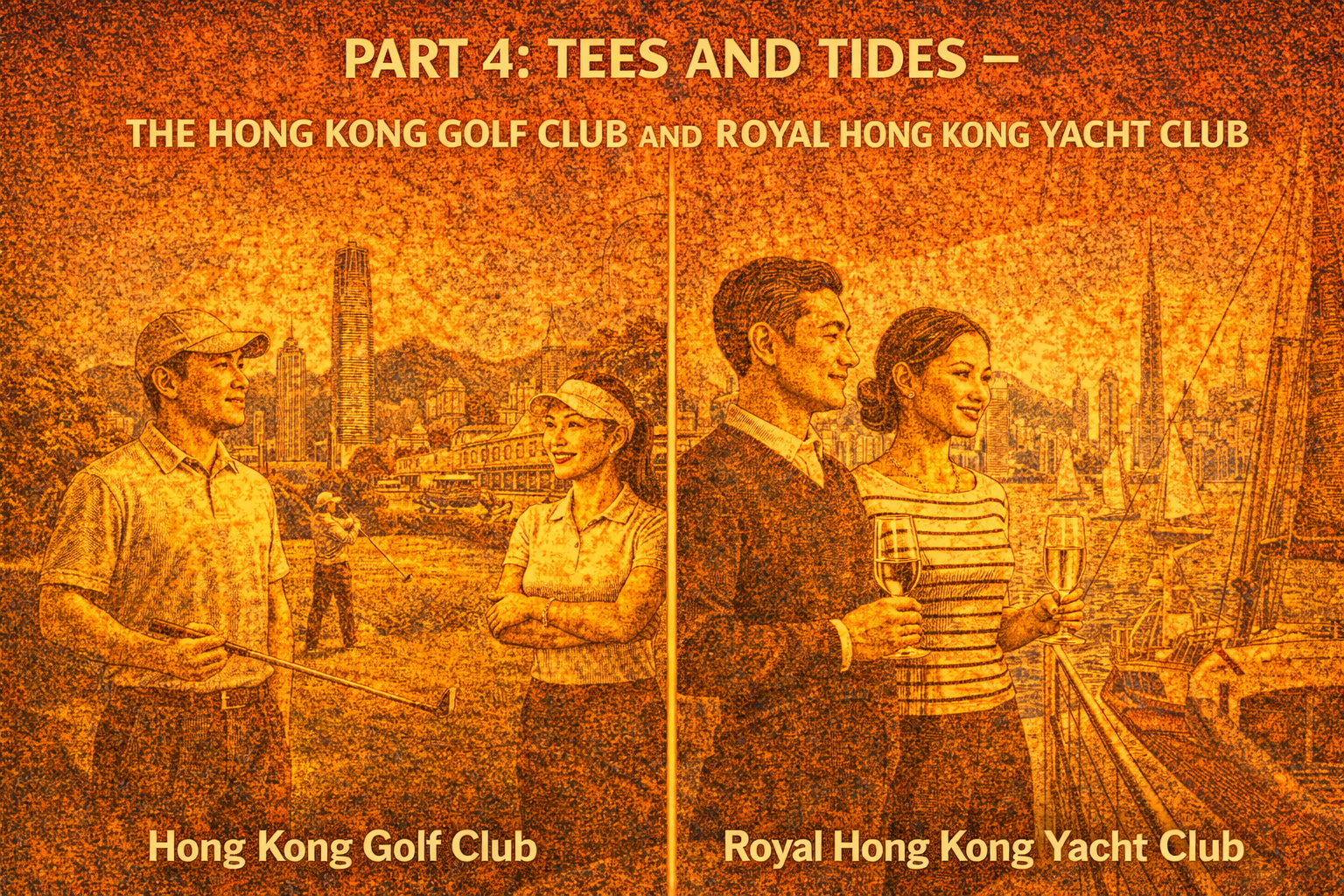
Part 4: Tees and Tides – The Hong Kong Golf Club and Royal Hong Kong Yacht Club
As I continue this series on Hong Kong’s private clubs, I’ve delved into spaces that define the city’s social hierarchy. In previous installments, we examined colonial-era institutions and their modern evolutions. Now, in this fourth part, I turn to two venues rooted in leisure pursuits that have long symbolized prestige: the Hong Kong Golf Club and the Royal Hong Kong Yacht Club. These clubs, with their histories stretching back over a century, offer insights into how recreational activities intersect with class dynamics in Hong Kong. Established amid British colonial influence, they persist as gathering points for the affluent, where business, sport, and networking converge without fanfare.
The Hong Kong Golf Club stands as a cornerstone of the city’s sporting legacy. Founded on May 10, 1889, by 13 enthusiasts who convened to form what was initially known as the Royal Hong Kong Golf Club, it claims the title of Hong Kong’s first golf club. This origin story reflects the era’s expatriate-driven pursuits, with golf imported as a gentlemanly pastime. Over the decades, the club has expanded to include three renowned courses at Fanling—the Old, New, and Eden—each maintained to international standards using recycled water to underscore environmental stewardship. Facilities extend to a practice range, golf shop, and community programs that occasionally open the grounds to non-members, such as junior development schemes supported by the Hong Kong Golf Association.
Yet, its cultural footprint runs deeper. In Hong Kong’s upper echelons, the club embodies a blend of tradition and exclusivity. Membership, often corporate and commanding high fees, positions it as a domain for the elite—bankers, executives, and influential families—who use the fairways for discreet deal-making amid manicured landscapes. This role highlights a societal divide: while the club hosts major tournaments like the Hong Kong Open and LIV Golf events, drawing global attention, it has faced scrutiny over land use. Its 79-acre Fanling site, a rare green expanse in a densely populated city, has sparked debates on reallocating space for public housing, illustrating tensions between preserved privilege and broader urban needs. Objectively, the club functions as a social equalizer among the wealthy, fostering bonds through shared rituals like post-round discussions in the clubhouse, all while maintaining a low-profile allure that aligns with Hong Kong’s understated luxury.
Shifting from land to sea, the Royal Hong Kong Yacht Club traces its lineage to the 1840s, emerging from precursors like the Victoria Regatta Club and the Hong Kong Corinthian Sailing Club. This amalgamation formalized a community dedicated to sailing and rowing, gaining its “Royal” charter in 1893 under British patronage—a marker of imperial endorsement. The club’s first dedicated clubhouse arose in North Point in 1908, but by 1939, it relocated to Kellett Island, a man-made outpost in Causeway Bay that now serves as its flagship base. Today, with over 14,000 members, it ranks among Asia’s largest yacht clubs, offering facilities like marinas, training programs for all ages, and events spanning competitive regattas to casual paddling sessions.
In the context of Hong Kong’s upper class, the yacht club represents a maritime extension of elite camaraderie. Its membership draws from the city’s power brokers—entrepreneurs, professionals, and heirs—who view yachting not merely as sport but as a cultural rite. Here, social capital accumulates through shared voyages and waterfront gatherings, blending British naval traditions with local adaptations. The club’s role in nurturing talent via inclusive training belies its exclusive core, where entry requires nominations and vetting, reinforcing networks that span generations. Notably, it has evolved to include diverse activities, from rowing to environmental initiatives, yet remains a symbol of aspirational status in a harbor city where water-based leisure signifies affluence.
These clubs’ integration into Hong Kong’s upper strata—marked by colonial heritage, selective access, and recreational bonding—lends them potent narrative potential for Hollywood. Consider incorporating the Hong Kong Golf Club into a thriller: envision a high-stakes corporate espionage plot where protagonists negotiate shadowy alliances on the Old Course’s rolling hills. Culturally, this fits as the club mirrors the upper class’s preference for environments that facilitate unscripted power plays, away from public scrutiny, emphasizing Hong Kong’s blend of Eastern efficiency and Western decorum. A scene could depict a tycoon sealing a merger over a bunker shot, highlighting how such settings underscore class insulation amid the city’s hustle.
For the Royal Hong Kong Yacht Club, a drama series might feature a family saga unfolding during a regatta off Kellett Island. Sailors from rival clans compete, revealing intergenerational secrets against Victoria Harbour’s skyline. This portrayal captures the club’s cultural essence: a nexus for the elite where maritime prowess symbolizes resilience and status, echoing Hong Kong’s seafaring history while contrasting with its land-scarce reality. Hollywood could provoke thought by showing how these venues perpetuate social strata—perhaps a subplot where an outsider infiltrates a yacht party, exposing the subtle barriers that define upper-class cohesion.
In examining these clubs, I see enduring fixtures in Hong Kong’s social fabric, objective emblems of how leisure shapes identity. As we move to part five, get ready for a shift to the intersections of media and finance with the Foreign Correspondents’ Club and the Bankers Club—hubs where journalists and financiers mingle, revealing the evolving dynamics of influence in this global city.