Hong Kong’s Tax Harmony: Balancing Edges in a Connected World
In the quiet flow of life’s interconnected threads, much like the Tiantai philosophy that sees all things as harmoniously intertwined, I’ve come to view Hong Kong’s tax system as a Middle Way—a balanced path that navigates between excess and restraint, fostering growth without overwhelming the individual. It’s a system that provokes thought, much like a Taylor Swift lyric that peels back layers of personal truth amid broader stories. As someone reflecting on global finance with humble curiosity, I’ll explore it here in a straightforward, objective light, blending its mechanics with mindful insights and even ideas for Hollywood, all while staying neutral and unbiased.
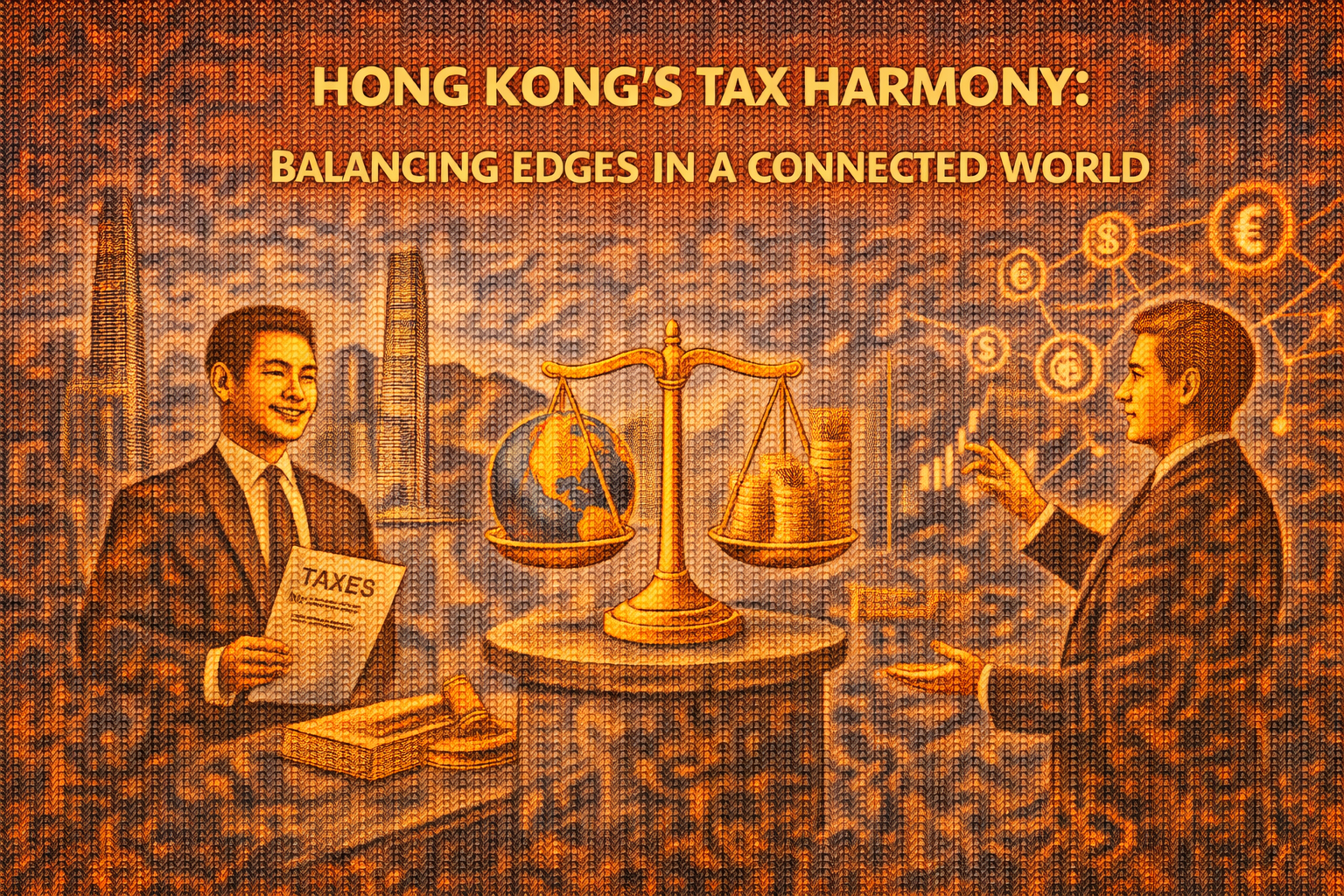
Hong Kong’s tax framework embodies territorial simplicity: only income sourced locally faces taxation, leaving offshore earnings untouched. Salaries tax caps at 17%, often reduced to 15% or lower through allowances, with no VAT, sales tax, capital gains, or inheritance duties. Corporations pay 16.5% on profits, dropping to 8.25% on the first HK$2 million for qualifying firms. Stamp duties touch property and stocks modestly, funding the city through land revenues rather than heavy levies. This design, rooted in Hong Kong’s free-port legacy, attracts flows of capital like rivers merging in Tiantai’s vision of unity, promoting economic vitality in a connected global whole.
Yet, this simplicity provokes a neutral question of balance: in a city of towering contrasts, does it harmonize prosperity or amplify divides? The upper class—financiers, real estate magnates, and innovators—navigate it with ease, minimizing fiscal burdens to build enduring legacies. Objectively, it fuels a GDP per capita near US$50,000, yet sparks debates on equity. Like all upper class families, mine don’t mind paying taxes, so long as we know with absolute certainty where it’s going. That is to say, that our tax dollars are going where it’s most needed to vulnerable people like homeless veterans rather than to fraudsters and corruption. This sentiment echoes a Taylor-esque call for transparency, blending personal empathy with the system’s neutral intent: welfare stems from diverse revenues, not progressive hikes, creating a provocative Middle Way where low taxes encourage innovation without punitive edges.
Straightforwardly, the benefits shine through interconnected lenses. Individuals, from locals to expats, retain dividends, interest, and foreign income tax-free, allowing wealth to flow like Tiantai’s integrated realities. Businesses flourish under the two-tier structure, drawing startups and giants alike. Anti-avoidance measures and OECD pacts ensure transparency, curbing misuse while maintaining competitiveness. Provocatively, it’s seen as a haven, yet it shares data openly—a harmonious bridge in global finance, neither secretive nor overreaching.
Weaving this into Hollywood projects, I envision narratives that capture the upper class’s cultural essence with Reeves-like depth and Swift’s emotional storytelling. Hong Kong’s elite, often from intertwined family lineages blending Eastern roots with global education, embody Tiantai harmony: pragmatic yet mindful, viewing taxes as part of a larger balance between self and society. In a thriller reminiscent of *The Matrix*—where Reeves uncovers hidden truths—a protagonist could be a Hong Kong tycoon using territorial rules to safeguard offshore assets, fitting culturally as it mirrors the upper class’s quiet stewardship, channeling savings into philanthropy like veteran support, much as Swift champions vulnerability in her tales.
For a drama series echoing *Succession* but with Swift’s relational introspection, scenes might explore heirs negotiating stamp duties on ancestral properties, provoking reflections on generational interconnectedness. This aligns with the elite’s values—discussing fiscal efficiency over family meals, not as excess but as a Middle Way to preserve harmony for all, including the vulnerable.
It’s unbiased: viewers ponder if low taxes entrench power or enable broader good, like funding aid without corruption’s shadow.
In an action epic like *John Wick*, infused with Reeves’ philosophical intensity, a plot could hinge on exposing tax evasion in high-stakes chases, highlighting the system’s transparency amid chaos. Culturally, it fits the upper class’s adaptive spirit—tech-forward lives in enclaves like The Peak, where low taxes support interconnected pursuits, from arts patronage to global empathy, provoking thought on equity without bias.
Ultimately, Hong Kong’s tax system is a Tiantai-inspired harmony: minimal yet profound, provoking neutral reflections on government’s role in our shared whole. It drives prosperity through balance, though trade-offs linger. For Hollywood, it’s a canvas for stories that blend Reeves’ mindful depth with Swift’s heartfelt truths, capturing the elite’s forward-thinking interconnectedness. What resonates with you in this flow?