The Hidden Rooms of Shinbashi: An Ozashiki Masterclass at Grand Hammer.
The air is still, yet the spirit remains restless. Welcome to Friday’s Lifestyle transmission.
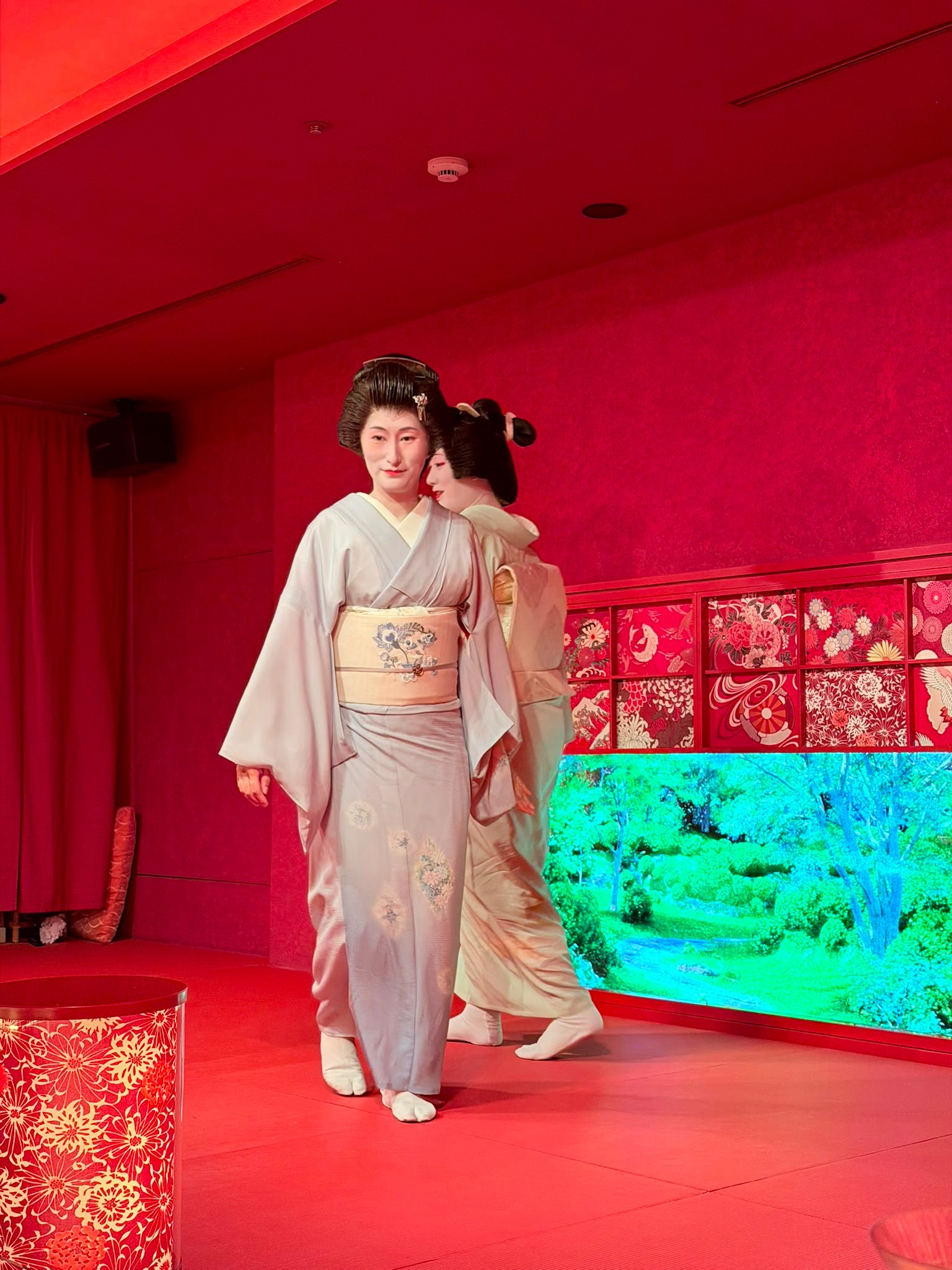
It is Friday, the 10th of July 2026. Following our deep psychological exploration of modern digital illusions and boundaries, we return to the physical topography of high-end traditional hospitality. Tonight, I am lifting the veil on an exceptionally rare corporate and cultural alignment that capped off my Tokyo immersion cycle: my first ozashiki (お座敷 / private geisha banquet), held at Grand Hammer in the historic entertainment district of Shinbashi on the evening of Friday, the 3rd of July 2026. As a producer constantly auditing the social choreography of the room, entering this multi-century tradition provided an invaluable masterclass in the absolute art of the host.
Deconstructing the Tourist Misconception
Truth be told, when the final logistics came through and I learned that this ozashiki would be held alongside international tourists, I fell victim to a temporary misconception. I assumed the experience would lack structural authenticity. However, looking at the evening through a rigorous operational lens, the only real element of inauthenticity I could identify was the presence of a dedicated emcee, who fluidly introduced the evening’s events and the two geisha in flawless English.
The human infrastructure of the room was a fascinating study in cross-cultural communication:
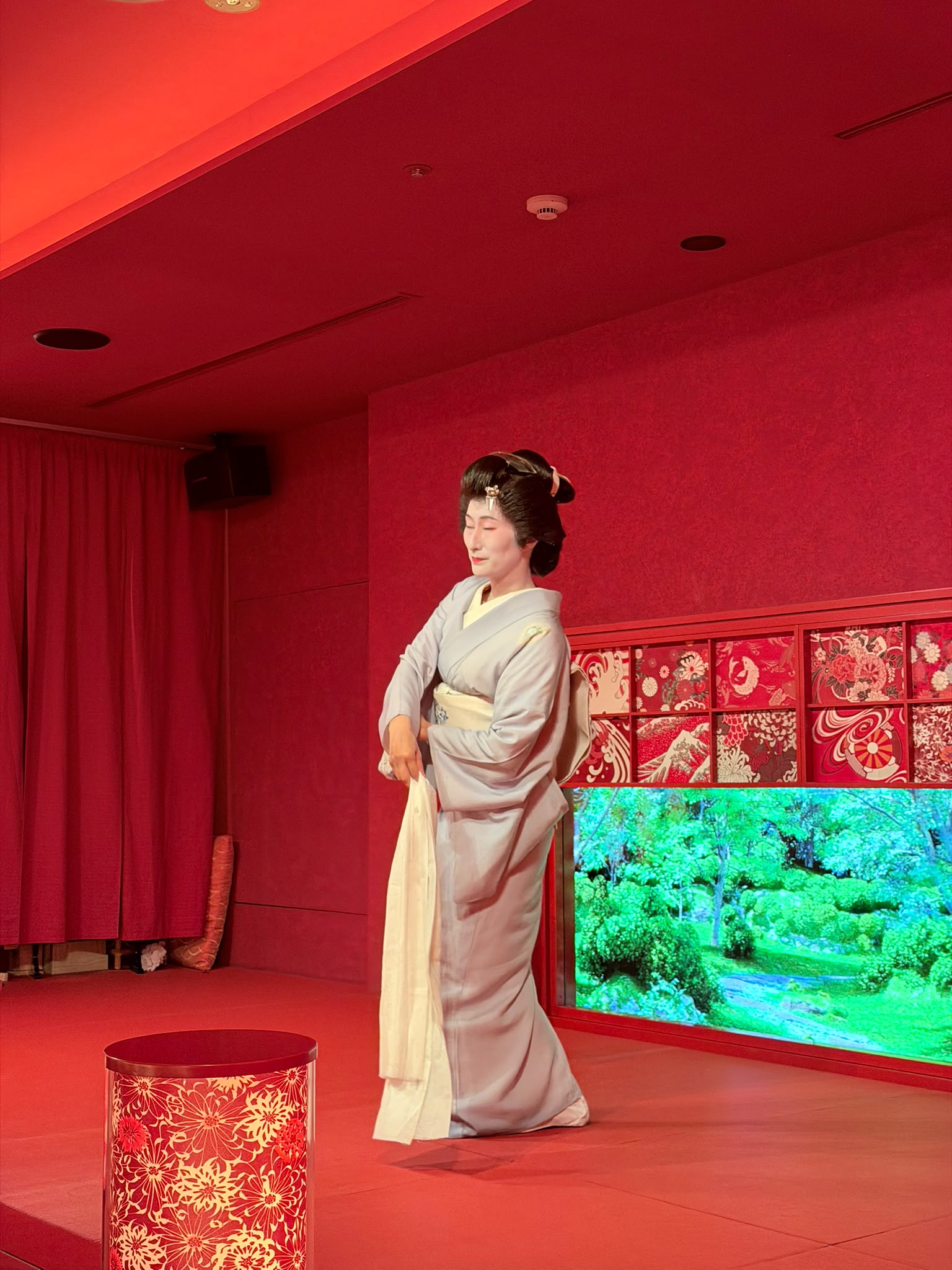
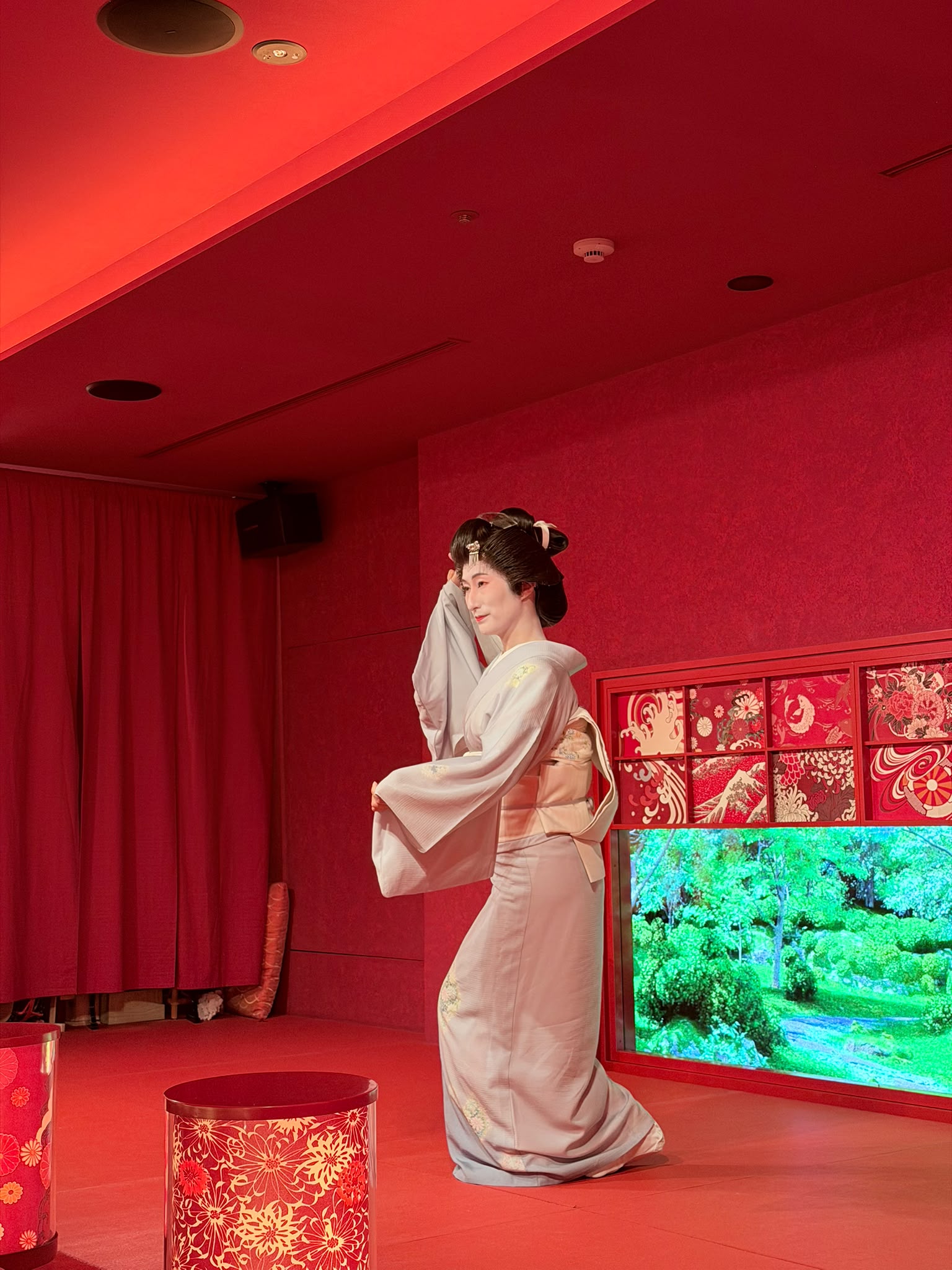
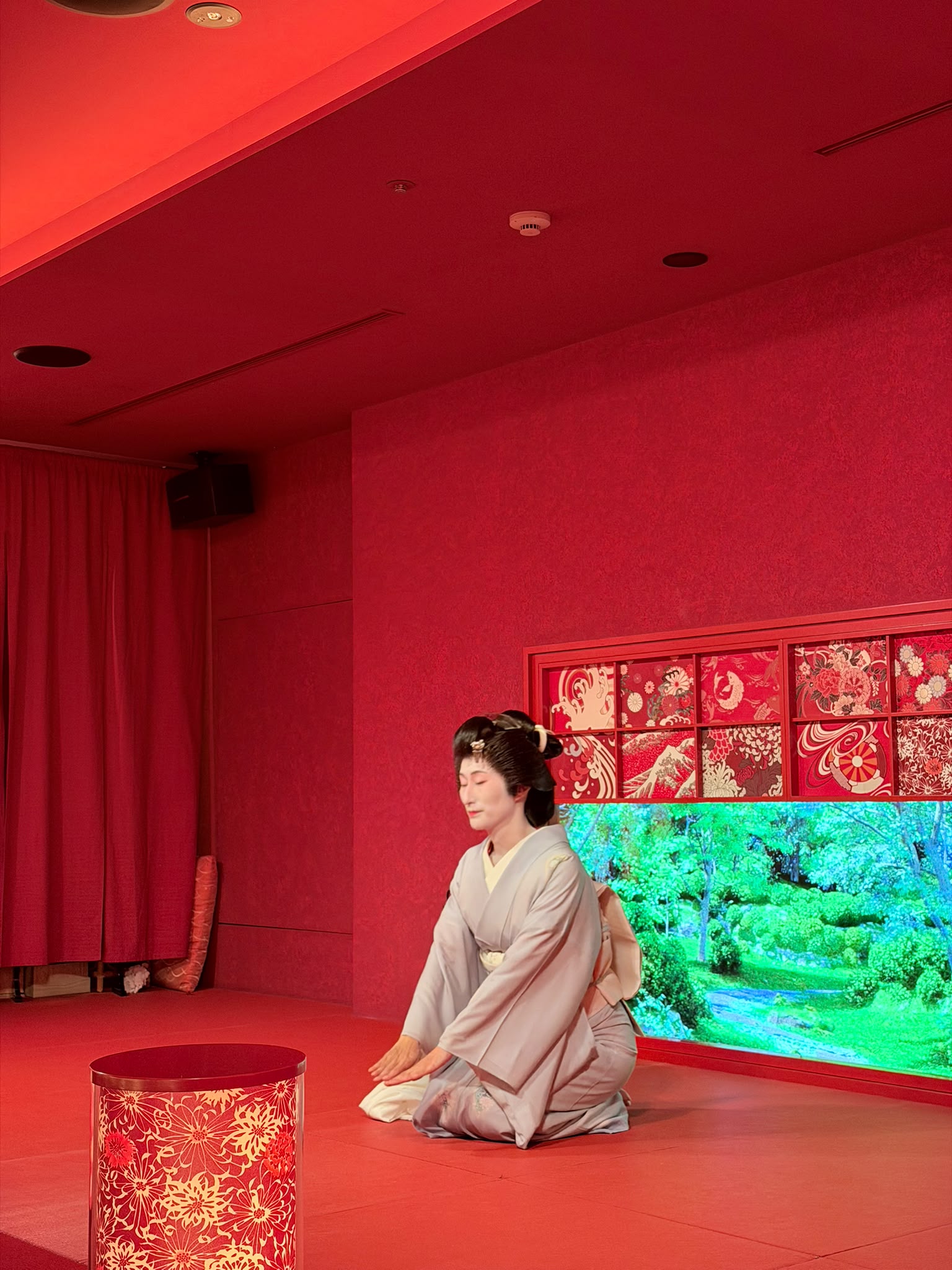
• The Companions: We were accompanied by the lovely Tokyo geisha, Natsuki and Nana. The younger of the two, Nana, spoke lovely, natural English. The elder, Natsuki, relied on an electronic handheld translation tool—the exact same interface utilized by retail sales assistants in premium shopping centers like Lumine 2.
• The Room Dynamics: The banquet room was shared with at least one other family—an American group traveling with their son, who happened to be celebrating his 13th birthday that very evening.
The Logistics of Presence
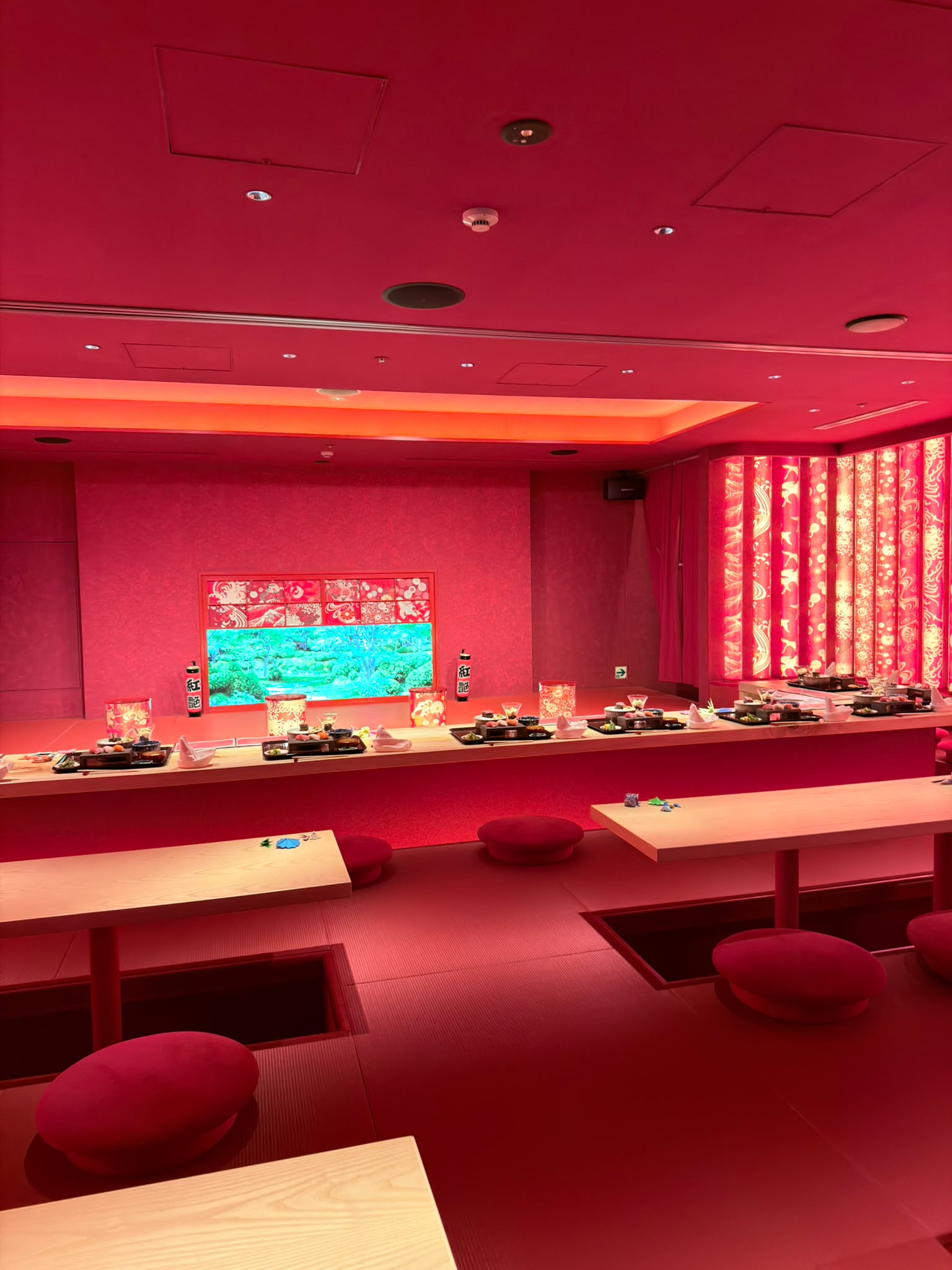
My tactical instinct to arrive significantly ahead of the scheduled banquet time proved entirely correct. Navigating the venue early allowed me to secure a private, uninterrupted photoshoot within the empty, pristine banquet hall, capturing the visual currency of the space before the room’s energy shifted. The traditional cuisine was already meticulously laid out when I stepped into the frame, presenting a flawless visual baseline of readiness.
Once the geisha were formally introduced, the room transitioned into a period of dedicated conversation. Frankly, my natural shyness surfaced, and I found myself extremely nervous—a vulnerability that physically manifested in how noticeably my hands shook when I attempted to eat and drink. I tried to actively deploy the Japanese I am currently learning, but my mind repeatedly drew blanks. It was a humbling reminder that my linguistic fluency is not yet where I require it to be.






The Choreography and the Prize
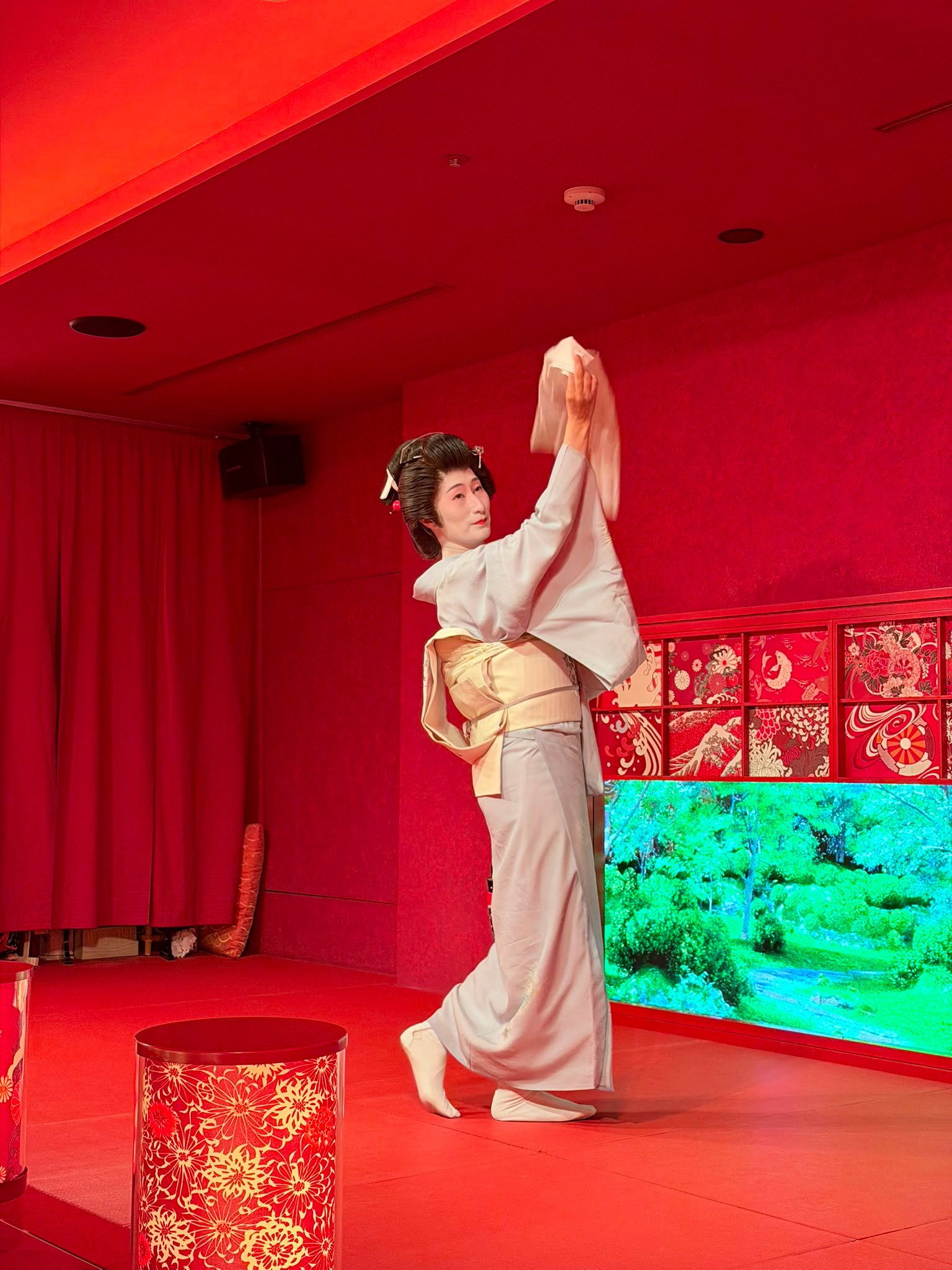
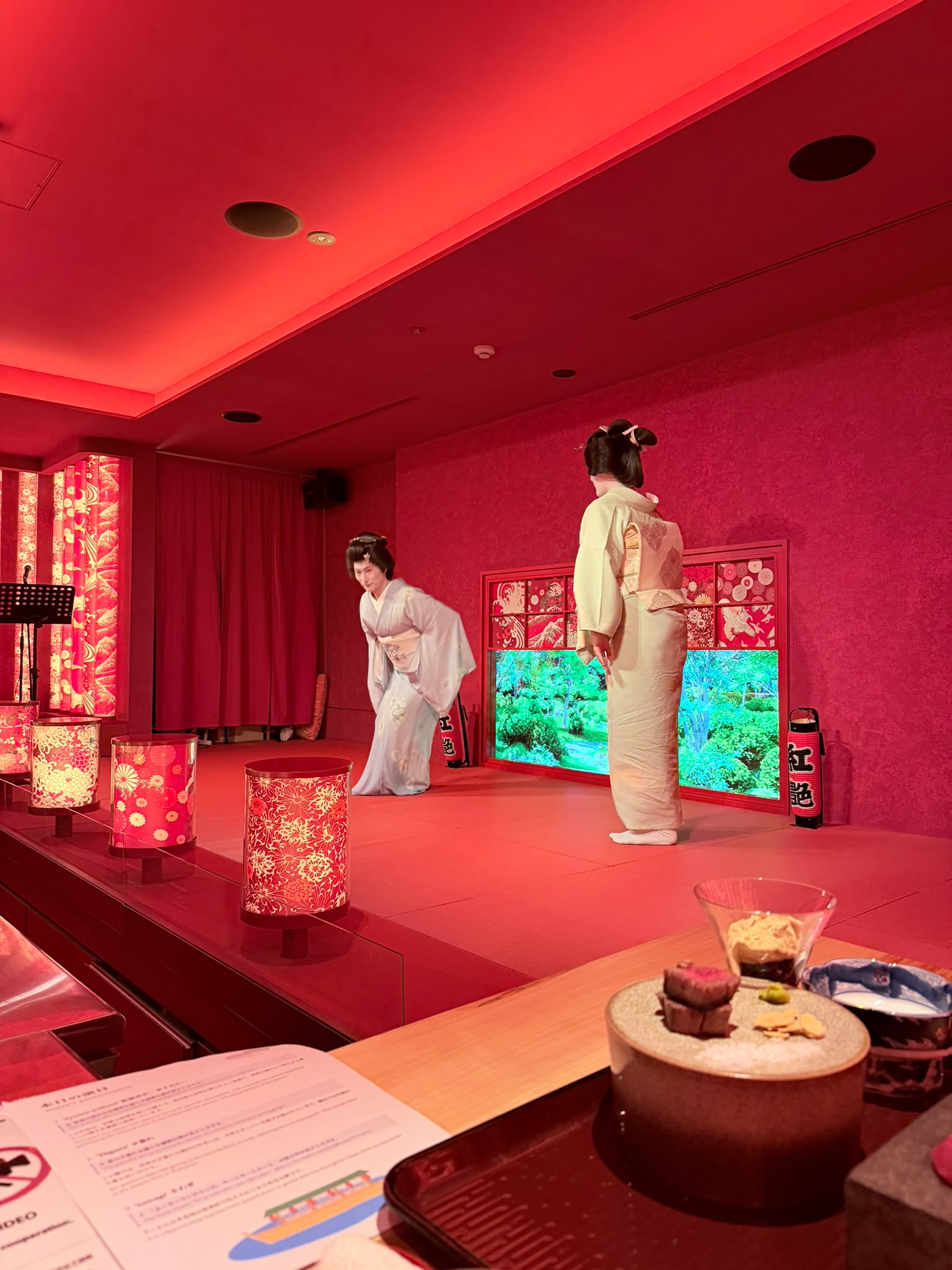
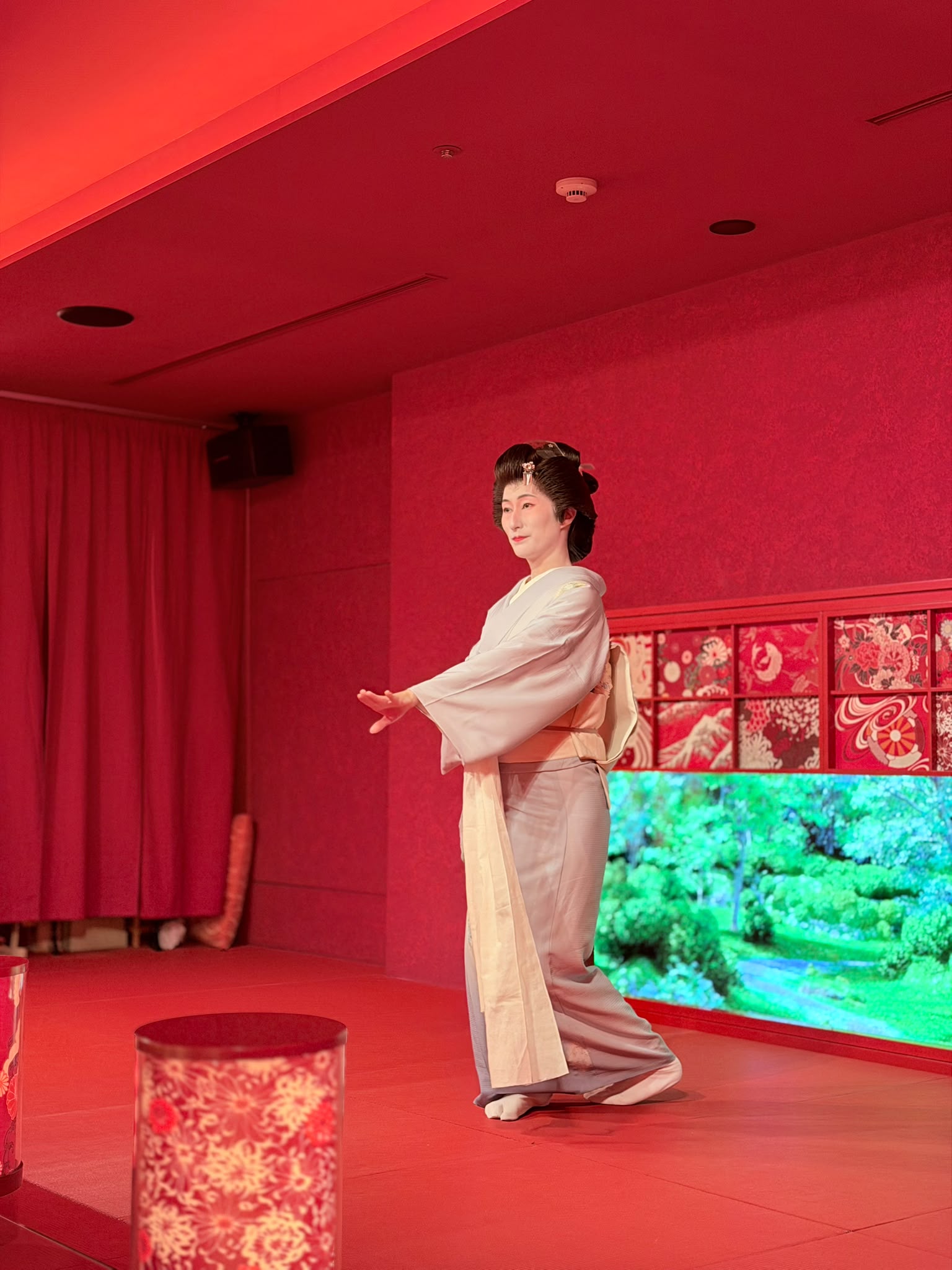
Following our initial conversation came the core artistic showcase: three precise traditional dance performances. The first was executed by Natsuki alone, demonstrating seasoned, deliberate poise; the second was delivered by Nana alone, capturing a more youthful energy; and the final sequence brought both masters together in a synchronized display of fluid physical storytelling.
After a second round of conversation, the room pivoted into traditional drinking games. As an independent executive trained to read timing and intent, I held my focus under pressure—and I won. I still retain my physical prize from the evening: a lucky white envelope gifted directly to me by Natsuki, serving as a tangible token of positive affinity, “jyun4 fan6” (緣份).
Calibrating the Vibe: Tokyo vs. Kyoto
Prior to this evening, I operated under the structural impression that all ozashiki were unyieldingly rigid, hyper-formal events. While the American family dressed completely casually, I felt entirely appropriate and balanced in my striking black yukata. Based on this setting, I would classify the Tokyo experience as a semi-formal, high-tier banquet.
My second and next ozashiki will be deliberately held in Kyoto. As a producer, I require a comparative baseline to analyze the subtle differences between Tokyo geisha and Kyoto geiko (藝妓), as they are titled in the old capital. During the evening, I overheard Natsuki explaining to the American family via her translation device that the two regions maintain highly distinct lineages:
• The Apprenticeship: Tokyo geisha apprentices are traditionally called hangyoku (半玉 / half-jewel), whereas Kyoto apprentices are known globally as maiko (舞妓).
• The Silhouette: Their entire wardrobe, structural hair styling, and the actual duration of their rigorous apprenticeships follow completely separate regional redlines.
While I imagine the foundational format of the ozashiki remains similar, the ultimate distinction will lie entirely in the underlying venue, gravity, and cultural atmosphere.
The Ultimate Manifestation
Ultimately, my long-term goal is to transition from a participant to the primary anchor of the space. My objective is to personally host a curated ozashiki, either in Tokyo or Kyoto, surrounded by guests of my own choosing as a secure, married woman.
That future gathering will be the true geisha banquet of my mental wanderings—functioning essentially as an elite nomikai (飲み會 / drinking party) with geiko acting as the supreme hostesses and cultural entertainment. Observing Natsuki and Nana navigate the room has given me the precise tools to refine my own social reflexes, preparing me to command the high-stakes rooms of Eurasia Rising and the international tables of Kushiel’s Legacy: The Terminus. We take the lessons of hospitality one step at a time, moving closer to the blueprint of the empire.
The fire within me burns steady, learning from the timeless hostesses of the floating world.
Until the wind shifts again.
— Zephyr Chan